Paraprobiotics (Heat-Killed Probiotics)

You may have taken probiotics faithfully every day, yet still felt disappointed that they weren’t delivering the results you expected. Many people focus mainly on the number of live bacteria (CFUs) listed on the label.
But no matter how many live bacteria you consume, if they can’t survive stomach acid and bile to reach the intestines intact, it’s difficult to get the results you’re hoping for. This is exactly why health experts and wellness communities have recently started paying attention to paraprobiotics as a new alternative to traditional probiotics.
Key Takeaway
This guide breaks down what paraprobiotics are and how they differ from traditional live probiotics, positioning them as a next-generation approach to gut health. We’ll also cover the correct way to take paraprobiotics so you can enjoy their benefits safely, along with how to prevent possible paraprobiotics side effects.
What Do Paraprobiotics Mean, and How Do They Work?

Paraprobiotics aren’t live bacteria — they’re beneficial bacteria that have been specially heat-treated and stabilized into an active ingredient.
In simple terms, paraprobiotics are inactivated (heat-killed) probiotic strains that retain their beneficial compounds and cell wall structure even after processing.
Traditional live probiotics only work if they reach the intestines alive. Because of this, a large portion is destroyed while passing through stomach acid and bile, which limits how many actually make it to the gut intact.
Paraprobiotics, on the other hand, are already stabilized in their inactivated form, so they’re designed to reach the intestines without being broken down by heat, humidity, or stomach acid.
Data Insight
Unlike live probiotics that must survive the journey to the gut, paraprobiotics deliver their beneficial compounds directly to gut bacteria and the immune system in an inactivated, heat-treated form — a novel approach to gut health.
Why Choose Paraprobiotics? Key Benefits Explained

One of the biggest advantages is that even people with sensitive digestive systems can take paraprobiotics comfortably, since they can act as food for existing beneficial gut bacteria and may help improve the gut environment relatively quickly.
The cell wall components on the surface of the inactivated bacteria can directly stimulate immune cells in the gut lining, which may help support the body’s overall defense system. Because they don’t need time to colonize the gut the way live bacteria do, the immune response may be triggered relatively quickly.
They’re also highly resistant to heat and humidity, so refrigeration isn’t required — the ingredients stay stable even in the middle of summer or while traveling, making storage very convenient.
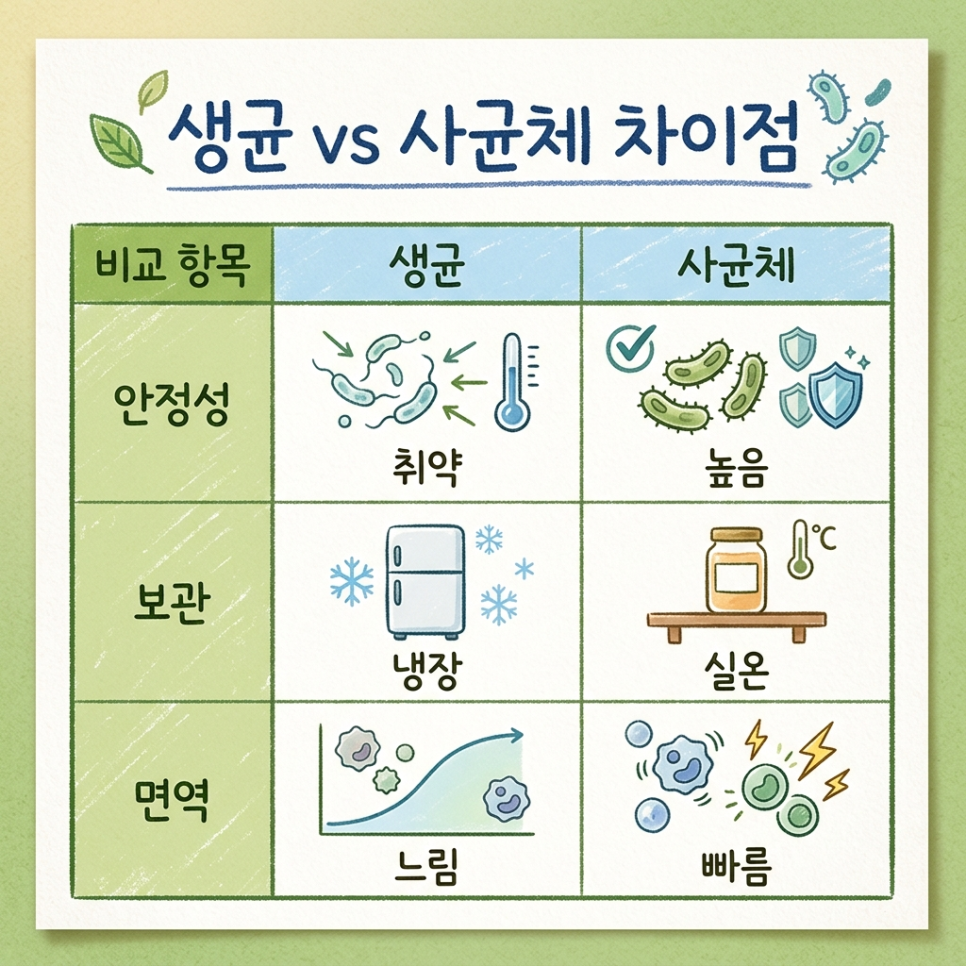
| Comparison | Live Probiotics | Paraprobiotics (Inactivated) |
|---|---|---|
| Heat & Stomach Acid Stability | Low (mostly destroyed before reaching the gut) | High (reaches the gut intact) |
| Storage | Refrigeration typically recommended | Room-temperature storage (very convenient) |
| Speed of Immune Stimulation | Requires gut colonization and metabolite formation first | Cell wall components stimulate immune cells right away |
Are There Paraprobiotics Side Effects? Safety Precautions to Know

Paraprobiotics are generally considered safer than live probiotics, but depending on individual constitution, some people may experience bloating or temporary diarrhea.
These reactions aren’t usually caused by the ingredient’s toxicity — they’re more likely a temporary adjustment, such as mild gas or stomach discomfort, as the gut microbiome shifts to accommodate the new inactivated bacteria.
For this reason, it’s wise to start with a small amount rather than a large dose right away, giving your gut time to adjust.
Checklist
✅ Follow the recommended daily serving size printed on the product label
✅ Start with a small amount and gradually increase the dose
✅ Those with underlying health conditions or who are pregnant should consult a doctor before use
If skin hives or persistent vomiting occur even after reducing the dose, stop taking the product immediately.
Paying close attention to how your body responds, combined with consistent, healthy daily habits, is the best way to get the most out of paraprobiotics.
Frequently Asked Questions
1. Does “paraprobiotics” mean the bacteria are dead?
Yes. Paraprobiotics are beneficial bacteria that have been specially heat-treated, so the cells are no longer biologically active — but the beneficial compounds and cell wall structure remain intact.
2. Do the benefits of paraprobiotics improve when taken with live probiotics?
A synergistic effect may be possible. Live probiotics colonize the gut directly, while paraprobiotics may help beneficial bacteria multiply and stimulate the immune system — which is why combination products featuring both ingredients have become popular.
3. Can children or elderly people experience side effects from paraprobiotics?
Because paraprobiotics don’t multiply inside the body, they’re relatively free from risks like bacteremia that are sometimes associated with live probiotics. That said, taking too much may cause bloating, so it’s recommended that children and elderly individuals start with less than the standard recommended amount.
4. Is it best to take it on an empty stomach in the morning?
Unlike live probiotics, paraprobiotics aren’t destroyed by stomach acid, so they can be taken before or after meals at any time of day. Taking them consistently at the same time every day matters far more than whether your stomach is empty.
References
· (Internal link: see Kookmin Bio Home — recommended to replace with an internal article covering recommended paraprobiotics products in the future)
· Ministry of Food and Drug Safety, Republic of Korea, Ministry of Food and Drug Safety, “Status of Approved Functional Ingredients for Health Functional Foods,” MFDS public data.
· Benefactor Research Team, “A Study on the Immunomodulatory Activity of Heat-Treated Lactic Acid Bacteria (Paraprobiotics),” Journal of the Korean Society for Microbiology and Biotechnology, 2023.
This article is intended for general health information purposes only and is not a substitute for individual diagnosis or treatment. If you have a health concern, please consult a healthcare professional.
#Paraprobiotics #ParaprobioticsMeaning #ParaprobioticsBenefits #ParaprobioticsSideEffects #HeatKilledProbiotics #InactivatedProbiotics #NextGenProbiotics #GutHealth #ImmuneSupport #Postbiotics