If your legs suddenly feel weak going up stairs,
and your walking pace has slowed down noticeably,
it may not just be normal aging — it could be a sign of sarcopenia in seniors.
Left unaddressed, it can increase the risk of falls and fractures,
so catching it early and managing it matters.

This article covers the causes and diagnosis criteria of sarcopenia in seniors, along with treatment and nutrition tips, plus muscle-strengthening exercises you can do at home.
If your walking pace has slowed or stairs feel harder than before,
read through the details below.


What Is Sarcopenia in Seniors and Why Does It Happen?
Sarcopenia in seniors refers to the age-related decline in skeletal muscle mass, strength, and physical function.
Some muscle loss with age is a normal part of aging.
But when the decline happens quickly or physical function drops along with it, that’s a different story.

When muscle mass and strength decline, walking or climbing stairs can become noticeably harder,
and the risk of falls or fractures can rise as well.
It’s not just a matter of low energy —
it can be a sign that the physical function needed for daily life is declining.
If your walking pace has clearly slowed or you’re struggling to stand up from a chair without help,
it’s worth checking for possible sarcopenia.

✔️ Muscle loss can lead to declining strength and physical function, so it’s worth paying attention to.
✔️ A slower walking pace and frequent unsteadiness can be early warning signs.
✔️ Catching these changes early and managing them helps you maintain a healthy, independent daily life longer.

How Is Sarcopenia Diagnosed in Older Adults?
Diagnosing sarcopenia involves assessing not only muscle mass but also physical function measures like grip strength and gait speed.
In other words, it isn’t determined by age or body type alone.
According to the Korean Geriatrics Society’s clinical guidelines on sarcopenia,
grip strength of 26 kg or less in men and 17 kg or less in women is considered reduced muscle strength,
while a gait speed of 0.8 meters per second or slower is considered reduced physical performance.
Calf circumference measurement, the chair stand test,
and the SARC-F self-screening questionnaire are also used as screening tools.
So rather than brushing off the feeling that you’re walking slower than before,
it’s a good idea to have your grip strength and gait speed checked at a nearby clinic.
✔️ Grip strength of 26 kg or less (men) or 17 kg or less (women) indicates reduced muscle strength.
✔️ A gait speed of 0.8 m/s or slower is also used as a diagnostic marker.
✔️ Calf circumference and the SARC-F self-screening questionnaire are used as additional screening tools.
How Is Sarcopenia Treated in Seniors?

Treating sarcopenia in seniors centers on combining exercise with nutritional management.
Rather than relying on a single medication to rebuild muscle,
the approach involves pairing exercise and nutrition based on each person’s health condition.
Getting enough protein plays an especially important role in maintaining muscle mass.
It helps to include protein-rich foods such as lean meat, fish, tofu, and eggs
at every meal.
In fact, one study found that older adults who consumed less than 0.8g of protein per kg of body weight per day
had more than twice the risk of developing sarcopenia compared to those who consumed 1.2g or more.
From what I’ve noticed among older friends and family,
those who consistently include protein-rich side dishes at every meal
do seem to maintain their muscle strength noticeably better.

If needed, after checking your overall health and nutritional status,
you can talk with a healthcare provider about vitamin D or other nutritional supplements.
For more health information on managing protein intake and nutritional balance,
you can also visit the Kookmin Bio homepage.
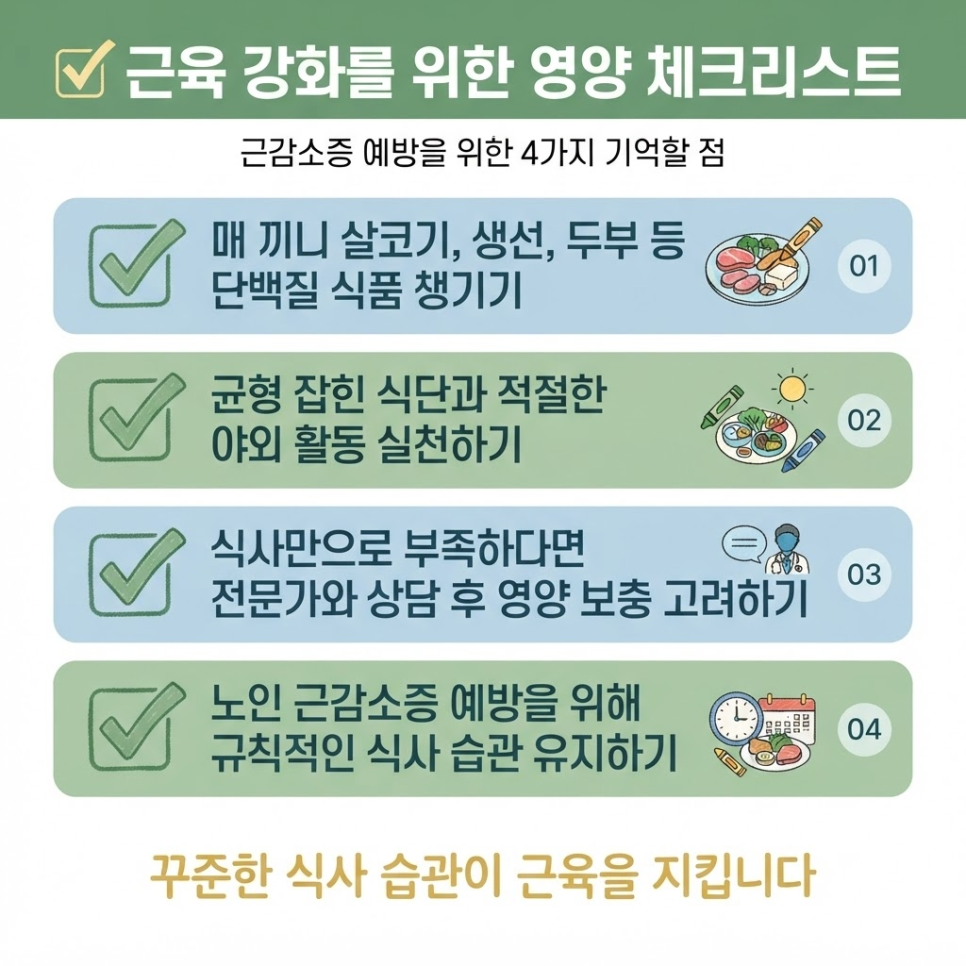
✅ Include protein-rich foods like lean meat, fish, and tofu at every meal
✅ Maintain a balanced diet and get adequate outdoor activity
✅ If diet alone isn’t enough, talk with a professional about nutritional supplements
✅ Build regular eating habits to help prevent sarcopenia in seniors
What Exercises Help Prevent Muscle Loss in Seniors at Home?

When it comes to exercise for sarcopenia in seniors, strength training tailored to your fitness level and joint condition is safer than lifting heavy weights.
Building a lifestyle habit of regularly using your muscles helps slow the rate of strength decline.
Two well-known exercises for sarcopenia are
chair sit-to-stands and calf raises.
Both movements help work the lower-body muscles, including the thighs and calves,
and are simple enough to do at home.
You can start by holding the back of a chair and slowly sitting down and standing up,
or resting your hands on a chair and holding a calf raise for about 3 seconds.
Rather than pushing yourself to do more reps right away,
it’s best to start within your comfortable range and build up consistency over time.

Combining exercise with adequate nutrition and a regular lifestyle can help maintain muscle mass and physical function.
Start with light movement today,
and build a consistent routine to help prevent sarcopenia in seniors.

✔️ Practicing safe strength exercises consistently may help support muscle strength and physical function.
✔️ Staying consistent without overexertion is key to managing sarcopenia.

⚠️ If you have joint pain or a chronic condition, consult a healthcare professional before starting any exercise.
⚠️ If you feel dizzy or experience pain, stop immediately and don’t push through it.
Frequently Asked Questions

1. How can you tell the difference between normal aging and sarcopenia in seniors?
It’s determined by evaluating grip strength, gait speed, and muscle mass together. Rather than relying on age alone, it’s important to check both muscle strength and physical function.
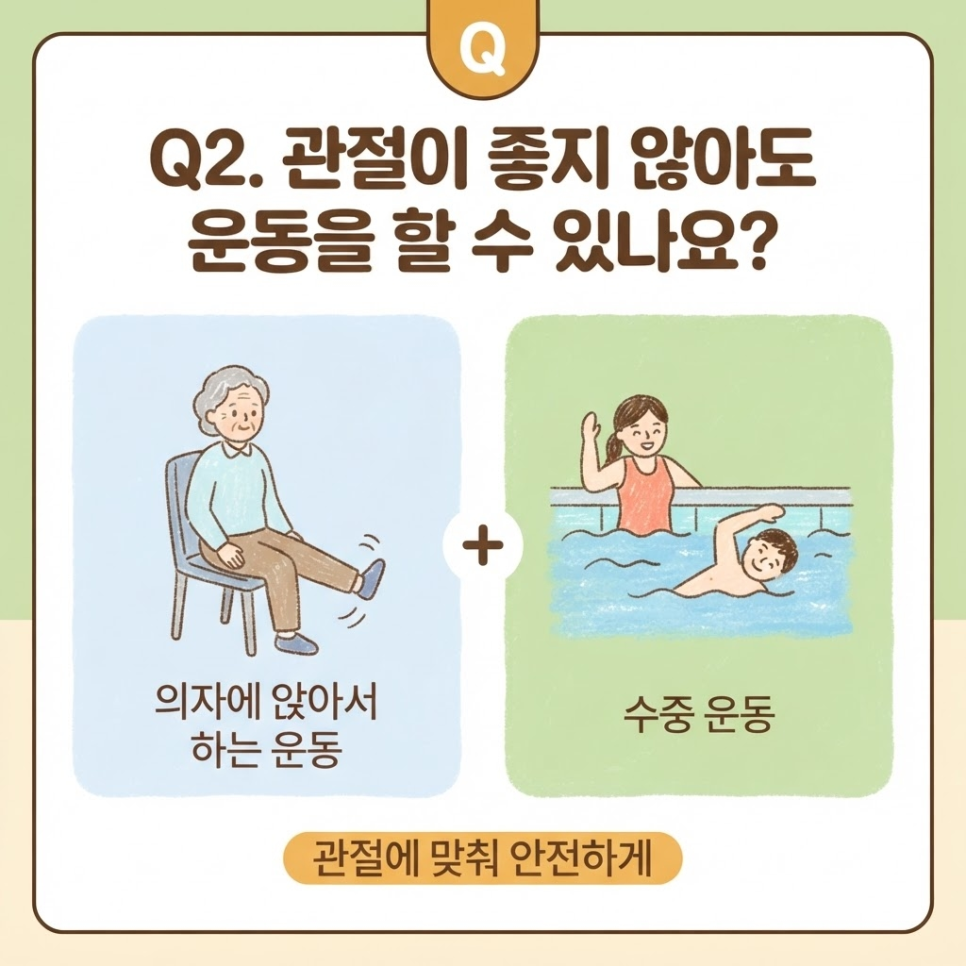
2. Can you still exercise if you have joint problems?
The exercises that work best depend on your individual joint condition. Chair-based exercises or water exercises that reduce joint strain can be good options, and if you have pain or an existing condition, it’s best to consult a professional before starting.
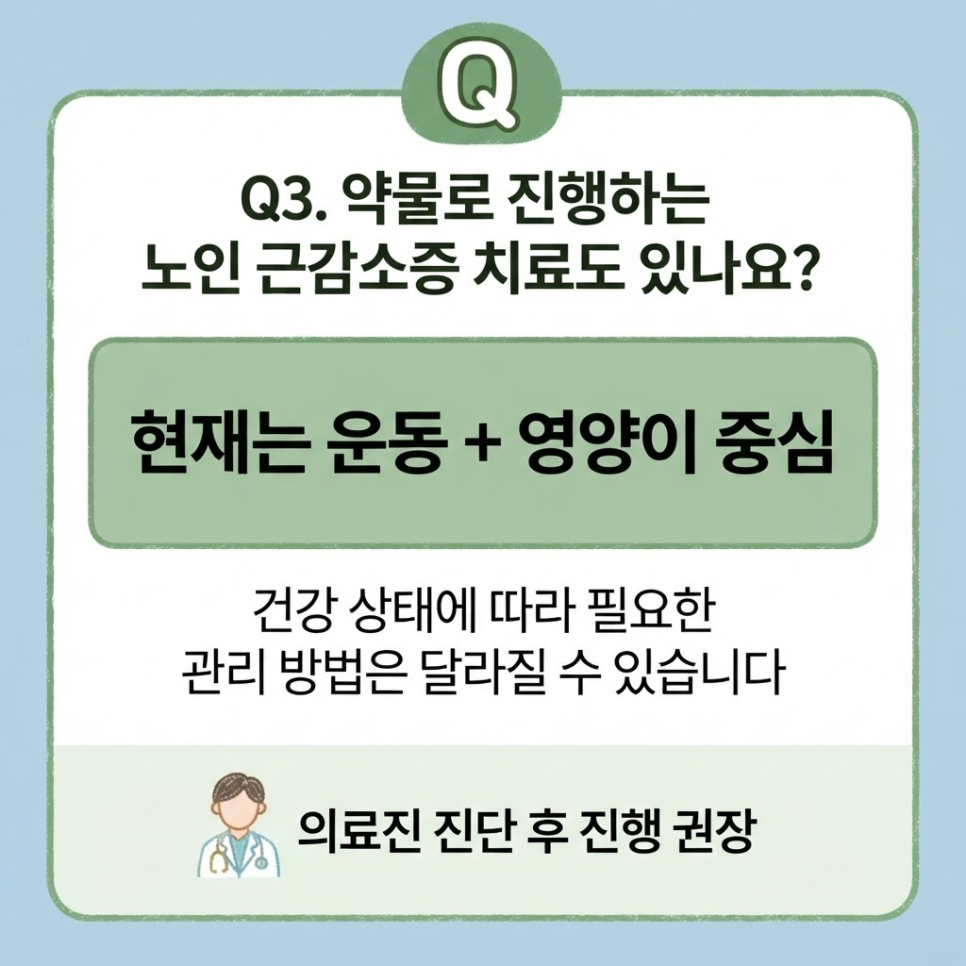
3. Is there a medication for treating sarcopenia in seniors?
Currently, treatment for sarcopenia is centered on exercise and proper nutrition. Since the right approach can vary depending on individual health status, it’s best to get a proper diagnosis from a healthcare provider.

4. Is eating enough protein alone enough to prevent sarcopenia?
Protein intake is important, but nutrition alone usually isn’t enough on its own. Combining regular strength training with a balanced diet is more effective for helping prevent sarcopenia in seniors.
References
· Medical Observer, “Korean Working Group Develops Korean-Style Sarcopenia Guidelines, Introduces New ‘Functional Sarcopenia’ Definition,” 2026. Read more
· Uihaksinmun (Medical News), “Low Protein Intake Linked to Higher Risk of Sarcopenia in Older Adults,” 2026. Read more
This article is provided for general health information purposes only and is not a substitute for individual diagnosis or treatment. Please consult a physician if you have health concerns.