The number on the scale isn’t bad at all—so why does your mirror check always feel disappointing?
Even when you diet hard, focusing only on the number on the scale often means you never actually check your normal body fat percentage for women.
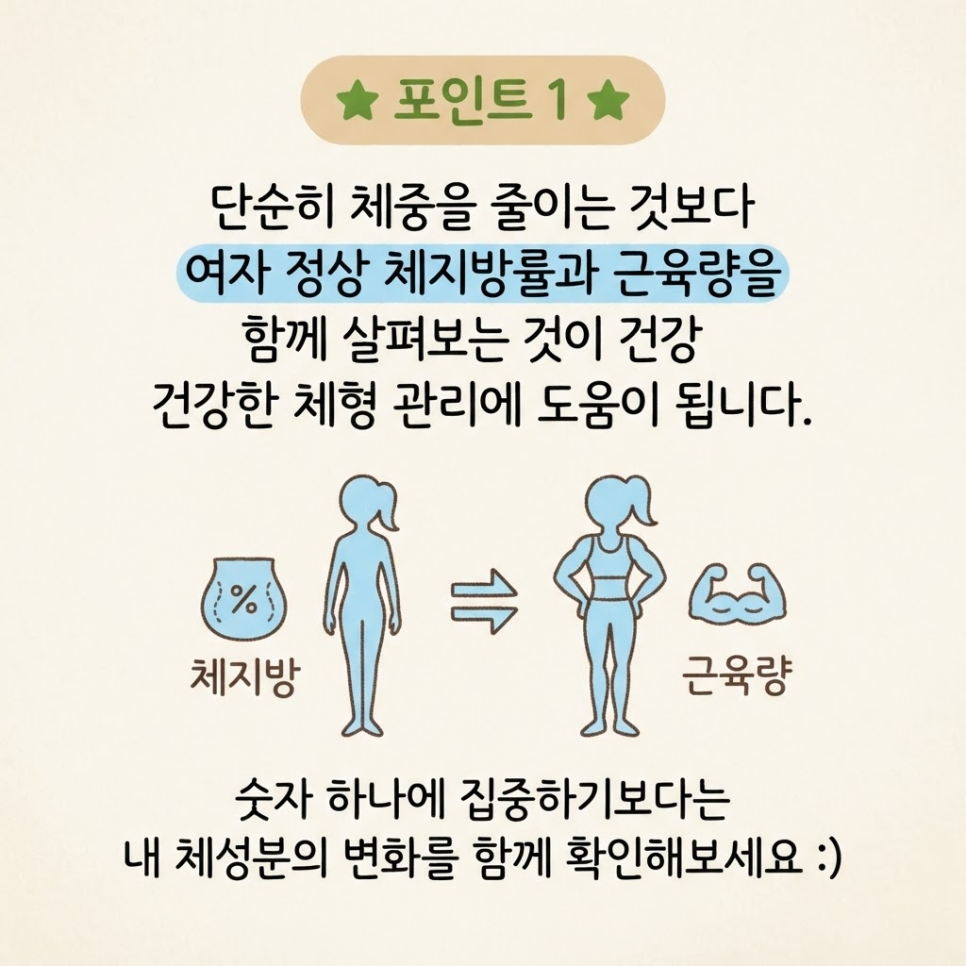
Even at the same weight, your body shape can look completely different depending on your ratio of fat to muscle.
When I got a body composition test myself, the difference in this ratio felt far more significant than the number on the scale.
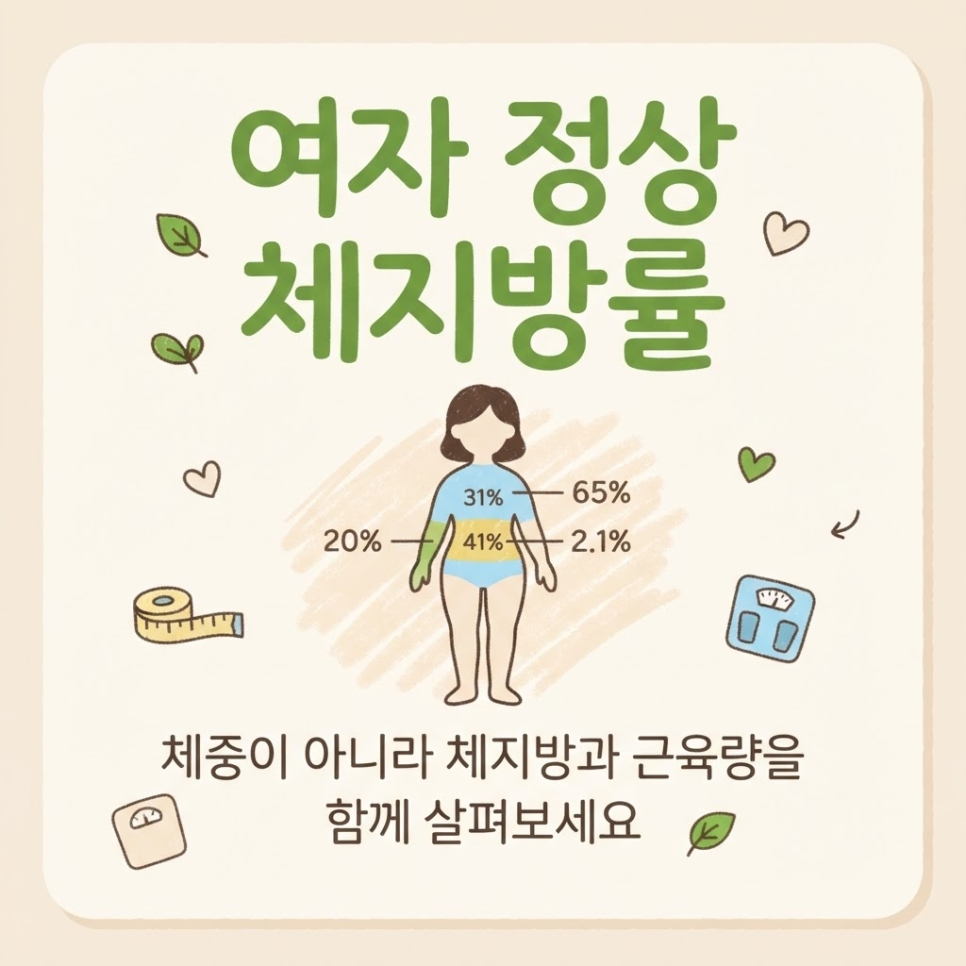
Ever wonder why your body doesn’t look the way you expected, even after all your hard work?🥲
The truth is, body composition—like body fat and muscle mass—matters just as much as your weight.
Quick Overview
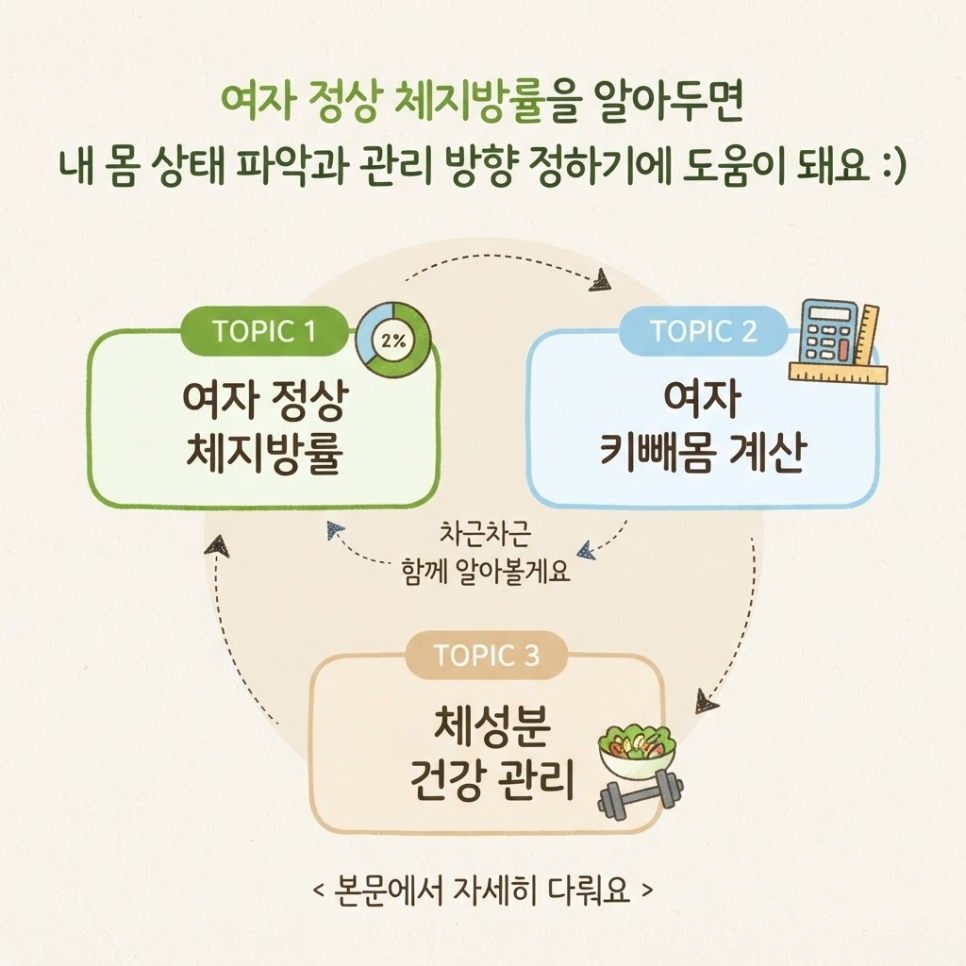
This article covers the typical normal body fat percentage for women and how it changes by age, the height-minus-weight formula you can use without a calculator, and how to manage body fat and muscle mass together.
We’ll also look at why you should check your body composition before focusing on the number on the scale.


1. What’s the Normal Body Fat Percentage for Women? (Ideal Range by Age)
Rather than a single fixed number, the normal body fat percentage for women is more accurately understood as a reference range that varies by age and measurement method.
Normal body fat percentage for women refers to a state in which the proportion of fat relative to total body weight falls within a healthy range.
Due to hormonal and physiological differences, women naturally tend to have a higher body fat percentage than men.
That’s why the same standard can’t simply be applied to both sexes.
According to various sources, the standard body fat percentage for women is often cited as roughly 18–28%.
That said, the exact figures can vary slightly depending on the organization and the measuring device used.
There are also differences by age group.
This is because muscle mass naturally tends to decrease with age, while body fat tends to increase.
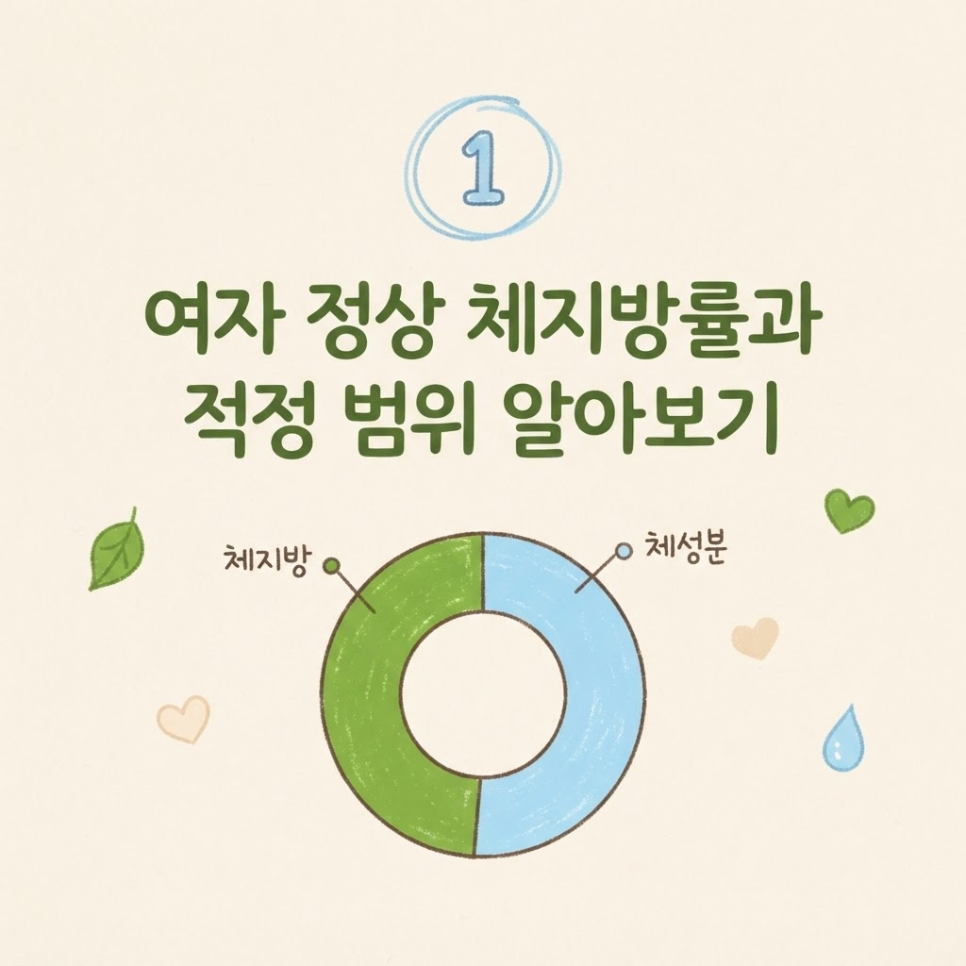
| Age Group | Reference Body Fat Percentage Range |
|---|---|
| 20–39 years old | approx. 21–32% |
| 40–59 years old | approx. 23–33% |
| 60–79 years old | approx. 24–35% |
※ Figures may vary depending on the measuring device and study population, so use them for reference only.
On the other hand, an excessively low body fat percentage isn’t a good sign either.
It may affect menstrual health, hormone balance, and bone health.
In other words, reducing body fat as much as possible isn’t automatically a good thing.
It’s important to build the habit of checking your body composition metrics alongside the number on the scale.
Rather than simply losing weight, tracking your normal body fat percentage for women together with your muscle mass is more helpful for healthy body management.
Focus on the trend in your body composition over time, not just a single number.
2. The Height-Minus-Weight Formula for Women: A Quick Reference Without a Calculator
The height-minus-weight number for women is just a rough reference that doesn’t reflect body composition, so it shouldn’t be treated as an absolute health indicator.
The height-minus-weight formula for women is a simple way to estimate body shape by subtracting your weight (kg) from your height (cm).
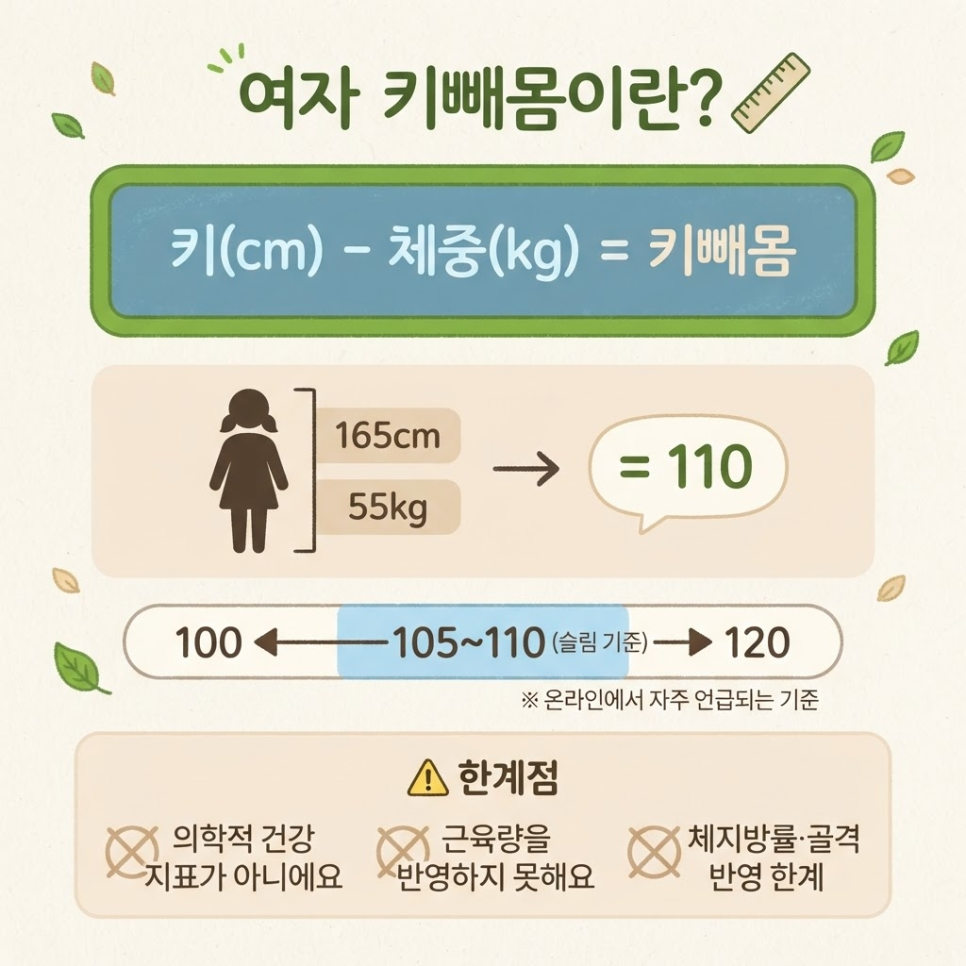
For example, if you’re 165 cm tall and weigh 55 kg, your height-minus-weight number would be 110.
Online, a score of around 105–110 is often mentioned as a benchmark for a slim body type.
However, this number isn’t a medical health indicator, and it fails to account for muscle mass, body fat percentage, or bone structure.

In fact, two people can have the same height-minus-weight number while one has more muscle mass and the other has a higher body fat ratio.
In that case, even with similar height and weight, their visible body shape and how clothes fit can look quite different.
That’s why it’s best to treat the height-minus-weight number as a rough reference only, and check body composition factors like your normal body fat percentage for women and muscle mass alongside it.
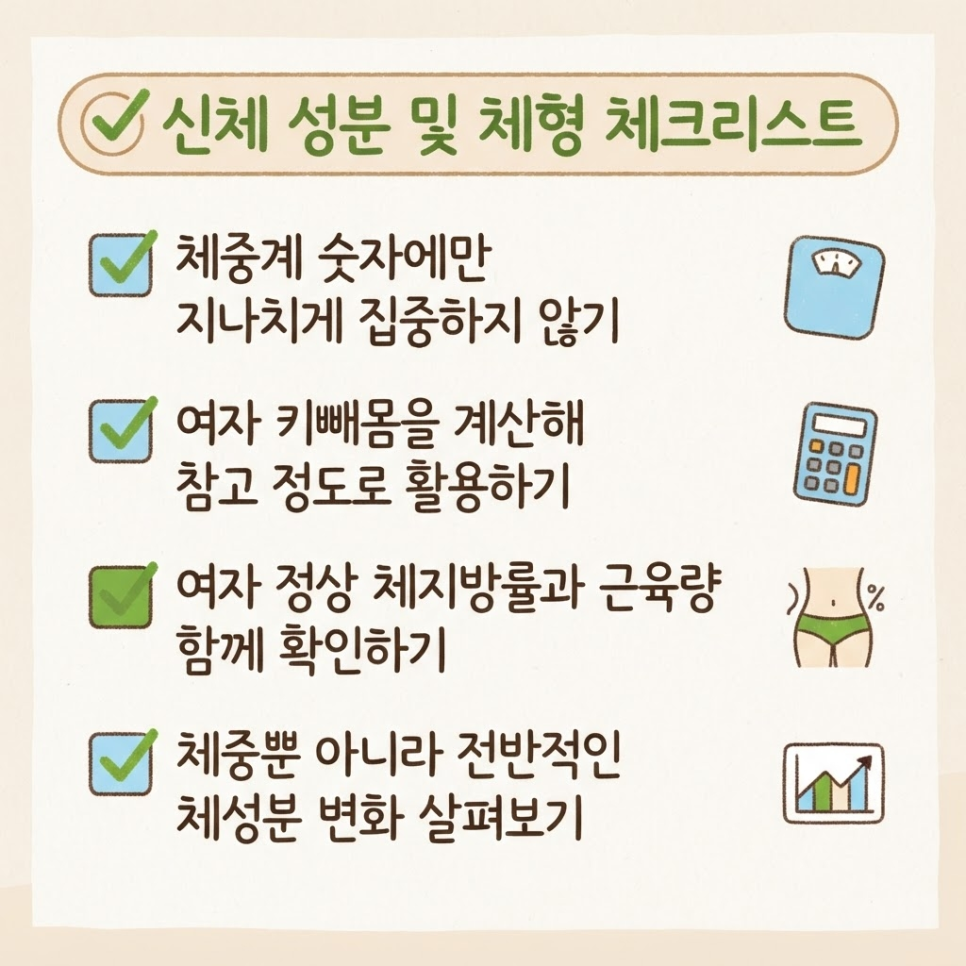
✅ Don’t focus too much on the number on the scale alone
✅ Calculate your height-minus-weight number, but treat it only as a reference
✅ Check your normal body fat percentage for women and muscle mass together
✅ Look at overall changes in body composition, not just weight
3. Can You Have Skinny Fat Even With a Normal Weight?
Yes—even if your weight and body mass index (BMI) are normal, a high body fat percentage can still mean you fall into the skinny fat category.
Skinny fat refers to a condition where weight and BMI are normal, but body fat percentage exceeds the healthy threshold.
According to available data, even when weight and BMI fall within the normal range, a body fat percentage of 30% or higher in women is often classified as skinny fat.
Because this involves high body fat but low muscle mass, someone may look thin on the outside while a body composition test tells a different story.
A normal BMI doesn’t necessarily mean your body composition is healthy.
If your condition or body shape has changed without a change in weight, check your normal body fat percentage for women and muscle mass together.
The problem is that skinny fat isn’t visible from the outside, so it’s easy to overlook.
That’s why it’s more important to regularly check your body composition analysis results rather than just the number on the scale.
4. How Can You Manage Body Fat and Muscle Mass in a Healthy Way?
Rather than simply cutting body fat, maintaining muscle mass alongside it is key to managing a normal body fat percentage for women.

In particular, repeatedly under-eating can cause you to lose muscle mass along with weight, so it’s important to be careful.
- Eat a balanced mix of protein, vegetables, and carbohydrates suited to your individual needs
- Build sustainable eating habits instead of resorting to extreme food restriction
- Combine cardio with strength training exercises like squats
- Maintain basic healthy habits like getting enough sleep and staying hydrated

Managing body fat while maintaining muscle mass can help you build a firmer body shape, even at the same height-minus-weight number.
Ultimately, managing a normal body fat percentage for women isn’t about rapidly lowering a number in a short time—it’s about building habits you can sustain for the long run.
When you combine a balanced diet with regular strength training, both your body fat and muscle mass ratios can improve together—so you may notice changes in your body shape and how you feel, even without a big change in weight.
If you’d like to build these habits while exploring more trustworthy health information, checking out related content on the Kookmin Bio home page may also help.

Frequently Asked Questions
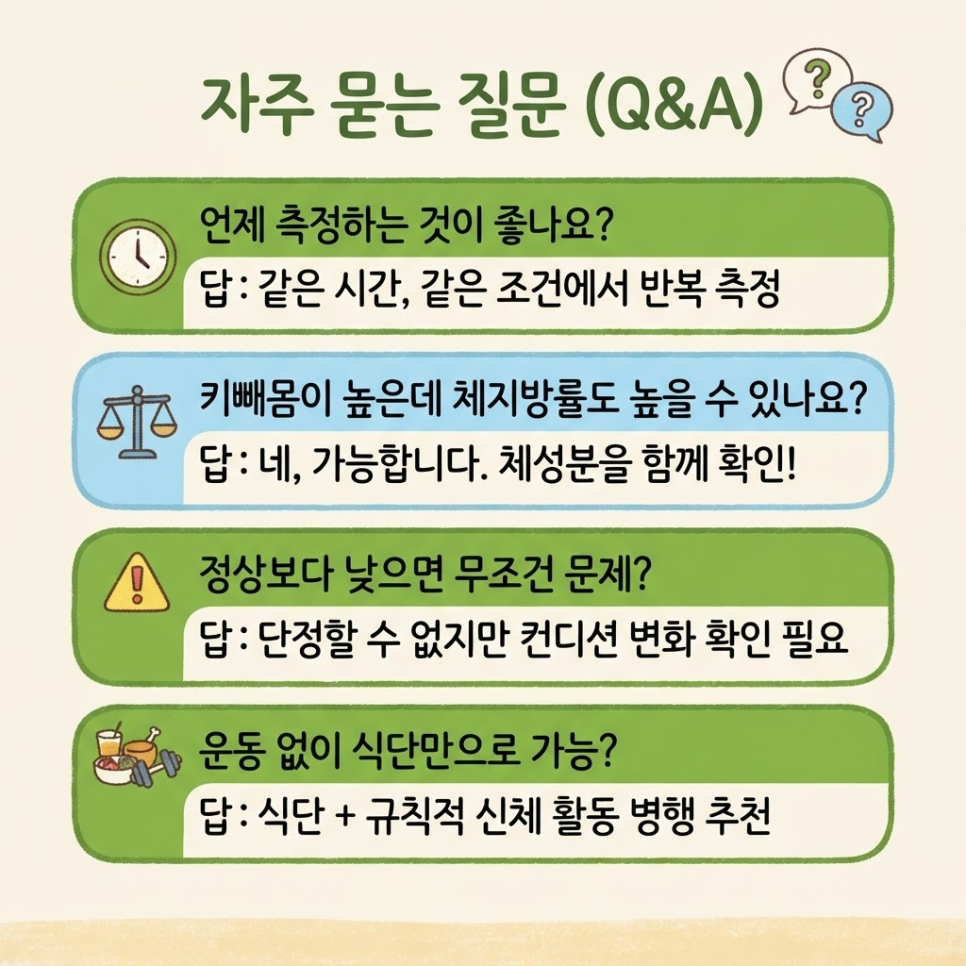
1. When is the best time to measure your normal body fat percentage for women?
Body composition results can vary depending on food intake, hydration, and recent exercise. If you want to track changes over time, it’s best to measure repeatedly under similar conditions and at similar times.
2. Can your height-minus-weight number be high while your body fat percentage is also high?
Yes, it’s possible. Even with a low body weight, if muscle mass is low and body fat ratio is relatively high, the height-minus-weight number alone can’t reveal this. That’s why it’s important to check body composition along with weight.
3. Is it automatically a problem if your normal body fat percentage for women falls below the healthy range?
Body fat percentage alone can’t determine your overall health status. That said, if excessively low body fat is accompanied by menstrual changes or a decline in how you feel, it’s worth checking with a healthcare provider.
4. Can you manage a normal body fat percentage through diet alone, without exercise?
Diet plays an important role in managing weight and body fat, but regular physical activity is also important for maintaining muscle mass. Combining strength training suited to your fitness level can help you maintain a healthy body composition.
5. How can you tell if you have skinny fat?
Weight and BMI alone aren’t enough to tell. You’ll need a body composition analyzer, such as an InBody device, to measure both body fat percentage and muscle mass accurately.
References
· Gaji News, “‘Obese in Your 20s, Normal in Your 50s’ — What’s the Right Body Fat Percentage for Your Age?”, Daum News. View source
· Samsung Medical Center, “She’s Thin… but Obese? The Truth About Skinny Fat,” Samsung Medical Center Health Information. View source
· Healtip, “The Truth About ‘Skinny Fat’ with Normal Weight and BMI,” Health Kyunghyang Healtip. View source
This article is intended to provide general health information and is not a substitute for individual diagnosis or treatment. If you have health concerns, please consult a medical professional.