Have you ever felt like the number on the scale went down, but your reflection in the mirror looks pretty much the same?
If you’ve been dieting hard but your visual body check still feels disappointing, you’re probably wondering why.
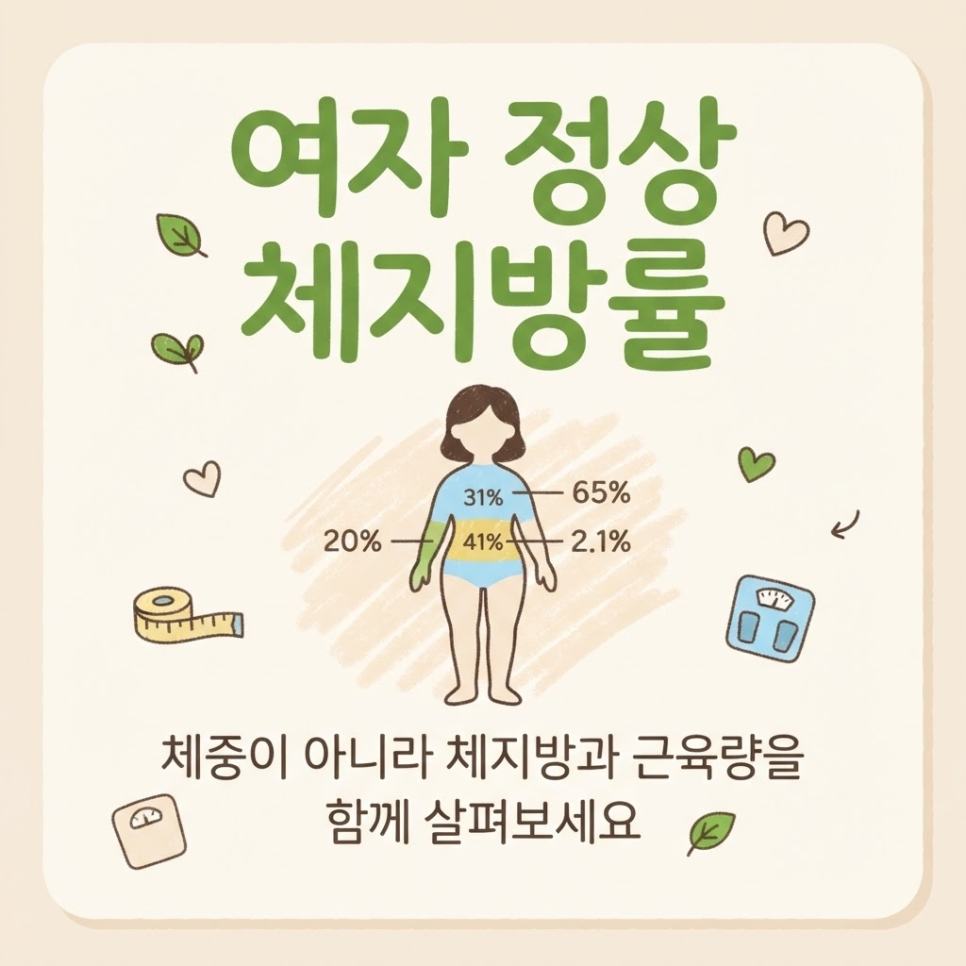
Body weight alone doesn’t tell the whole story — body composition, like body fat and muscle mass, matters just as much.
Most of us have felt frustrated at some point when our body didn’t match what we expected.
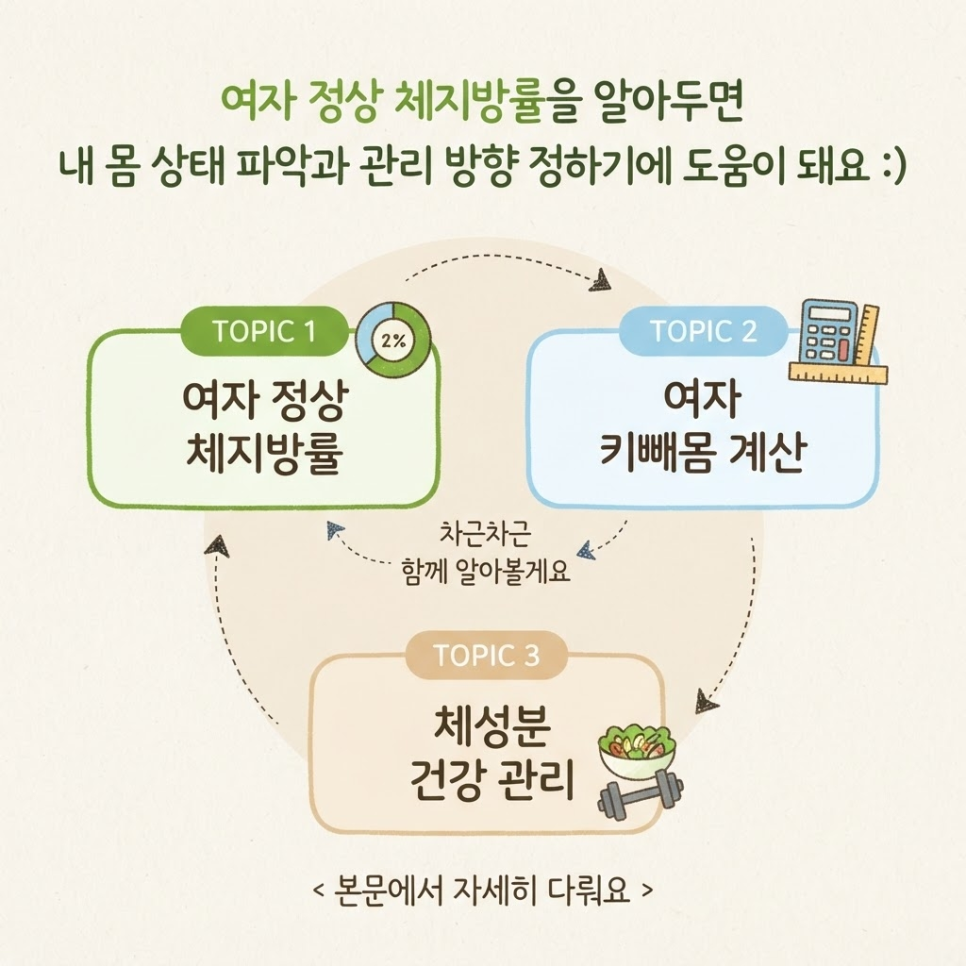
Knowing the normal body fat percentage for women can help you understand where your body stands right now and decide how to manage it going forward.
Today, we’ll walk you through the standard range for normal body fat percentage in women, a quick height-minus-weight method for women you can calculate without a calculator, and healthy ways to manage body composition.

Article preview
In this article, we’ll cover the typical normal range for body fat percentage in women along with the concept of body composition. We’ll also look at how to estimate your body type using the height-minus-weight method without a calculator, plus healthy ways to manage body fat and muscle mass.
What Is the Normal Body Fat Percentage Range for Women?
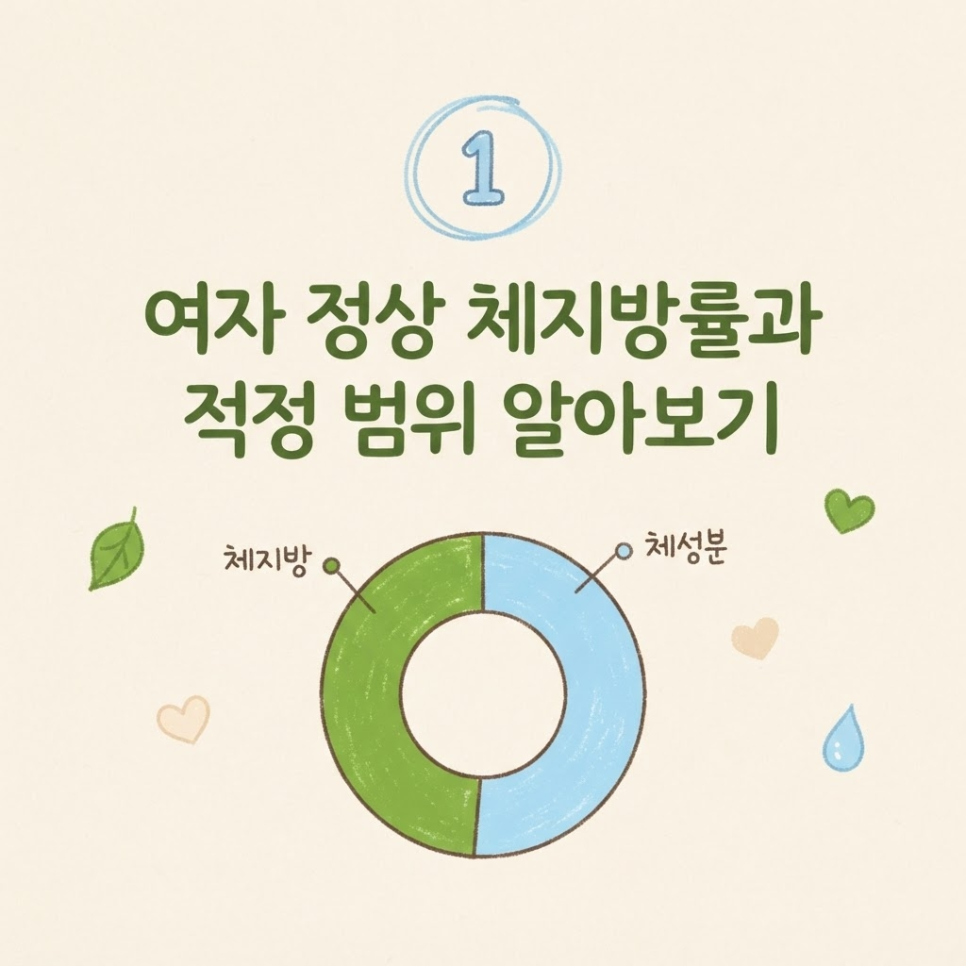
To get straight to the point, normal body fat percentage varies from person to person, but international standards generally consider a range of roughly 20-31% to be healthy.
Normal body fat percentage for women refers to the share of total body weight made up of fat, kept at a level that doesn’t put strain on the body’s normal functions.
Due to hormonal and physiological differences, women naturally tend to carry a higher body fat percentage than men.
Your ideal range can vary depending on age, measurement method, and individual health status.
That’s why it’s best not to treat a single number, like 20-25%, as an absolute standard for every woman.
According to the body fat percentage classification from the American Council on Exercise (ACE), the categories for women break down as shown below.
| Category | Body Fat % | Description |
|---|---|---|
| Essential Fat | 10-13% | The minimum level needed to maintain basic body functions |
| Athletes | 14-20% | Typical range for competitive athletes |
| Fitness | 21-24% | An active build with visible muscle definition |
| Average | 25-31% | The typical range for most women |
| Obese | 32% or higher | Excess body fat that may call for management |
On the other hand, if body fat percentage drops too low, it may potentially affect menstrual cycles, hormone levels, and bone health.
In other words, lowering body fat as much as possible isn’t necessarily a good thing.
If body fat percentage drops too low, it may be associated with irregular periods, hormonal imbalance, and reduced bone density.
Rather than lowering body fat at all costs, it’s safer to manage it within a normal range.
In fact, Seoul Asan Hospital’s health information notes that women are generally considered to have obesity when body fat percentage reaches 30% or higher.
Keep in mind that even at the same body weight, your actual body shape can look different depending on the ratio of fat to muscle.
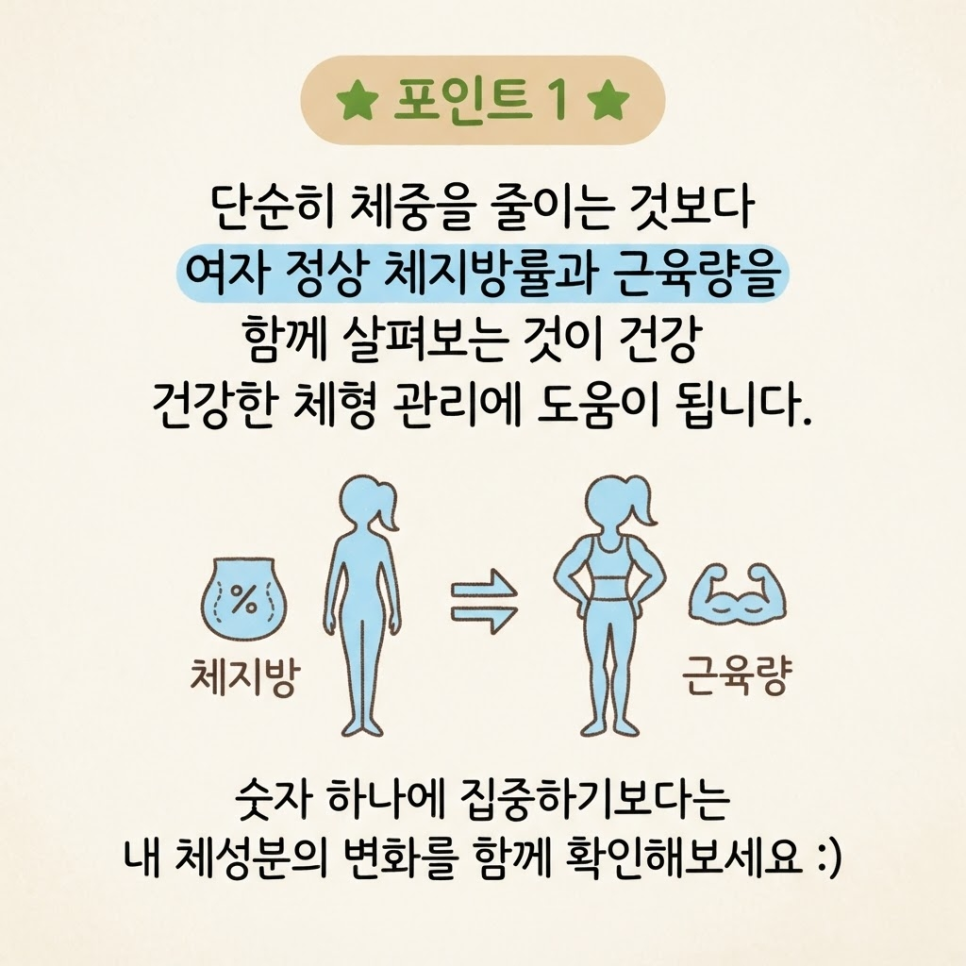
Rather than focusing only on losing weight, looking at your normal body fat percentage together with muscle mass may support healthier body composition management.
Try tracking changes in your body composition instead of fixating on a single number.
How Reliable Is the Height-Minus-Weight Method for Women?
To get straight to the point, the height-minus-weight number for women is just a rough reference for estimating body type — it’s not a medical health indicator.
The height-minus-weight method for women is a simple calculation where you subtract your body weight (kg) from your height (cm) to get a rough sense of your body type.
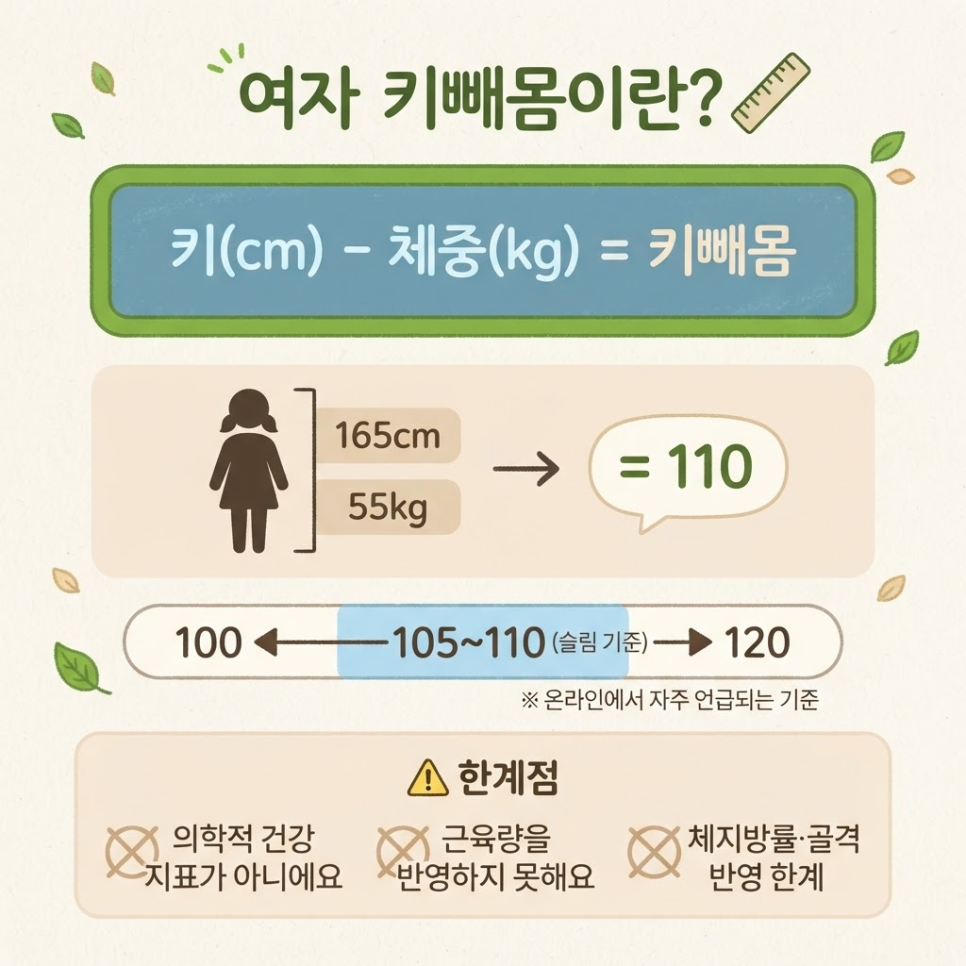
For example, if you’re 165cm tall and weigh 55kg, your height-minus-weight number would be 110.
Online, a height-minus-weight number of around 105-110 is often cited as a benchmark for a slim body type, but this isn’t an official medical standard — it’s more of a popular reference number that circulates online.
In reality, the height-minus-weight method doesn’t account for muscle mass, body fat percentage, or bone structure at all.
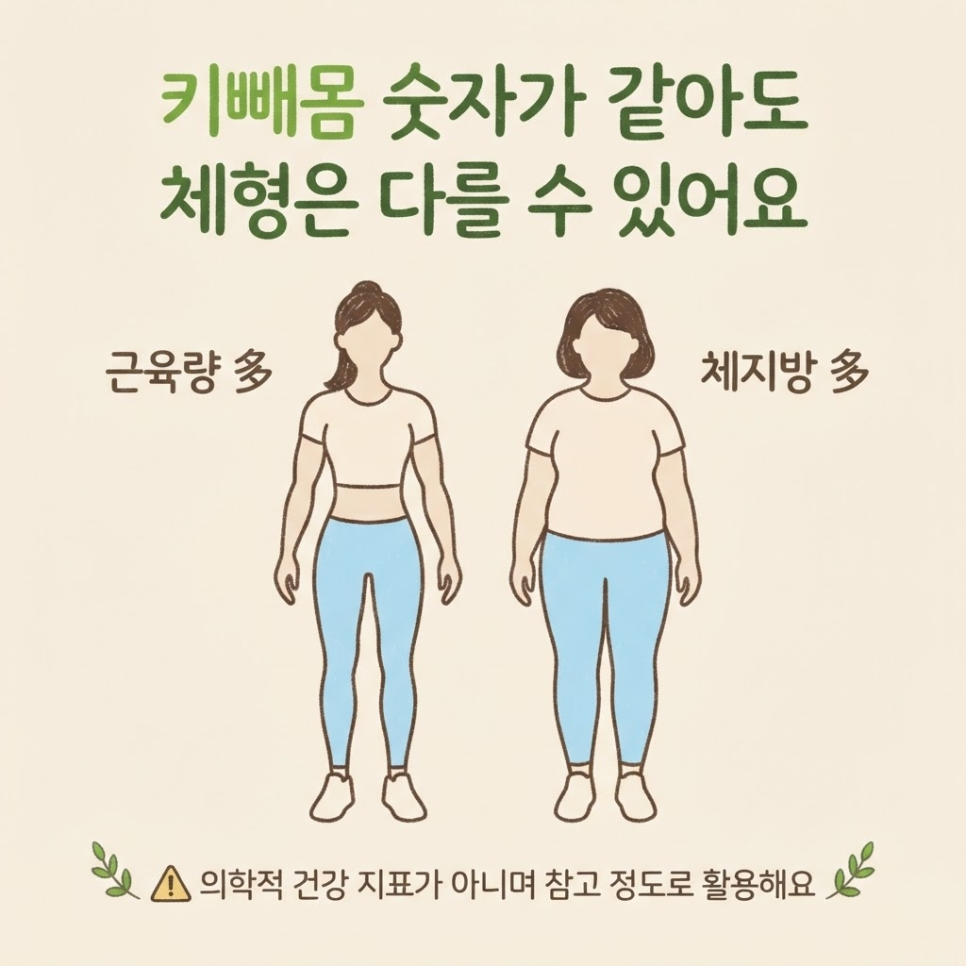
Even with the same height-minus-weight number, one person might have more muscle mass while another has a higher body fat ratio.
That means two people with similar weight and height can look noticeably different in body shape or how their clothes fit.
That’s why it’s best to treat the height-minus-weight number as a rough reference only, and check your normal body fat percentage and muscle mass alongside it.

✅ Don’t fixate too much on the number on the scale
✅ Feel free to calculate your height-minus-weight number, but treat it only as a reference
✅ Check your normal body fat percentage and muscle mass together
✅ Look at overall body composition changes, not just body weight
How Can You Manage Body Fat and Muscle Mass in a Healthy Way?
To get straight to the point, maintaining muscle mass while managing body fat — rather than cutting fat at all costs — is key to healthy body composition management.
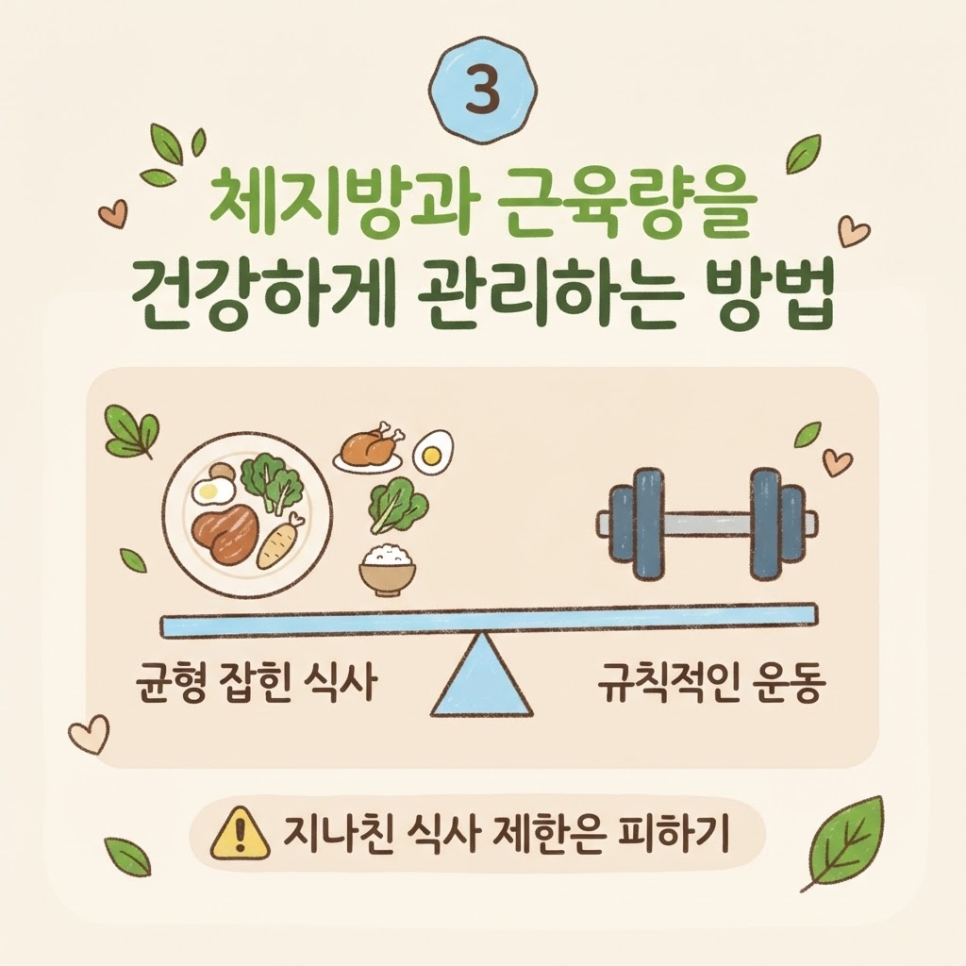
Repeatedly following extreme low-calorie diets can cause you to lose muscle mass along with body weight, so it’s important to be careful.
When eating, aim for a balanced intake of protein, vegetables, and carbohydrates suited to your individual needs, and avoid overly restrictive eating.
You can also find more information on balanced nutrition management at the Kookmin Bio homepage.
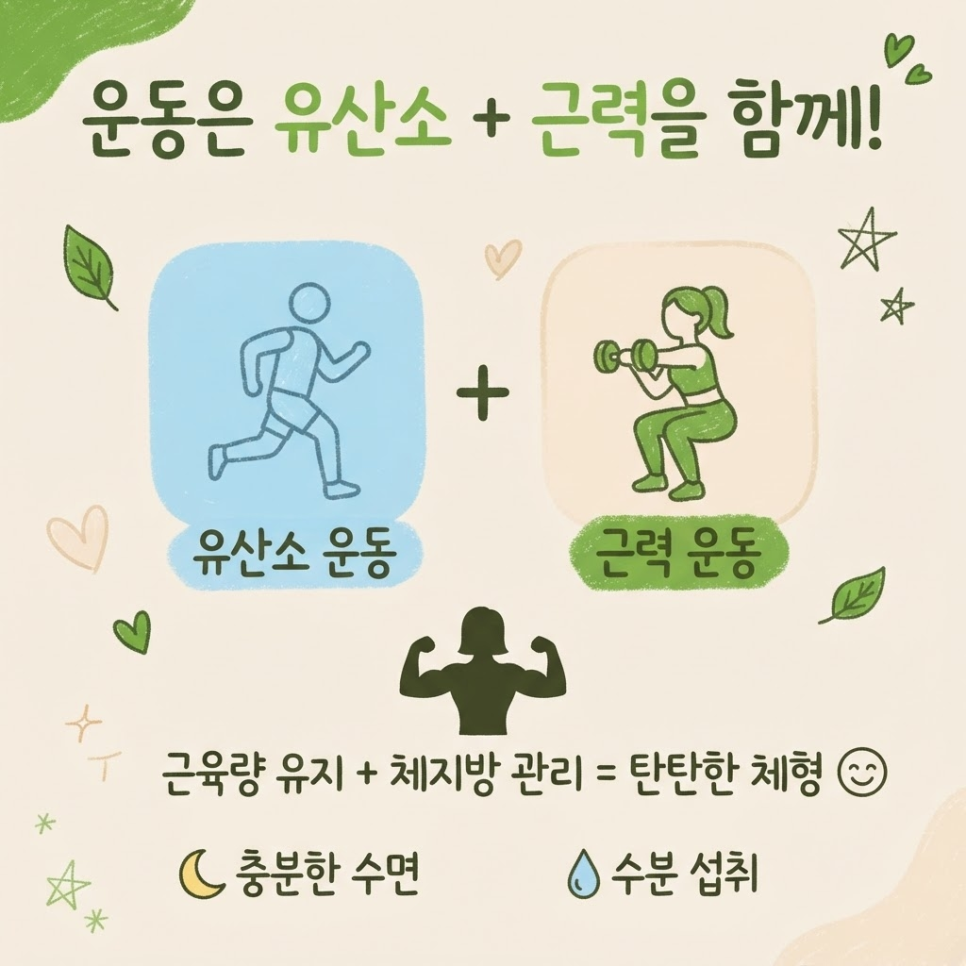
When it comes to exercise, try pairing cardio with strength training, like squats, rather than focusing on cardio alone.
Maintaining muscle mass while managing body fat may help you build a firmer, more toned shape even at the same height-minus-weight number.
Don’t forget the basics either, like getting enough sleep and staying hydrated.
Ultimately, managing your normal body fat percentage isn’t about rapidly lowering a number in a short period of time — what matters is building habits you can sustain long-term.

A balanced diet and regular exercise may help you manage your normal body fat percentage in a healthy way.
Choose a method you can maintain consistently, rather than chasing short-term weight changes.
Frequently Asked Questions
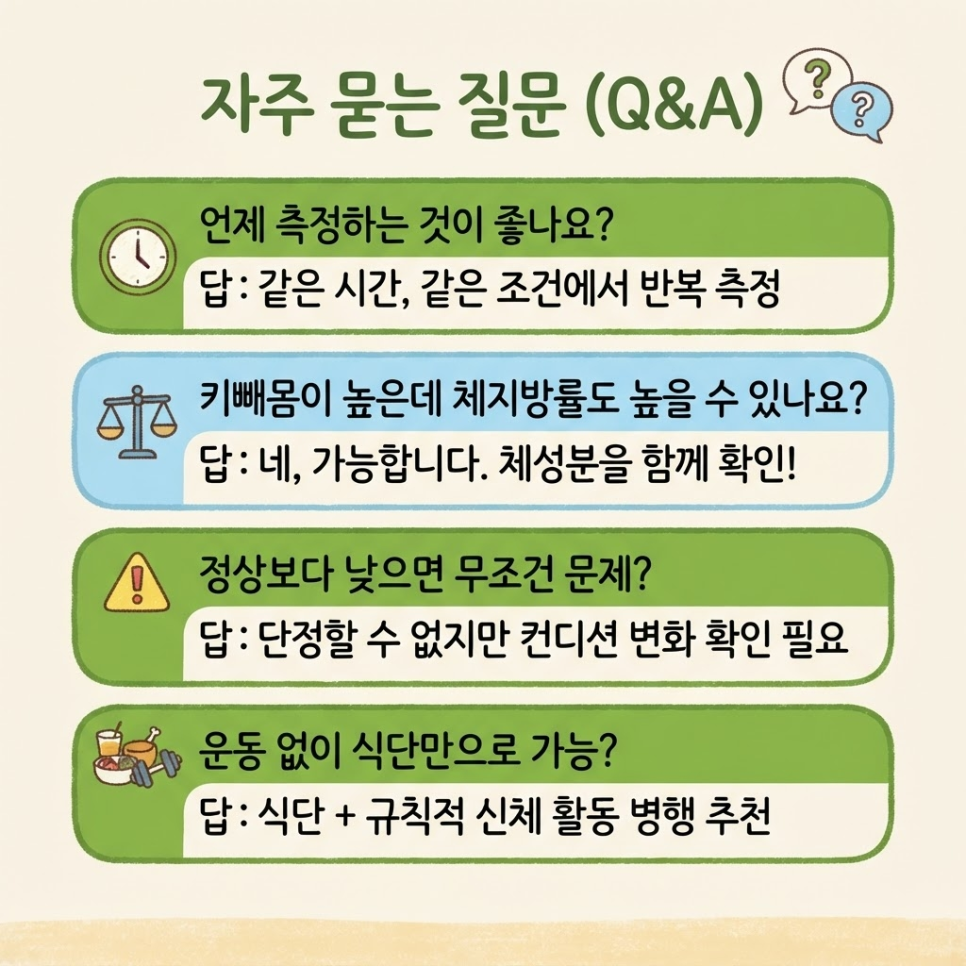
1. When is the best time to measure normal body fat percentage for women?
Body composition results can vary depending on food intake, hydration, and recent exercise. If you want to compare changes over time, it’s best to measure repeatedly under similar conditions and at similar times.
2. Can body fat percentage still be high even if the height-minus-weight number is high?
Yes, that’s possible. Even with a lower body weight, if muscle mass is low and body fat ratio is relatively high, the height-minus-weight number alone won’t reveal this. That’s why it’s important to check body composition alongside body weight.
3. Is it automatically a problem if body fat percentage is below the normal range for women?
Body fat percentage alone can’t determine your overall health status. That said, if body fat becomes too low and you notice changes in your menstrual cycle or a decline in how you feel, it’s worth having your health status checked.
4. Can I manage normal body fat percentage for women through diet alone, without exercise?
Diet management is important for weight and body fat control, but regular physical activity also matters for maintaining muscle mass. Pairing strength training suited to your fitness level can help support healthy body composition.
References
· Seoul Asan Hospital, “Body Fat Imbalance,” Seoul Asan Hospital Health Information. Read more
· American Council on Exercise (ACE), “Body Fat Percentage Charting: Averages in Men and Women,” ACE Fitness. Read more
This article is intended for general health information purposes only and is not a substitute for individual diagnosis or treatment. If you have health concerns, please consult a medical professional.