You’ve probably heard that probiotics should always be taken on an empty stomach.
Maybe you’ve worried that taking them after a meal means stomach acid will kill them all off.
But there’s a type of probiotic that’s relatively resistant to stomach acid, so you can comfortably take it after meals too.
That’s postbiotic probiotics.
In this article, we’ll break down how postbiotic probiotics differ from traditional live-strain probiotics,
why they’re often called 4th-generation probiotics,
and what to look for when choosing a heat-killed probiotic supplement you can take after meals.
What Are Postbiotic Probiotics?
Postbiotic probiotics refer not to live bacteria themselves, but to a concept centered on the metabolites and inactivated (heat-killed) cells that bacteria produce.
In a 2021 consensus statement, the International Scientific Association for Probiotics and Prebiotics (ISAPP)
defined postbiotics as “a preparation of inanimate microorganisms and/or their components that confers a health benefit on the host.”
I used to think all probiotics were pretty much the same.
But after looking into it, I found that the biggest difference is that heat-killed (postbiotic) forms don’t carry out metabolic activity,
which makes them relatively more stable against heat and acid.
✔ Postbiotics is a concept that covers heat-killed cells (paraprobiotics) and the metabolites bacteria produce
✔ In 2021, ISAPP officially defined postbiotics as “inanimate microorganisms or their components”
✔ The term “4th-generation probiotics” is a helpful shorthand, not an official scientific classification
How Do Heat-Killed Probiotics Differ From Live Probiotics?
Heat-killed probiotics are fundamentally different in form from live probiotic strains.
Because of this, storage methods and how you take them often differ as well.
| Category | Live Probiotics | Postbiotics (Heat-Killed) |
|---|---|---|
| State of bacteria | Live bacteria | Inactivated cells or bacteria-derived components |
| Heat/stomach acid stability | Relatively lower | Relatively higher |
| Typical storage | Many products require refrigeration | Many products can be stored at room temperature |
| Timing of intake | Many products recommend an empty stomach | Relatively flexible, per product instructions |
✔ Because heat-killed cells don’t carry out metabolic activity, they tend to be relatively more stable during storage and distribution
✔ That said, whether a product can be taken “after meals” varies by product, so always check the label
What Is Postbiotic Booster II?
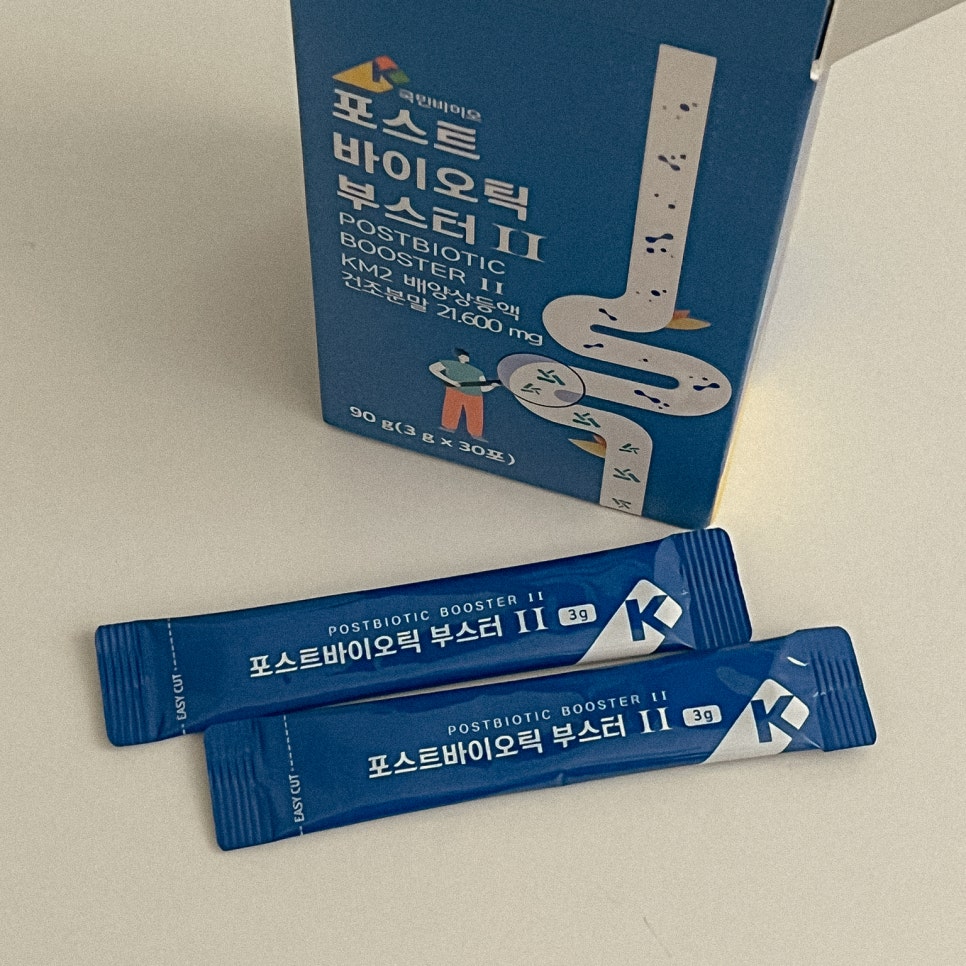
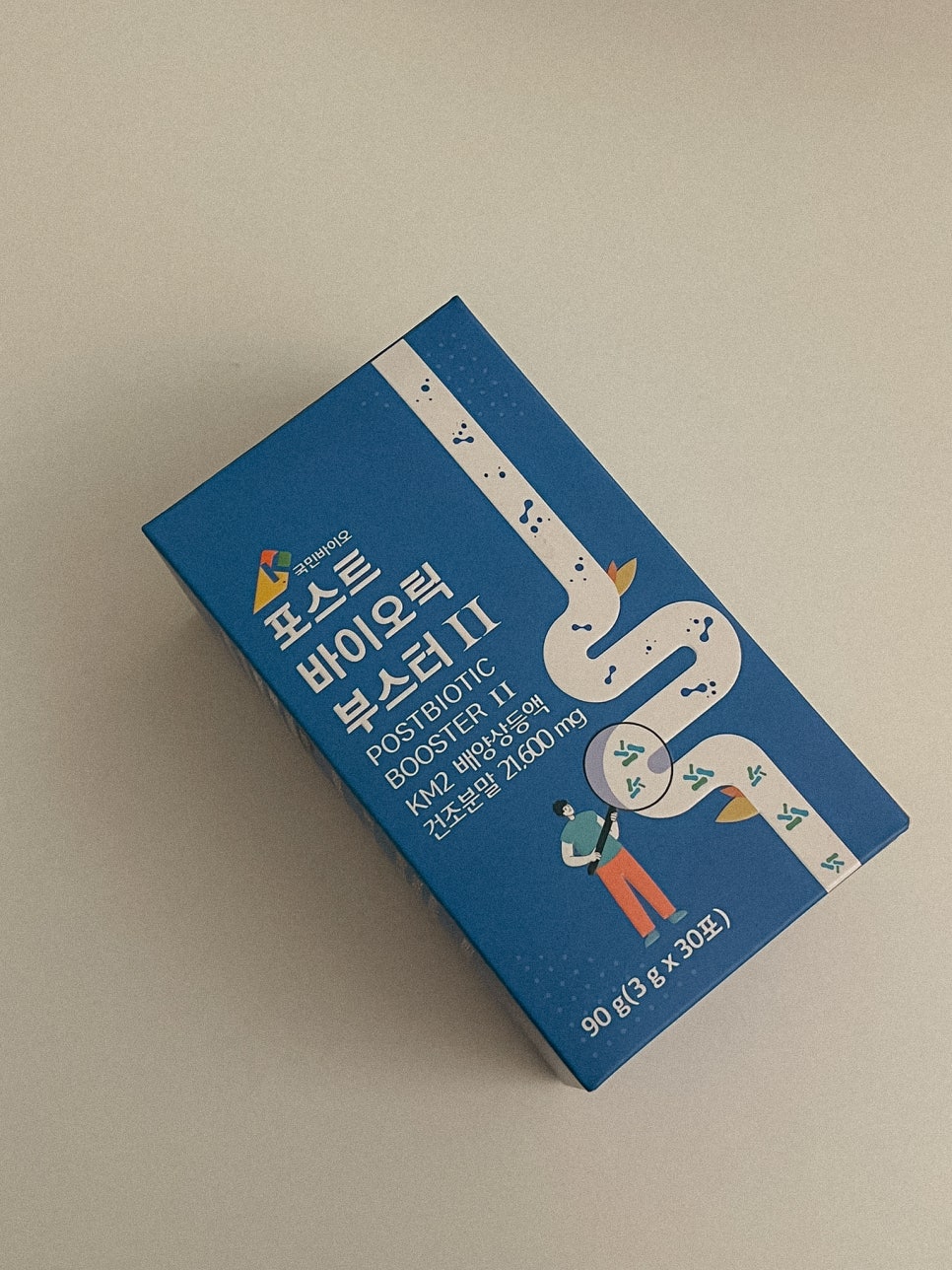
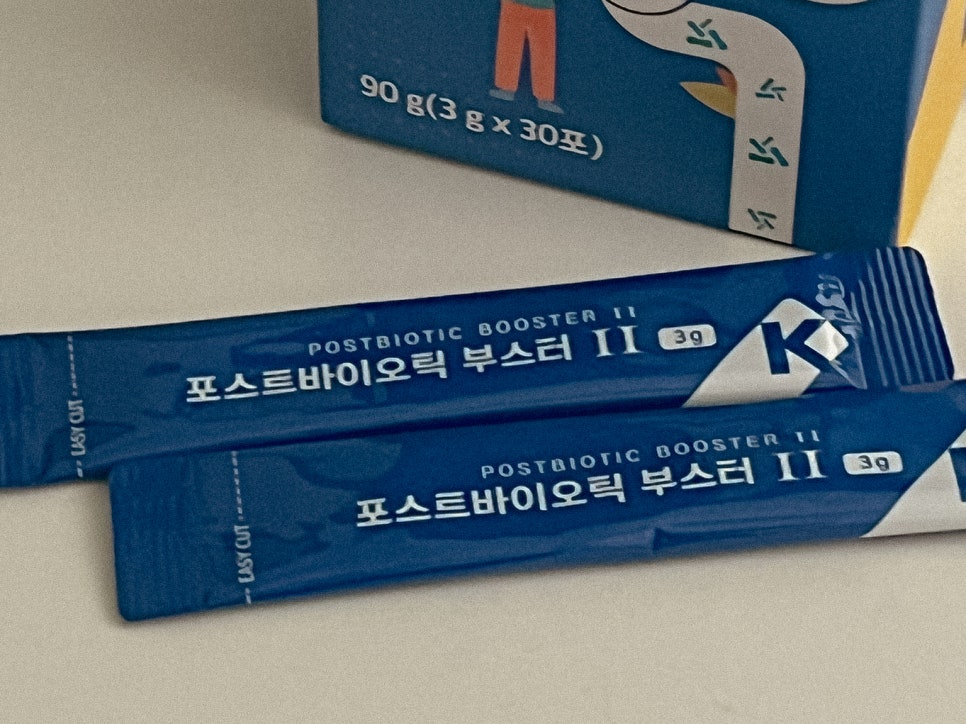
The product I’ve been taking lately is Postbiotic Booster II from Kookmin Bio’s K-CARE line.
It’s built around domestic Socheongja soybean, combined with psyllium husk, dietary fiber, and heat-killed cells.
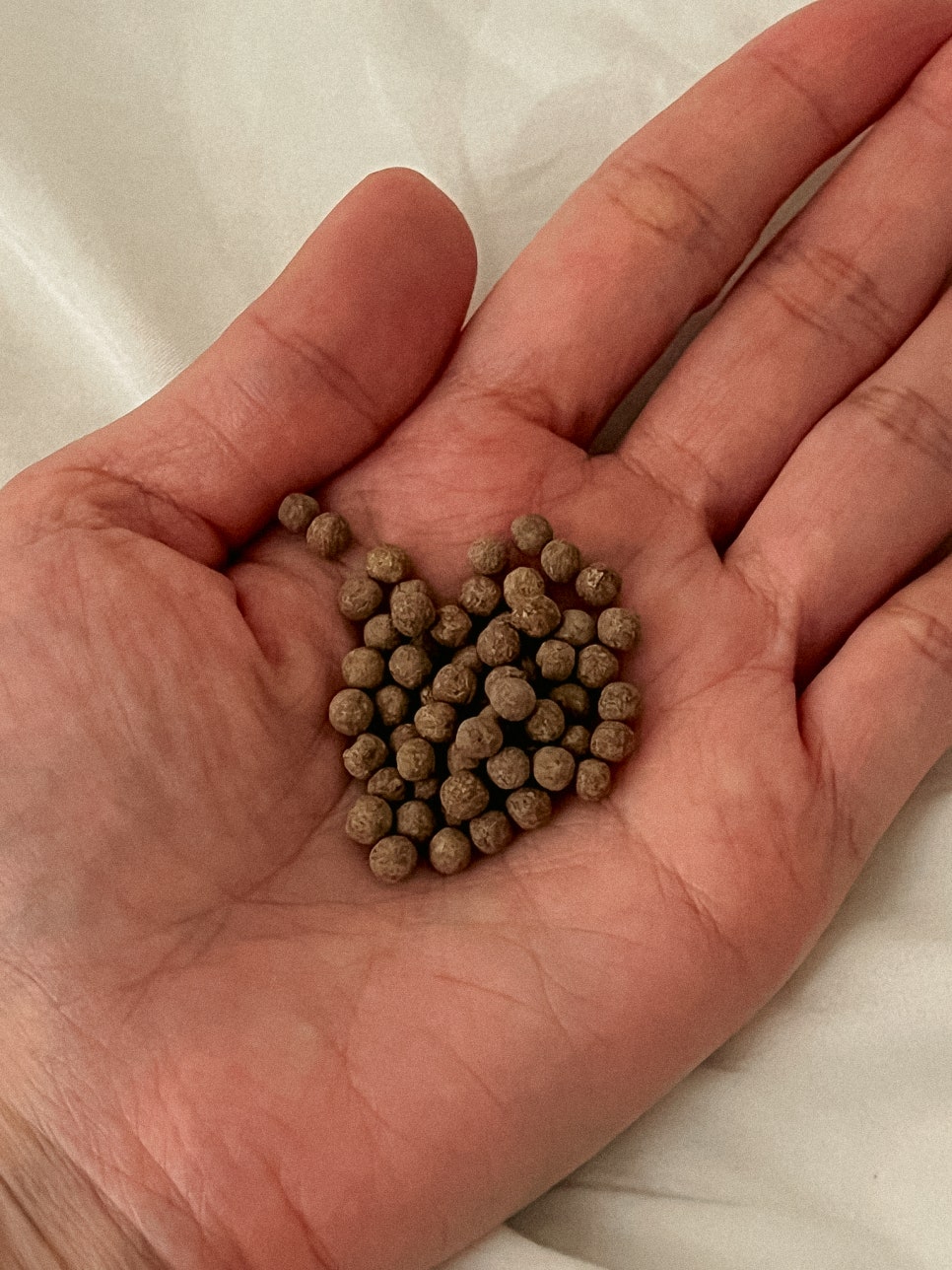
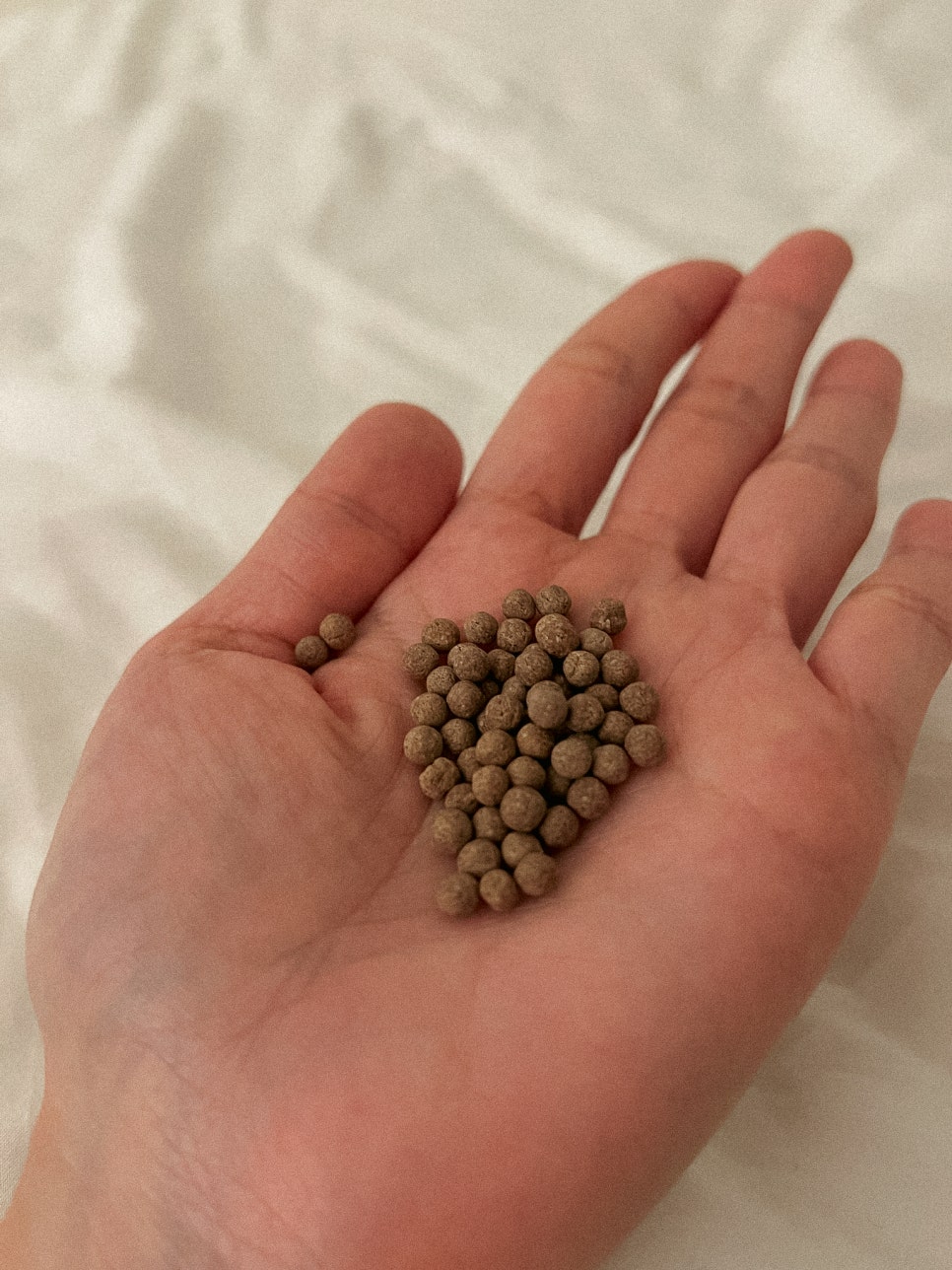
What I liked most was the small pill form, about 5mm in size.
There’s none of the chalky texture you get with powdered probiotics — you just swallow it with water, which feels much cleaner.
It also has 0g of sugar, which is worth noting if you’re watching your daily sugar intake.
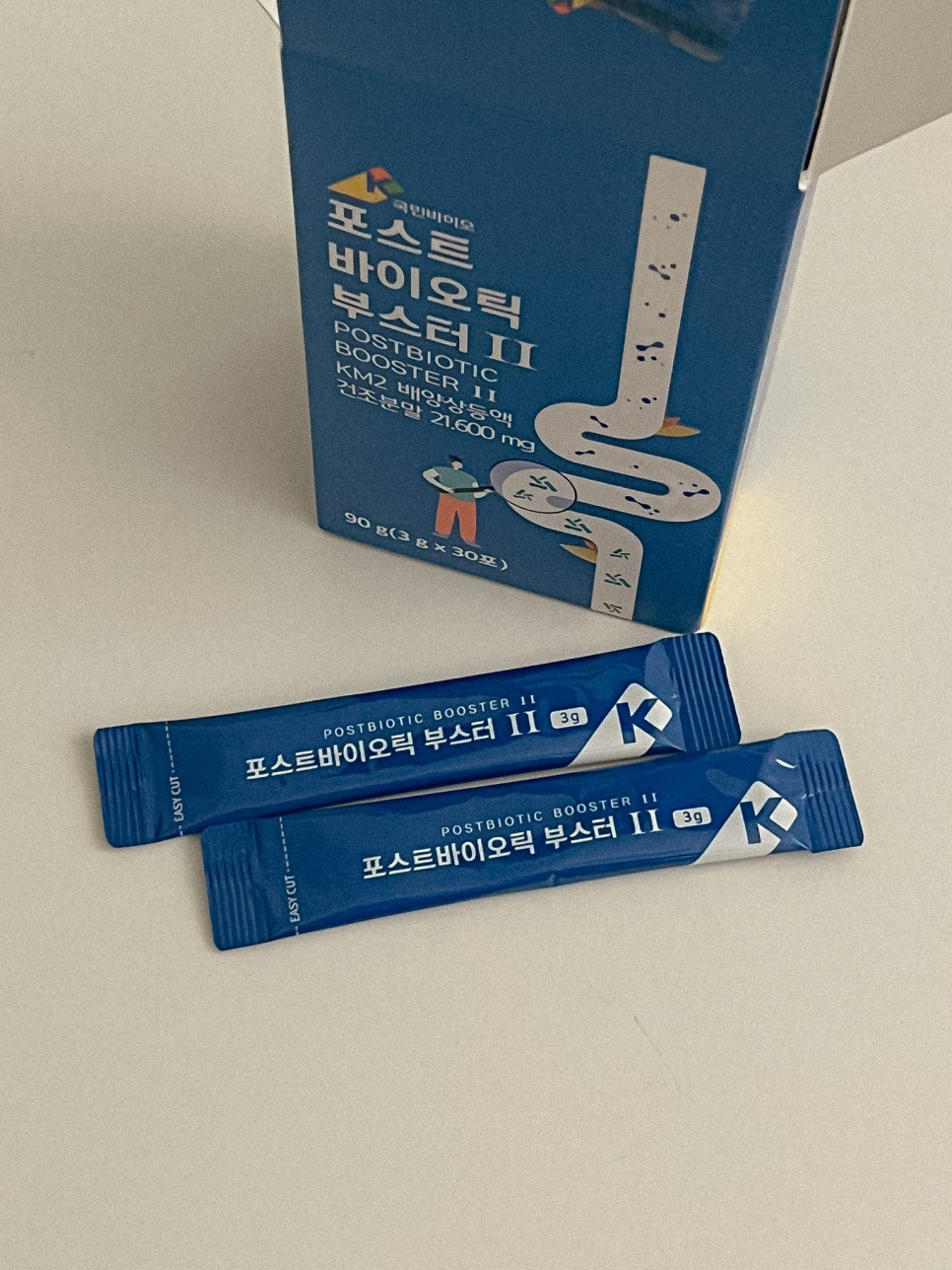
✅ Whether it uses domestic Socheongja soybean
✅ Whether it contains psyllium husk and dietary fiber
✅ Whether it contains heat-killed cells
✅ Sugar content (is it low-sugar?)
✅ Whether it’s a pill or a powder
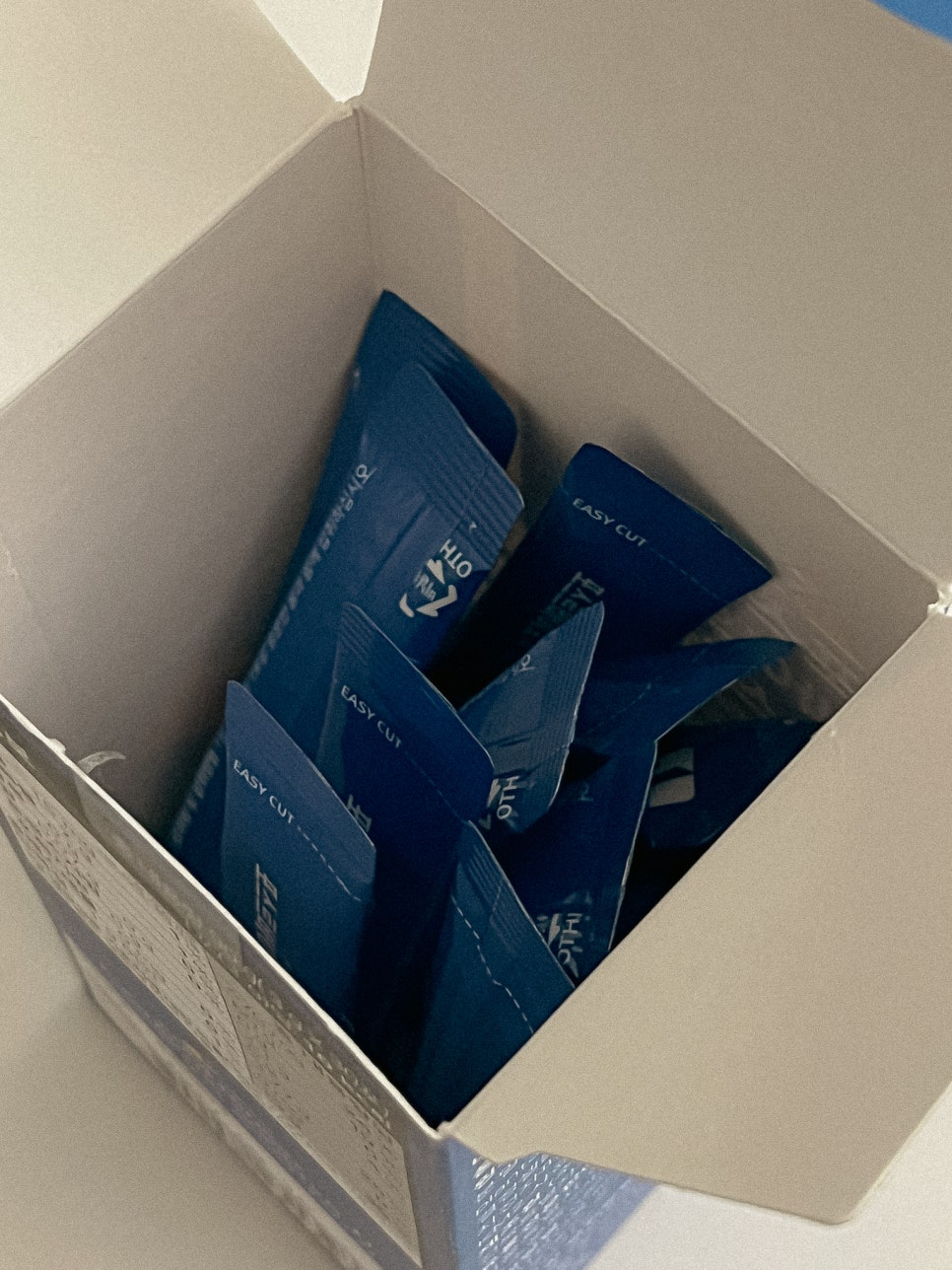
✅ Whether it comes in individually packaged sticks (for portability)
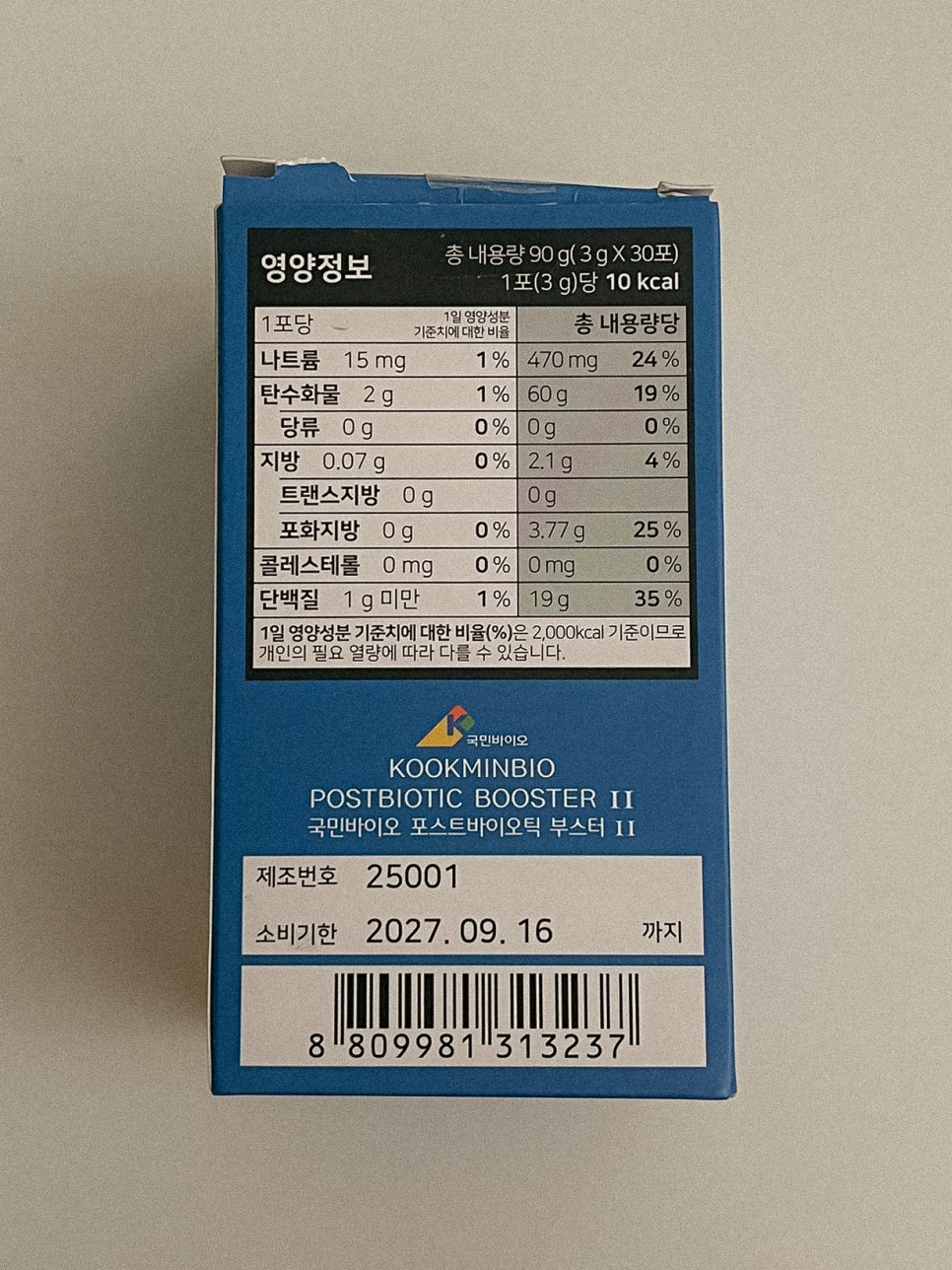
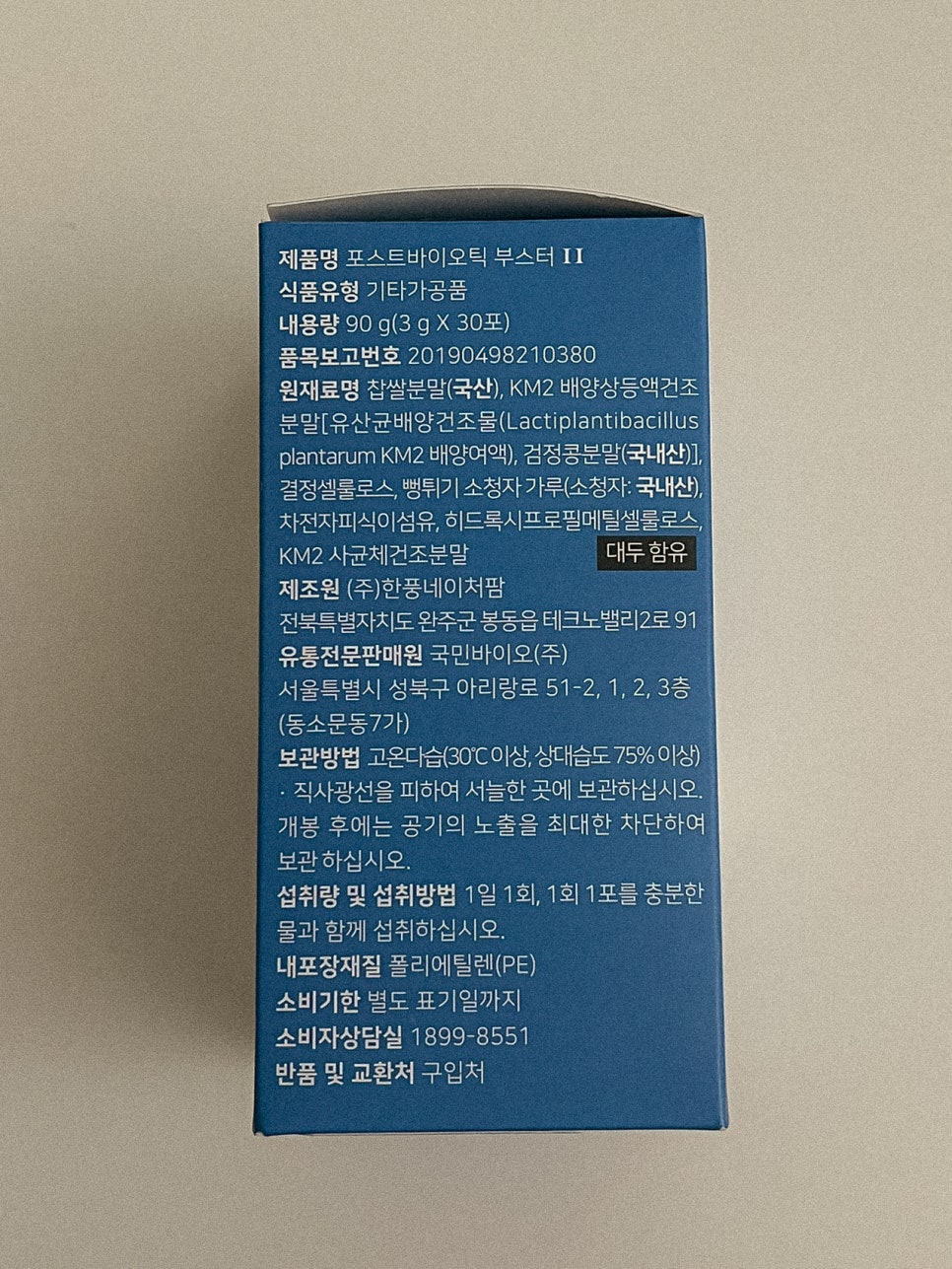
| Nutrition Facts (per 3g stick) | Amount / Notes |
|---|---|
| Calories | Low-calorie |
| Carbohydrates | About 2g (includes dietary fiber) |
| Sugars | 0g (Low-Sugar) |
| Key ingredients | Socheongja soybean, psyllium husk, heat-killed cells |
Is It Okay to Take 4th-Generation Probiotics After Meals?
Because heat-killed cells and metabolites behave differently from live bacteria, the most accurate approach is to check the intake instructions listed on each product.
Standard live-strain probiotics are often recommended on an empty stomach to reduce exposure to stomach acid.
Postbiotic probiotics tend to be relatively more flexible on this point.
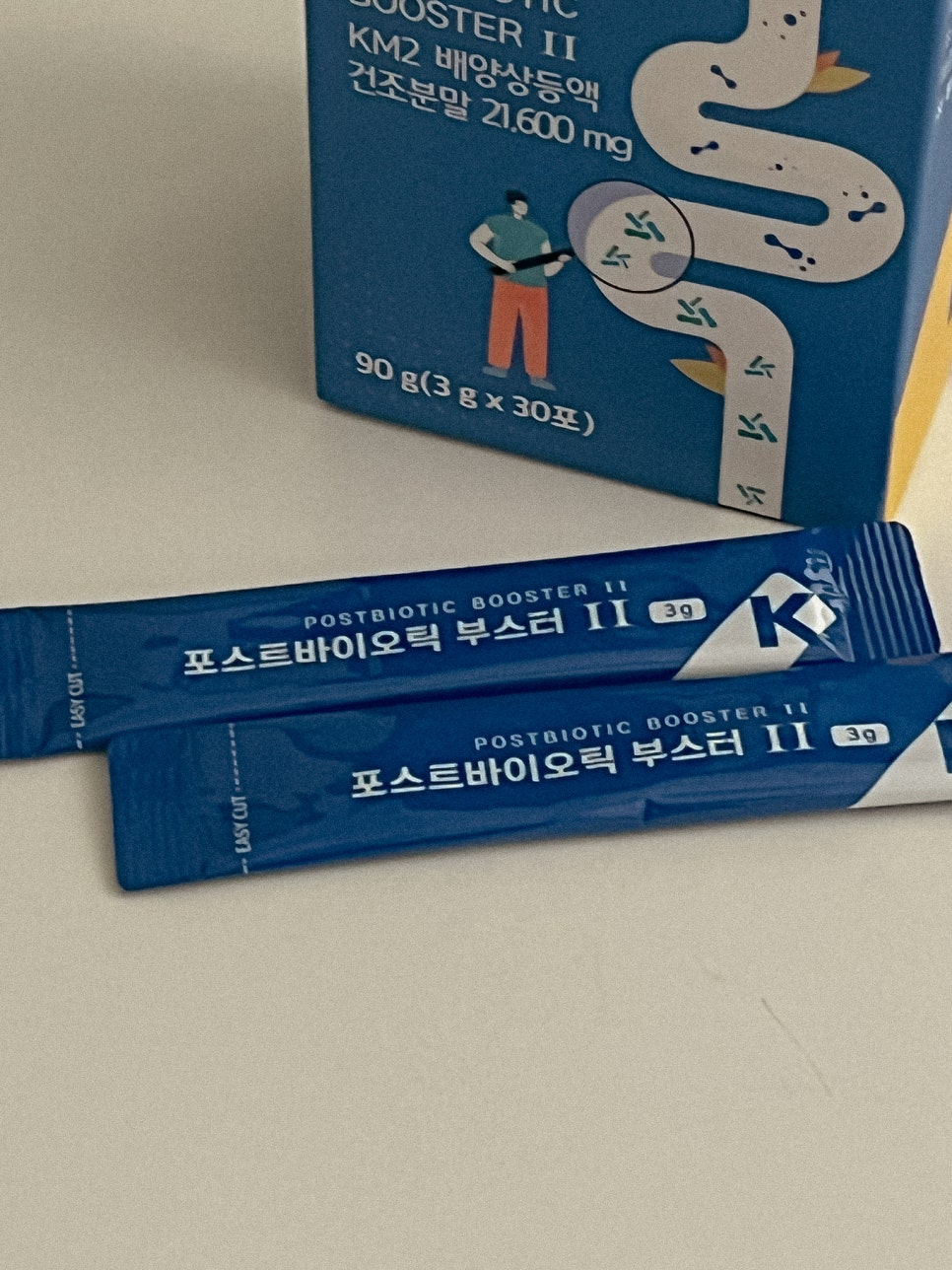
I used to forget to take my probiotics in the morning and end up eating breakfast first more often than not.
So I started looking for an option I could comfortably take after meals instead,
which is how I came across postbiotic probiotics.
In my own experience, taking it with water after a meal caused no issues at all.
If your product also contains psyllium husk and dietary fiber,
it’s a good idea to make sure you’re drinking enough water alongside it.

✔ Taking it after meals caused no noticeable discomfort
✔ The individually packaged sticks made it easy to carry and take on the go
· Timing and method of intake vary by product, so always check the label and intake instructions.
· This product is not intended to prevent or treat any specific disease, and individual results may vary.
Frequently Asked Questions
1. Can I take postbiotic probiotics after meals?
It’s most accurate to check the intake instructions for your specific product. Because heat-killed cells and metabolites behave differently from live bacteria, many such products can be taken after meals per their instructions.
2. Are heat-killed probiotics completely different from live probiotics?
Yes, heat-killed probiotics differ in form from live bacteria. That’s why it’s a good idea to check the ingredient composition and characteristics together when choosing a product.
3. Is “4th-generation probiotics” an official classification?
No. Postbiotics are often called 4th-generation probiotics to make them easier to understand, but this isn’t a formal scientific generational classification. What matters is checking the actual ingredients used.
4. Are postbiotic probiotics a health functional food?
This varies by product — some are classified as general foods, while others are officially recognized health functional foods. Be sure to check the food type listed on the product label before purchasing.
Since this is a probiotic you’ll be taking daily, ingredients matter — but I also find myself paying close attention to how easy it is to stick with long-term.
If you often forget to take probiotics before meals, or you’ve been looking for postbiotic probiotics that work differently from live-strain products,
I’d recommend looking beyond just the labels “4th-generation” or “heat-killed” and comparing the actual ingredients and form as well.
If you’d like to learn more about general probiotic intake guidelines or gut health management, you can find more information on the Kookmin Bio homepage.
References
· Salminen S. et al., “The International Scientific Association of Probiotics and Prebiotics (ISAPP) consensus statement on the definition and scope of postbiotics,” Nature Reviews Gastroenterology & Hepatology, 2021. View source
· Kim Hyun-ok, “[Close-Up] What Is the ‘4th-Generation Probiotic’ Postbiotics? Part 1: Defining the Term,” Foodicon, 2021. View source
· Kim Hyun-ok, “[Close-Up] What Is the ‘4th-Generation Probiotic’ Postbiotics? Part 2: The Benefits of Heat-Killed Cells,” Foodicon, 2021. View source
This article is intended for general health information purposes only and is not a substitute for individual diagnosis or treatment. If you have a health concern, please consult a medical professional.