Did you cut back on portions the moment you started your diet?
I did too.
I ate nothing but chicken breast and salad for weeks, and the number on the scale barely budged.
It turned out the problem wasn’t how much I was eating — it was that I didn’t know how to calculate daily protein intake for women correctly.
Once you know the right number for your own body weight, how fast your body changes can shift completely.
This guide breaks down the formula for daily protein intake for women by body weight, explains why your needs go up when you’re dieting or exercising, and shows you how to build a practical meal plan.
You’ll also find sample numbers for a 55kg (about 121 lb) woman and a chart of protein content in common foods.
How Do You Calculate Daily Protein Intake for Women?
The short answer: depending on your activity level, your protein needs range from 0.8g to as much as 2.0g per kilogram of body weight.
Calculating daily protein intake means figuring out how much protein you need each day based on your body weight and activity level.
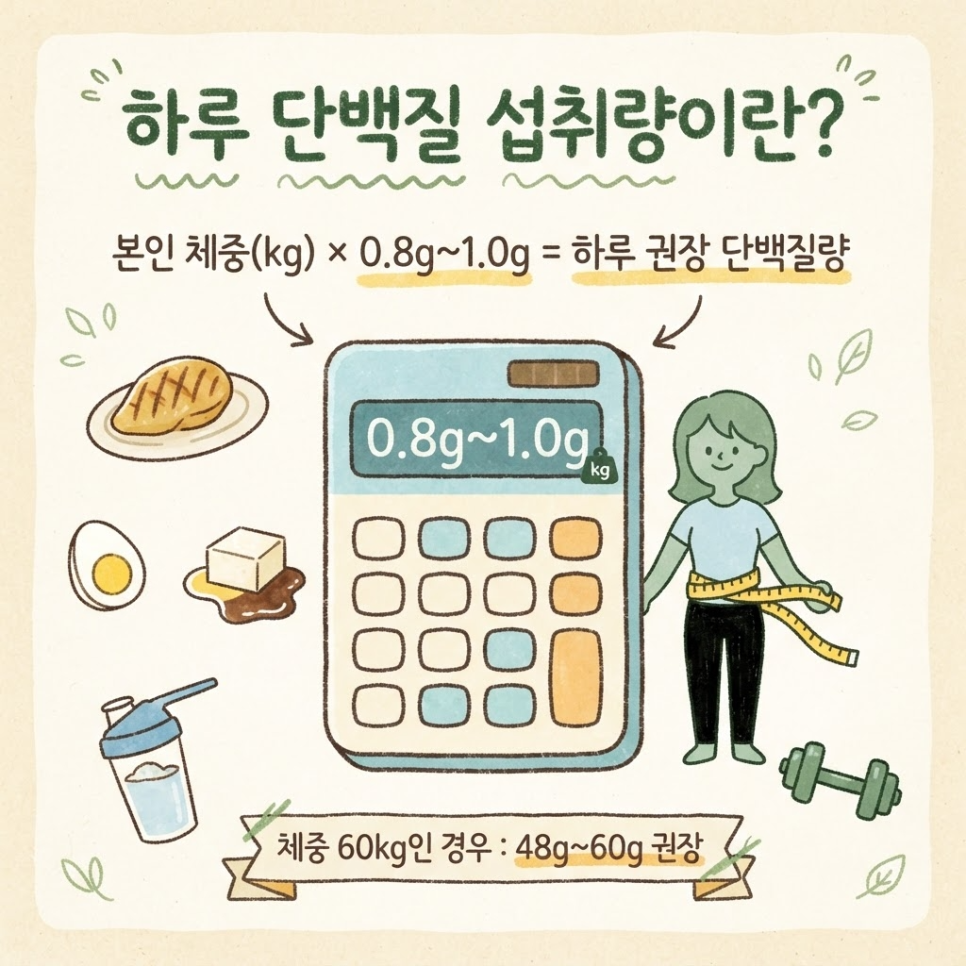
According to the 2020 Dietary Reference Intakes for Koreans, published by South Korea’s Ministry of Health and Welfare and the Korean Nutrition Society, the recommended protein intake for adults is about 0.91g per kilogram of body weight.
That figure is based on a typical, moderately active lifestyle.
But the picture changes once you cut calories to lose weight or add regular exercise.
When your body doesn’t have enough energy coming in, it tends to break down muscle protein first.
That’s why, when you calculate daily protein intake for women, you need to factor in both your goal and your exercise intensity.
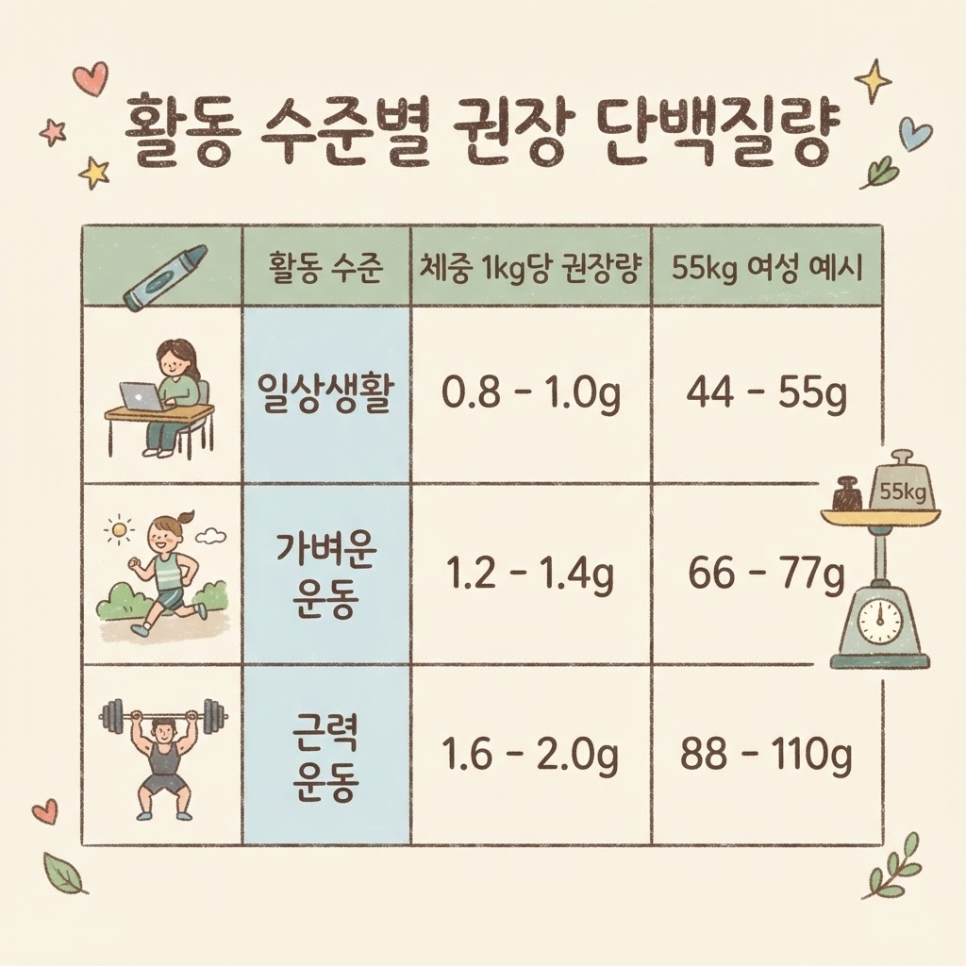
| Activity Level & Goal | Recommended Amount per kg of Body Weight | Example for a 55kg (121 lb) Woman |
|---|---|---|
| Sedentary (little to no exercise) | 0.8g ~ 1.0g | About 44g ~ 55g |
| Light exercise & cardio (general guideline) | 1.2g ~ 1.4g | About 66g ~ 77g |
| Strength training & high-intensity exercise | 1.4g ~ 2.0g | About 77g ~ 110g |
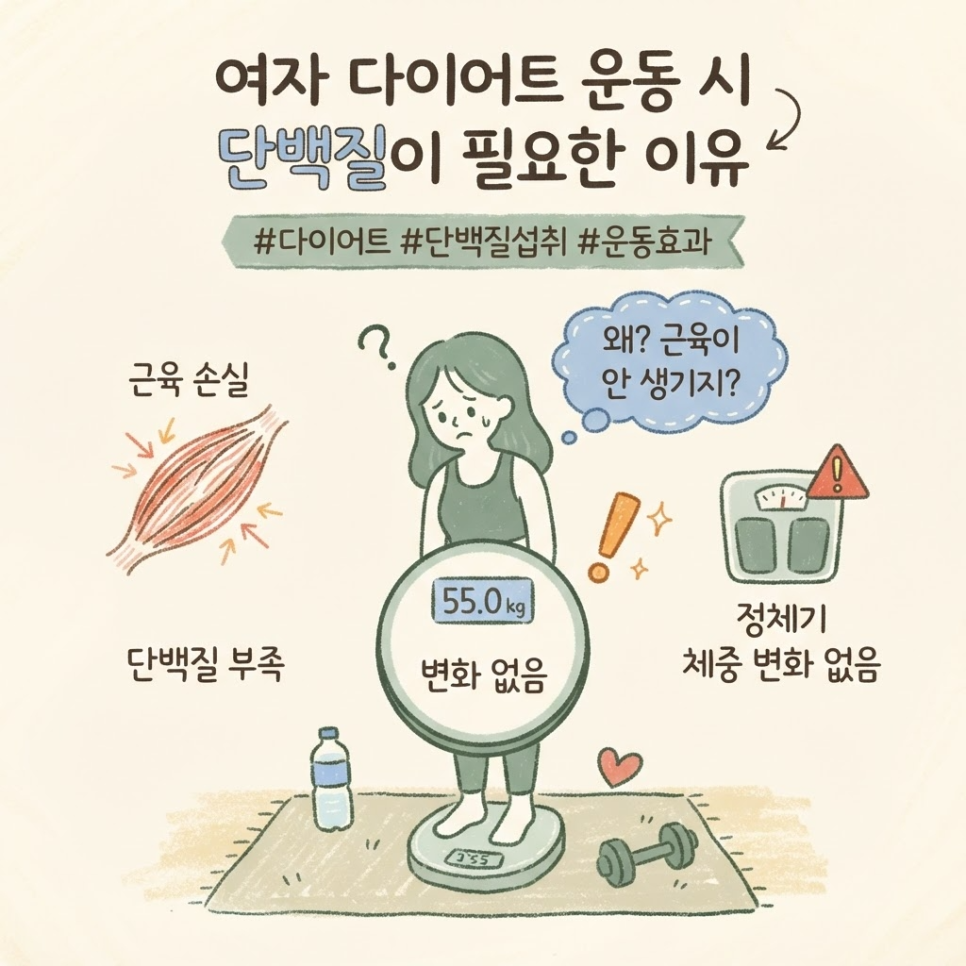
✔ For a typical sedentary lifestyle, the recommended intake is about 0.91g per kilogram of body weight.
✔ If you’re strength training, aim for 1.4g~2.0g per kilogram to help prevent muscle loss.
Eating more protein doesn’t automatically mean more muscle.
Once you go beyond what your body can use at one time, the extra protein may be stored as fat — so it’s worth measuring your intake based on your own body weight rather than guessing.
Why Do You Need More Protein When You Exercise While Dieting?
In short, not getting enough protein can lead to muscle loss and a drop in basal metabolic rate at the same time.
Protein is the key nutrient that repairs muscle fibers damaged during exercise and helps maintain muscle mass.
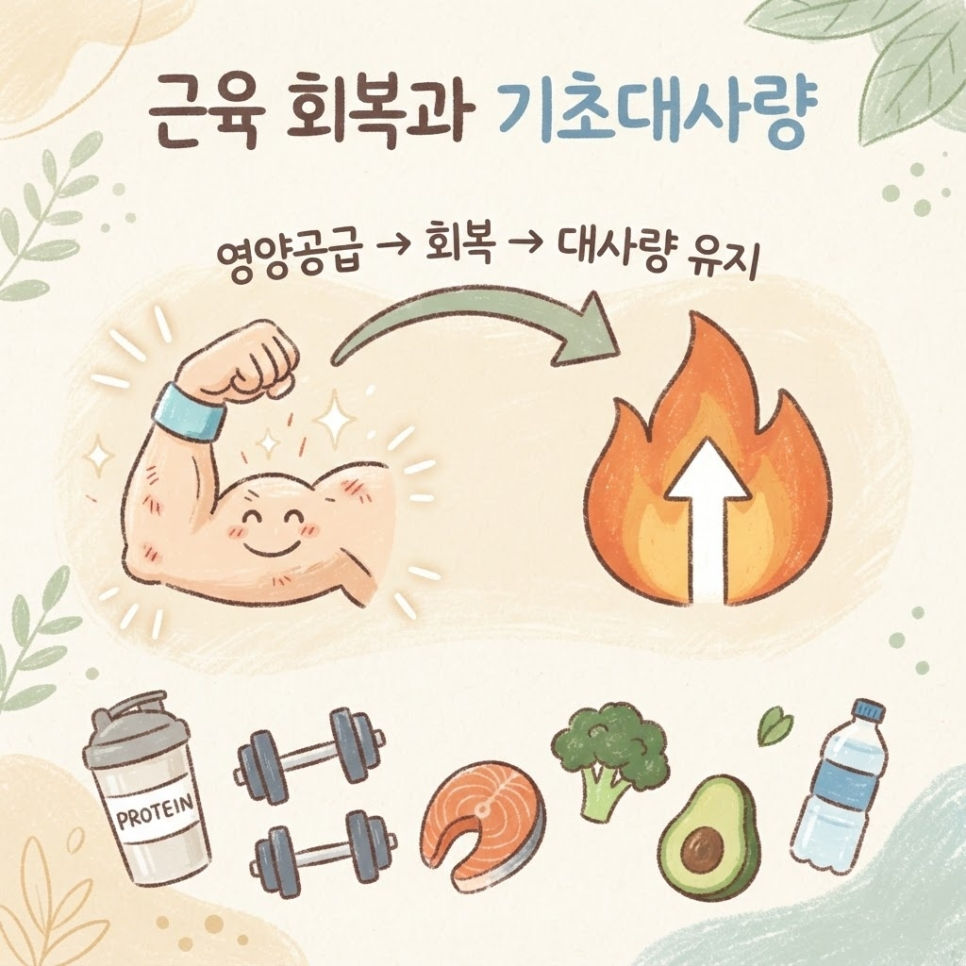
Exercise creates tiny amounts of damage in your muscle fibers.
Getting enough protein at that point allows the damaged tissue to repair and helps build a firmer, more toned body.
But when you’re not eating enough overall while dieting, your basal metabolic rate tends to drop too.
A lower metabolic rate means you gain weight more easily even when eating the same amount, which can set off a cycle that often ends in weight regain (the so-called \”yo-yo effect\”).
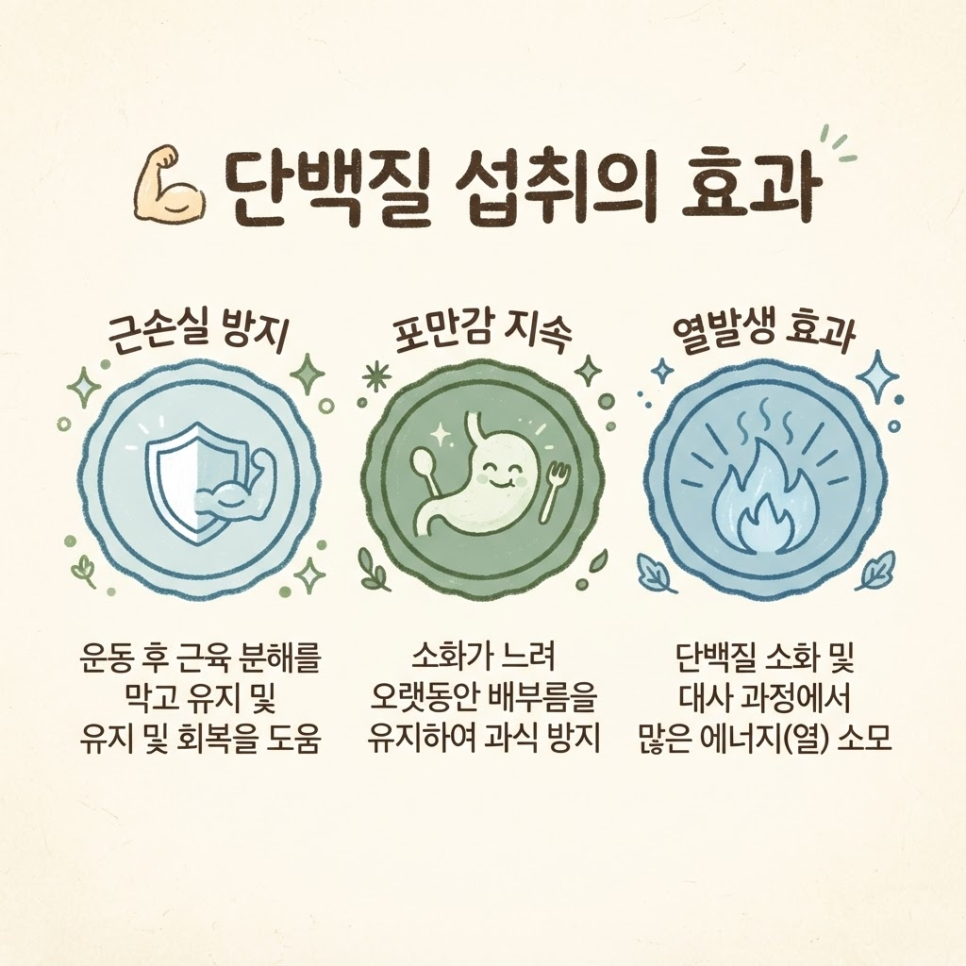
✅ Helps prevent muscle loss and maintain basal metabolic rate
✅ Keeps you fuller longer, making appetite easier to manage
✅ Supports metabolism through the thermic effect of food (TEF)
✅ Best spread evenly across three meals a day
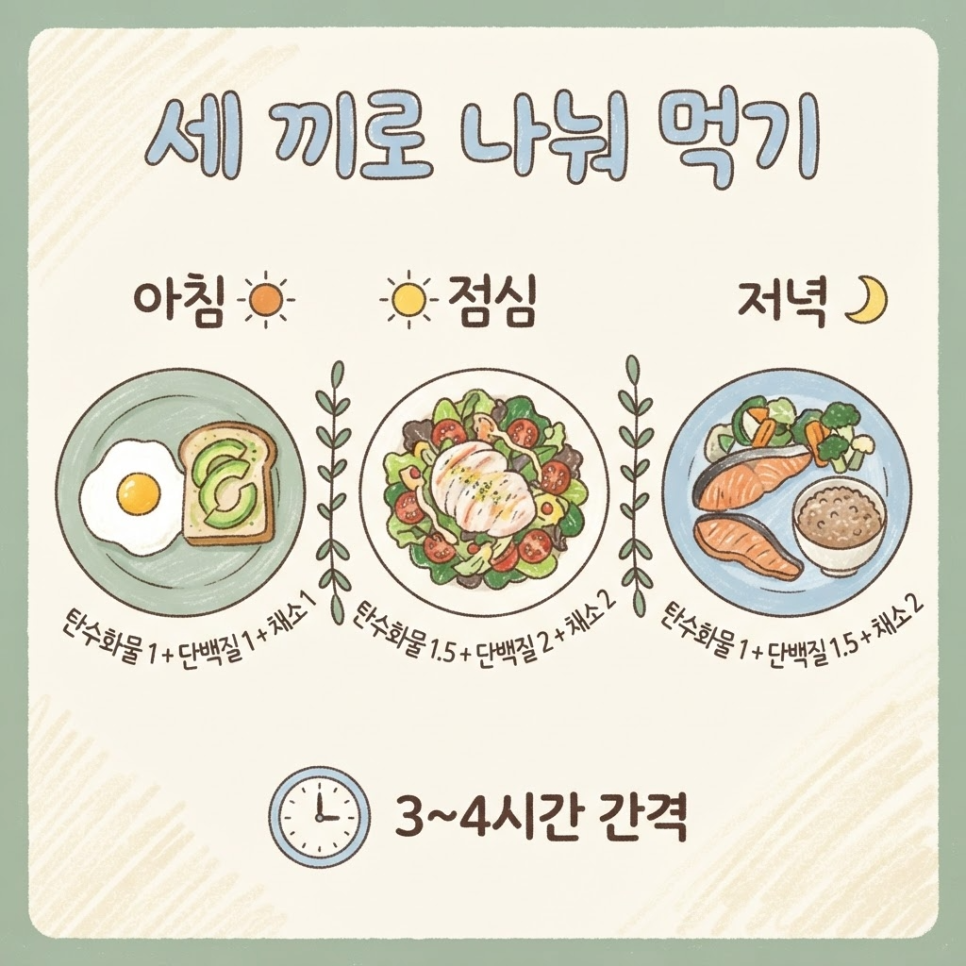
On top of that, spreading protein across three meals tends to be better for absorption than loading it all into one sitting.
Eating a large amount all at once can just leave you feeling bloated while the proportion your body actually uses drops.
We’d recommend dividing your intake evenly across breakfast, lunch, and dinner.
How Do You Hit Your Daily Protein Goal With Real Food?
The bottom line: calculate based on actual protein content, not the total weight of the food.
A protein-rich meal plan means building your daily target from a variety of ingredients — chicken breast, eggs, tofu, and more.
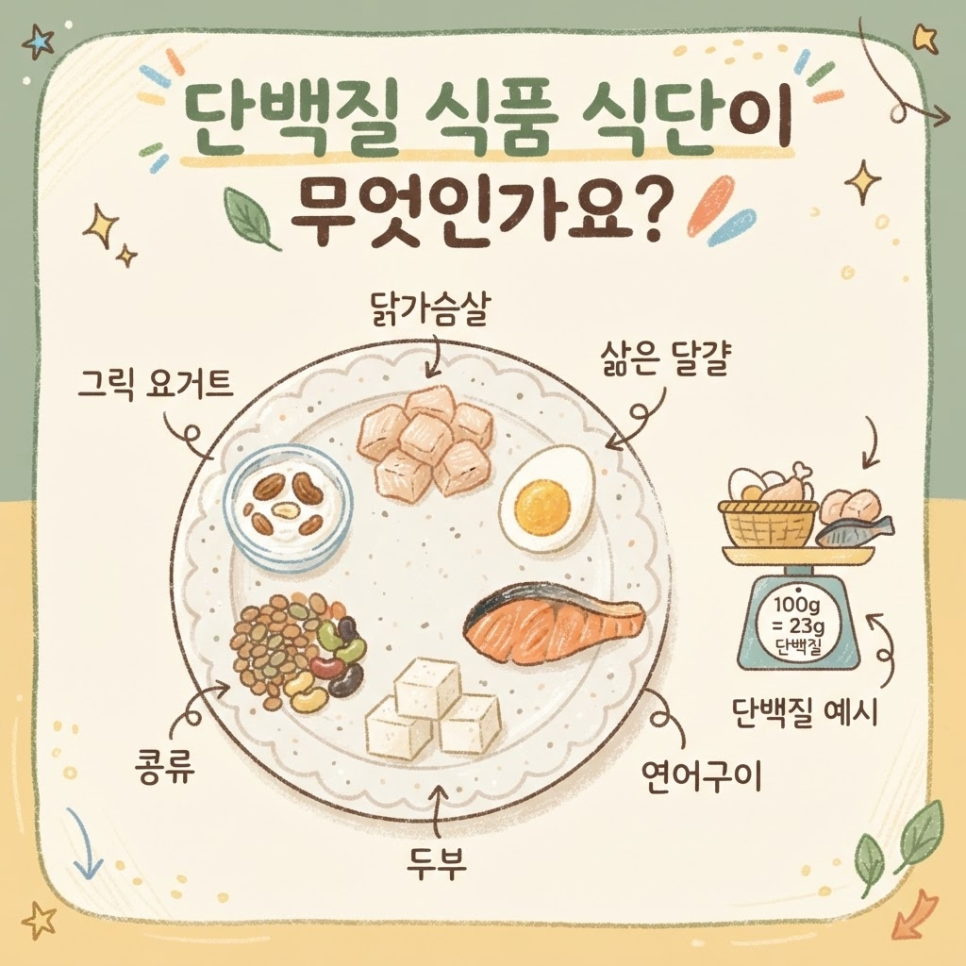
When people actually run the numbers, it’s common to mix up food weight with protein content.
For example, 100g of raw chicken breast contains about 23g of actual protein.
According to South Korea’s Ministry of Food and Drug Safety food nutrition database, raw chicken breast comes in at about 22.97g of protein per 100g.
Keep in mind that boiling or grilling removes moisture, so the protein content per 100g can look higher after cooking — it’s worth factoring in whether the food is raw or cooked.
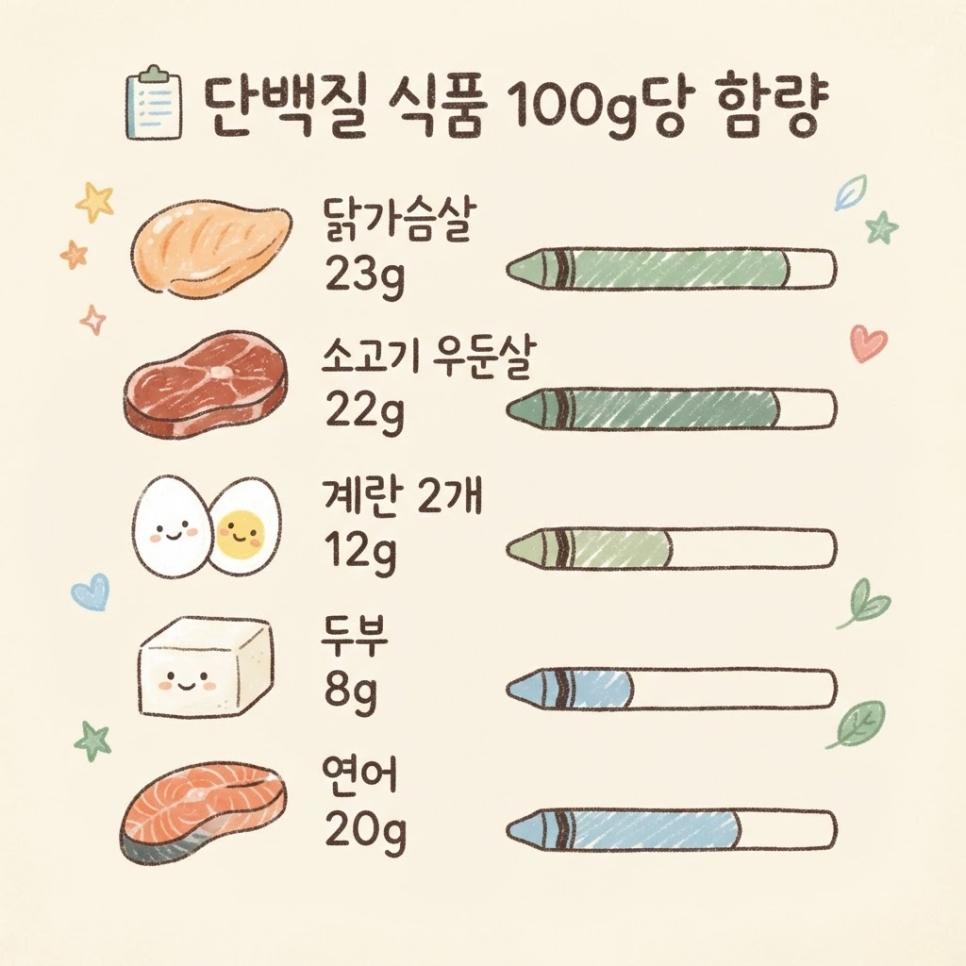
✅ Chicken breast (raw): about 23g
✅ Beef eye of round: about 22g
✅ 2 eggs (about 100g): about 12g
✅ Tofu: about 8g
✅ Salmon: about 20g
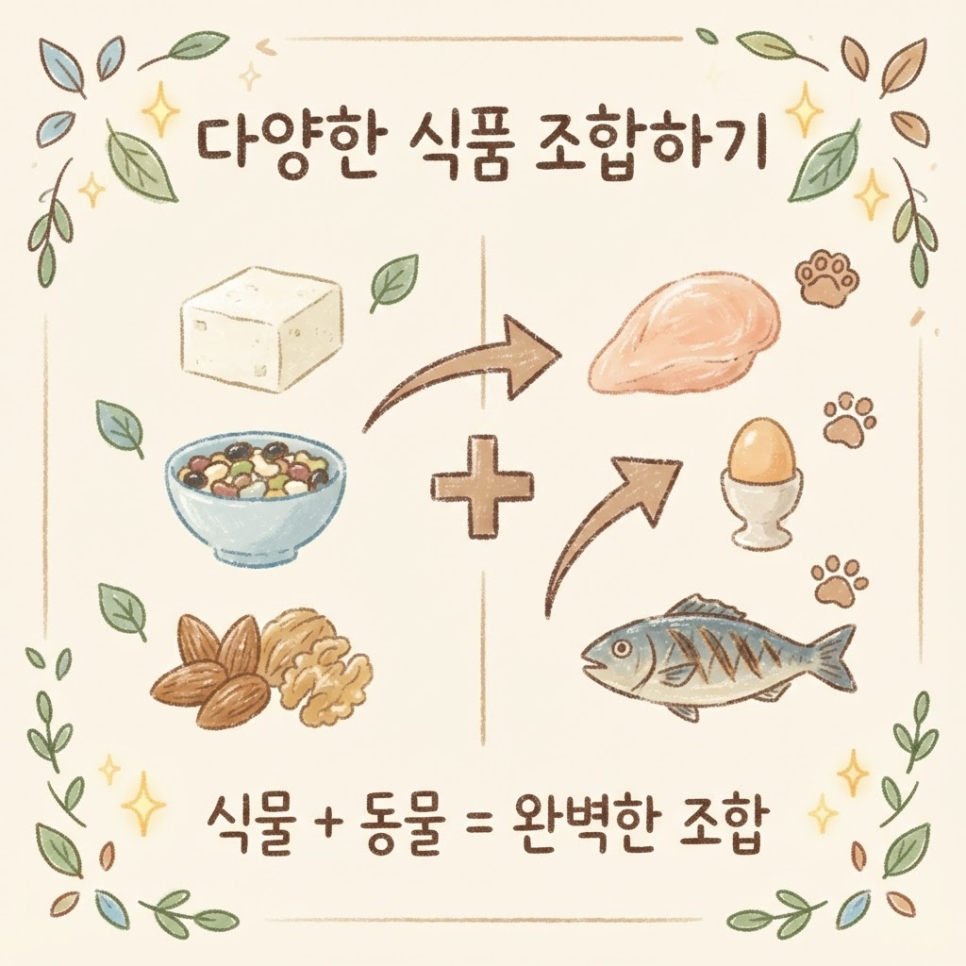
For a successful diet, combining a mix of animal and plant-based protein sources — rather than relying on just one — tends to be more favorable for absorption.
It also helps to have something easy to digest within about 30 minutes after exercise to support recovery.
If fitting all of this in every day feels like a hassle, looking into products with verified ingredients is one option — you can check related information on the Kookmin Bio homepage.
Frequently Asked Questions
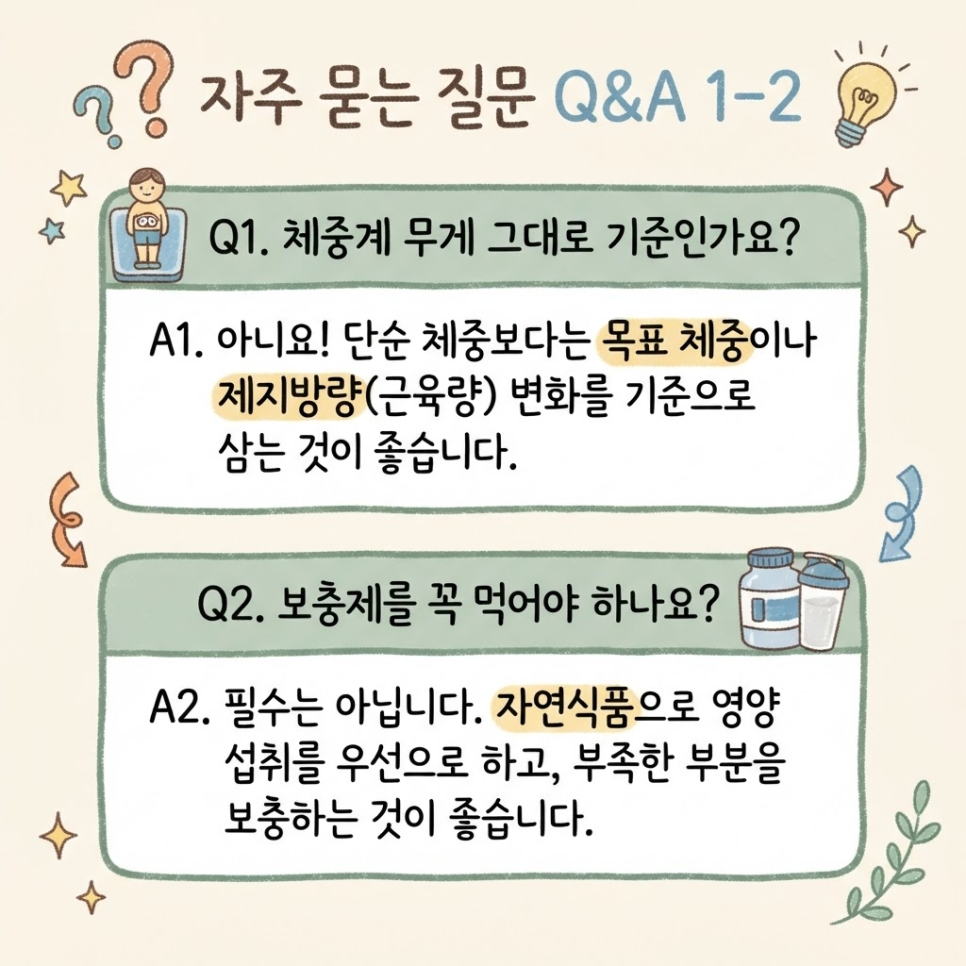
1. Should you always calculate daily protein intake for women based on current body weight?
Usually yes, current body weight is the baseline — but if body fat percentage is high, it’s more accurate to calculate based on goal weight or lean body mass (body weight minus body fat).
2. Do you have to take a protein supplement while dieting?
Not necessarily. If you can hit your target with everyday foods like chicken breast, eggs, tofu, and fish, getting most of your protein from whole foods is generally best. Supplements can be a helpful backup when you’re short on time.
3. Should you keep up your protein intake on rest days too?
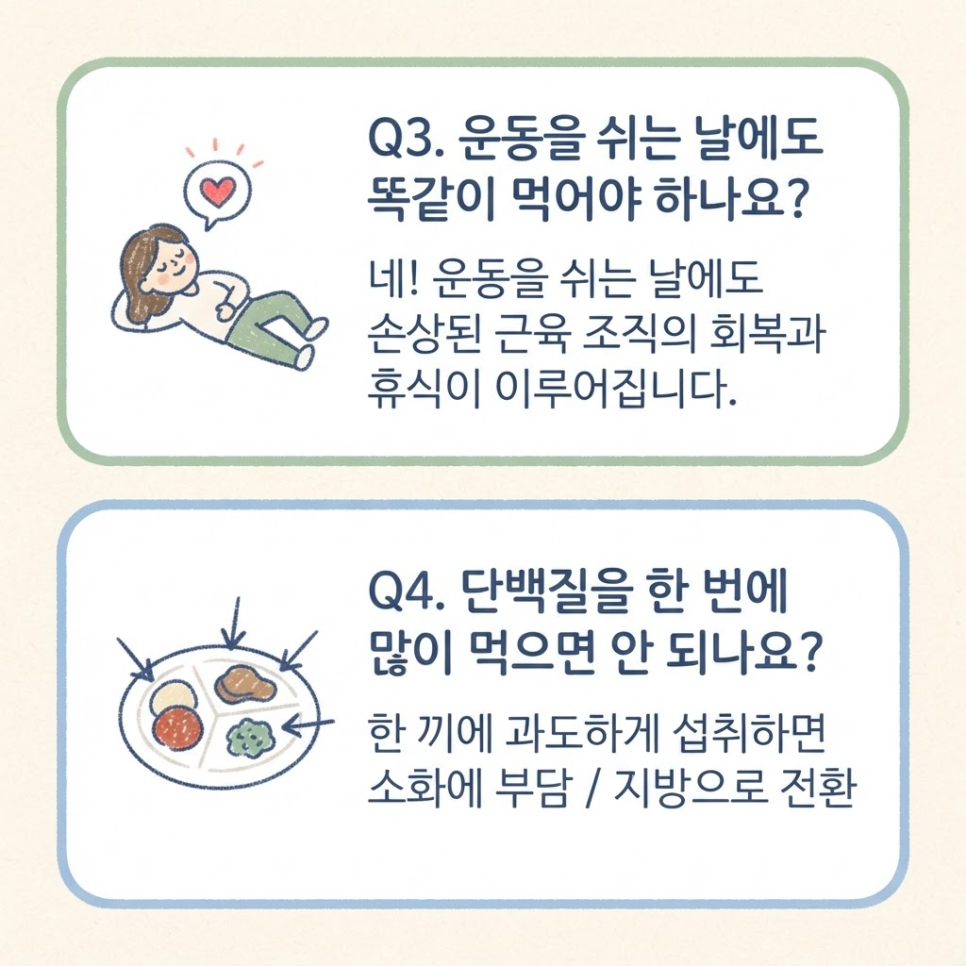
Yes — muscle tissue continues to repair itself even on days you don’t work out. So it’s a good idea to stick with your usual calculated amount on rest days as well.
4. Is it a problem to eat all your protein in one meal?
There’s a limit to how much protein your body can absorb and use at once. Eating too much in a single meal can strain digestion, and the excess may be converted to fat, so it’s recommended to spread your intake out in 3~4 hour intervals.
References
· Ministry of Health and Welfare & The Korean Nutrition Society, \”2020 Dietary Reference Intakes for Koreans,\” Ministry of Health and Welfare, 2020. Source
· Jäger R, Kerksick CM, Campbell BI, et al., \”International Society of Sports Nutrition Position Stand: protein and exercise,\” Journal of the International Society of Sports Nutrition, 2017. Source
· Ministry of Food and Drug Safety, \”Food Nutrition Component Database (Chicken Breast),\” Food Safety Korea. Source
This article is intended for general health information purposes only and is not a substitute for individual diagnosis or treatment.
If you have any health concerns, please consult a healthcare professional.