Protein shake labels often list unfamiliar abbreviations like WPI and ISP side by side.
They’re both protein, so why are the raw materials labeled so differently?
Understanding this difference actually makes it much easier to pick the product that’s right for you.
In this article, we’ll cover everything about soy protein isolate — what it means, plus how it differs from whey protein isolate in terms of raw material, absorption speed, and lactose content.
We’ll compare the plant-based protein from soybeans and the animal-based protein from milk in a table, along with a checklist to help you pick the right product for you.
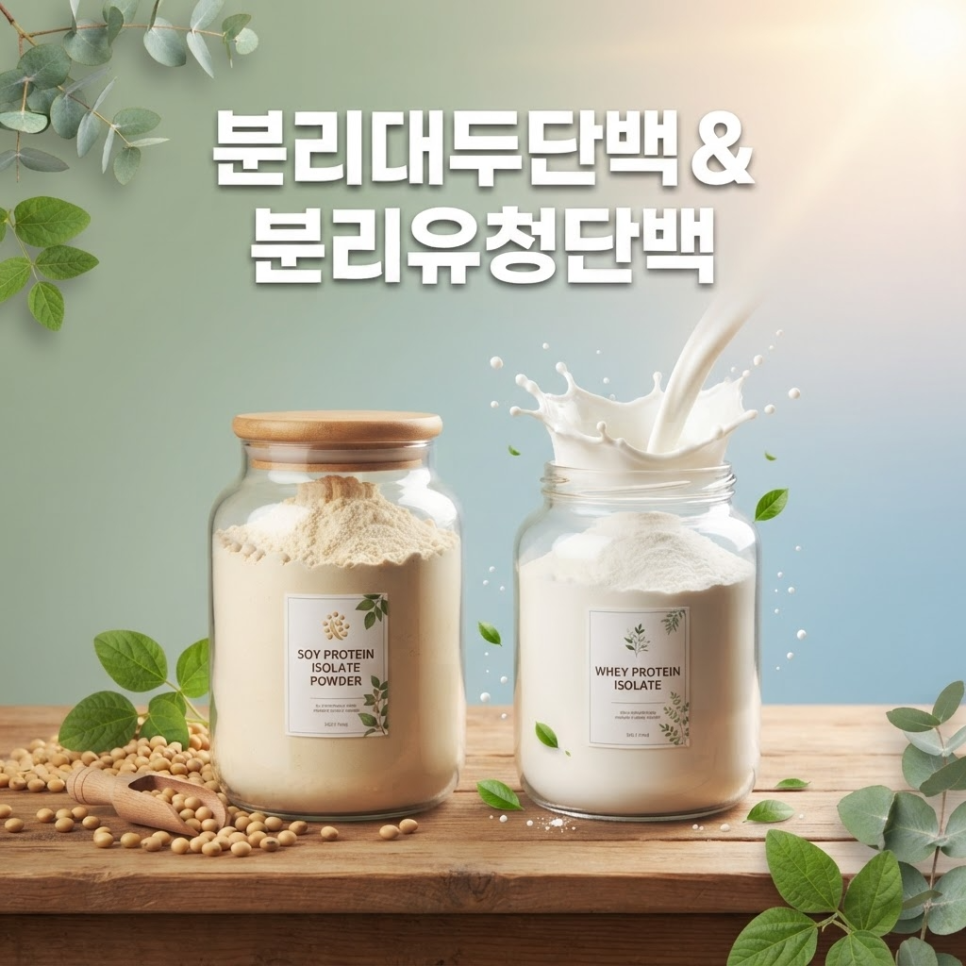

What Does Soy Protein Isolate Mean?
In short, soy protein isolate is a plant-based ingredient made by isolating protein from soybeans at a high concentration.
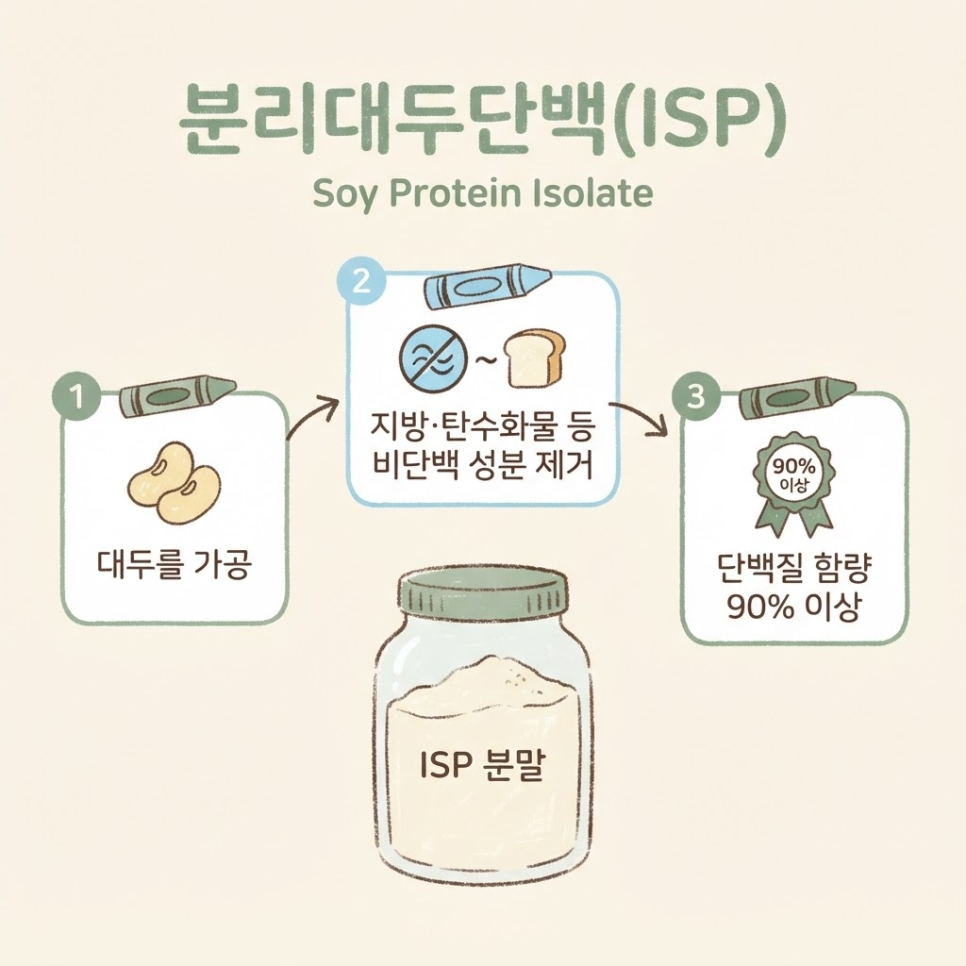
Soy Protein Isolate (ISP) refers to a high-protein ingredient made by processing soybeans to remove most non-protein components, such as fat and carbohydrates, raising the protein content to 90% or more of the dry weight.
In simple terms, think of it as ‘plant-based protein purified and extracted from soybeans.’
The English term Soy Protein Isolate is shortened to ISP, and if you see this listed on a product’s ingredient label, it means soy protein isolate is included.

· Soy protein isolate meaning = a plant-based ingredient derived from soybeans with 90%+ protein purity
· The English abbreviation is ISP (Soy Protein Isolate)
· A plant-based protein source with a relatively balanced essential amino acid profile
What Are the Characteristics of Soy Protein Isolate?
The biggest characteristic of soy protein isolate is that its source is soybeans, not milk.
That’s why it’s classified as a purely plant-based ingredient that contains no lactose at all.
If dairy tends to feel heavy on your stomach, or if you follow a vegan or vegetarian diet, this is worth considering.
Because it’s formulated to have a high protein content, it’s widely used in a variety of products, including protein shakes and high-protein convenience foods.


What Is Whey Protein Isolate (WPI), and How Does It Differ from Soy Protein Isolate?
In short, the biggest difference between the two ingredients comes down to whether they’re plant-based or animal-based.
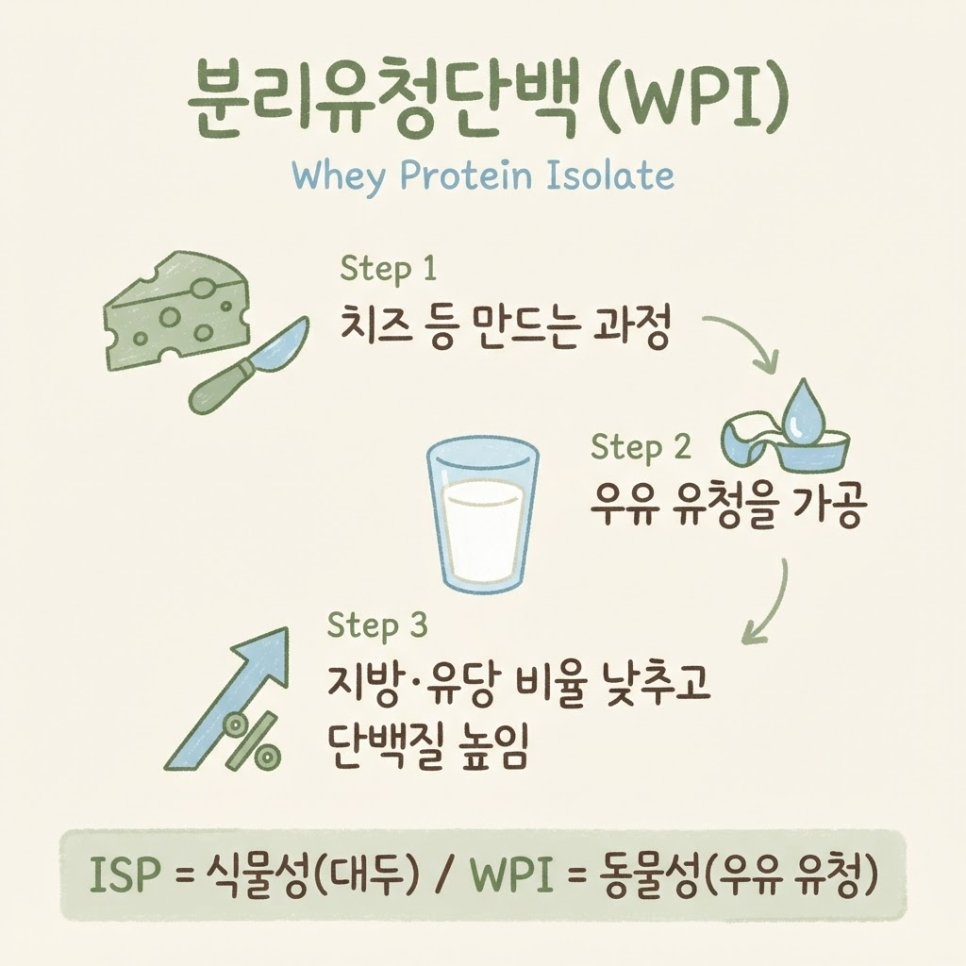
Whey Protein Isolate (WPI) refers to an animal-based ingredient made by processing the leftover whey from cheese production, lowering the fat and lactose content while raising the protein content.
Compared to the soy protein isolate meaning covered above, the clearest difference is the source — ISP comes from soybeans, while WPI comes from milk.
If you’ve ever looked into protein powders for the gym or weight training, you’ve likely come across the WPI label at least once.
How Should You Choose Between Soy Protein Isolate and Whey Protein Isolate?
Ultimately, it’s hard to say definitively that one is better than the other.
That’s because the right choice depends on your diet, digestion, and ingredient preferences.
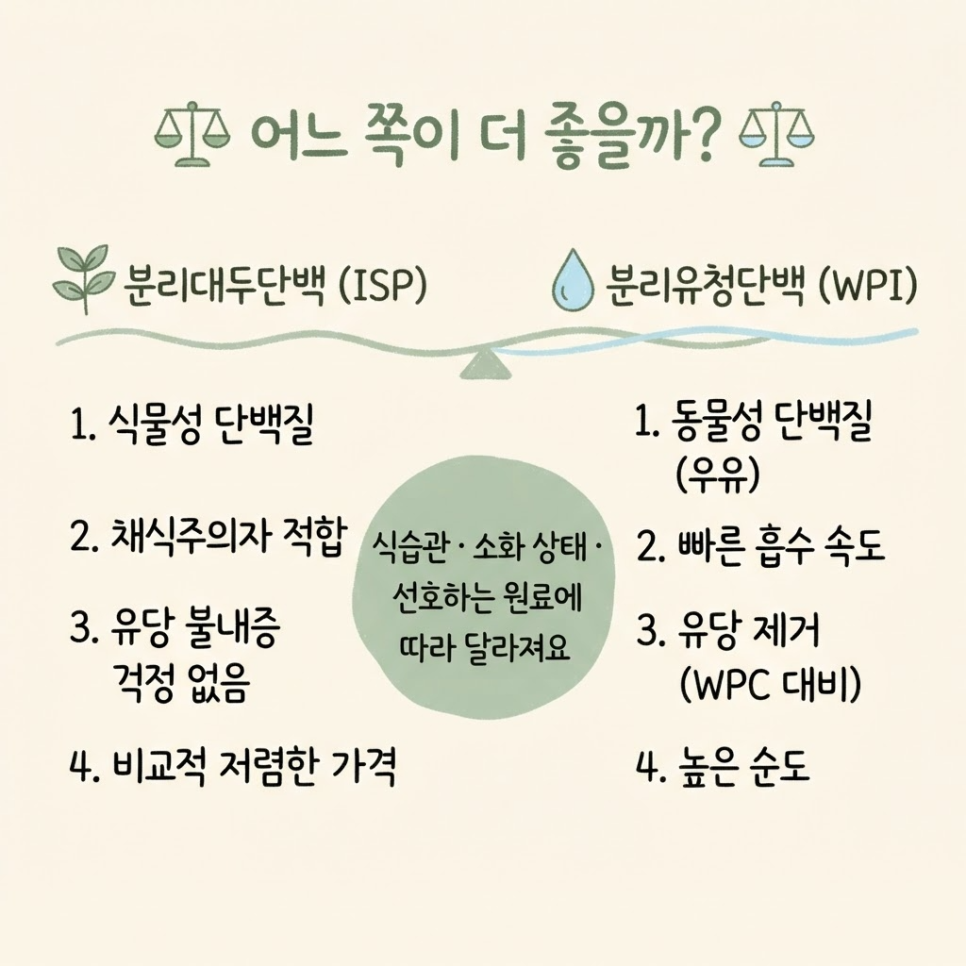
If you follow a plant-based diet, ISP — true to the soy protein isolate meaning — tends to be a convenient option.
On the other hand, if you’re used to whey protein or want fast absorption right after a workout, WPI may be worth prioritizing.
Related research has also reported that the muscle protein synthesis response after resistance exercise tends to be greater with whey protein than with soy protein.
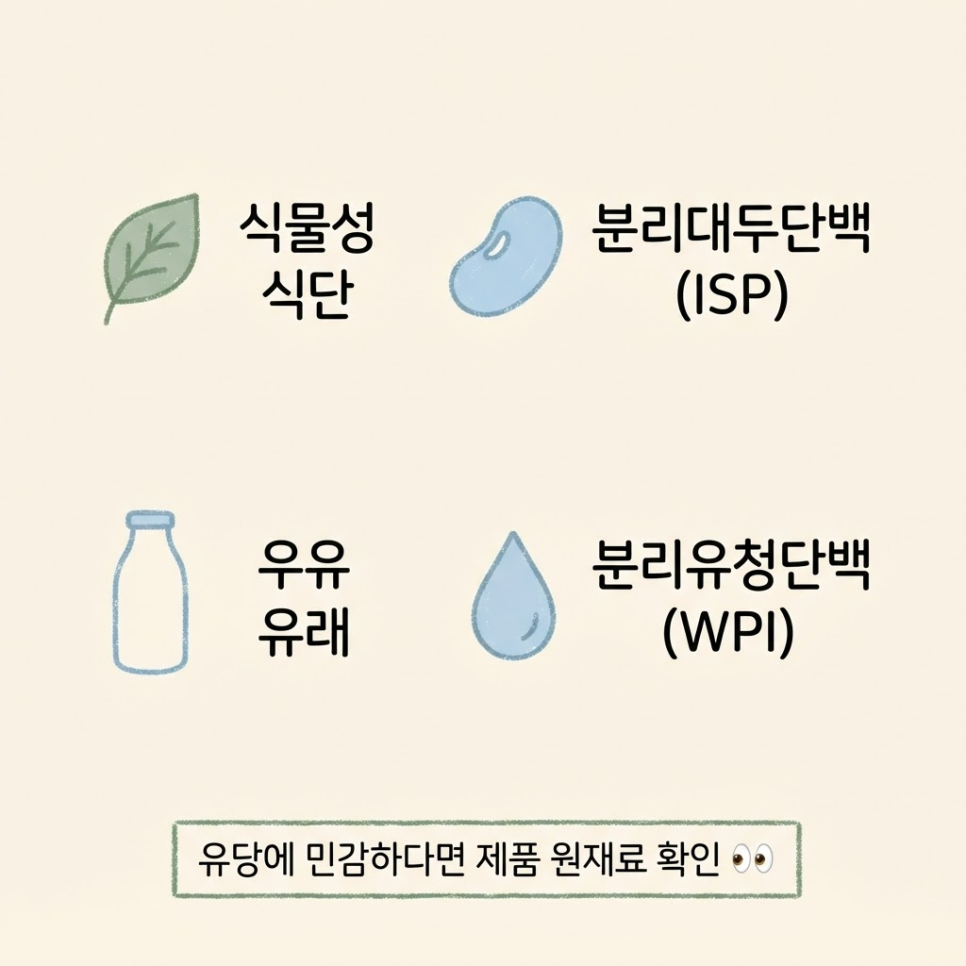
· If absorption speed matters most, choose WPI; if a plant-based diet matters most, choose ISP
· If you’re sensitive to lactose, be sure to check the finished product’s ingredient label
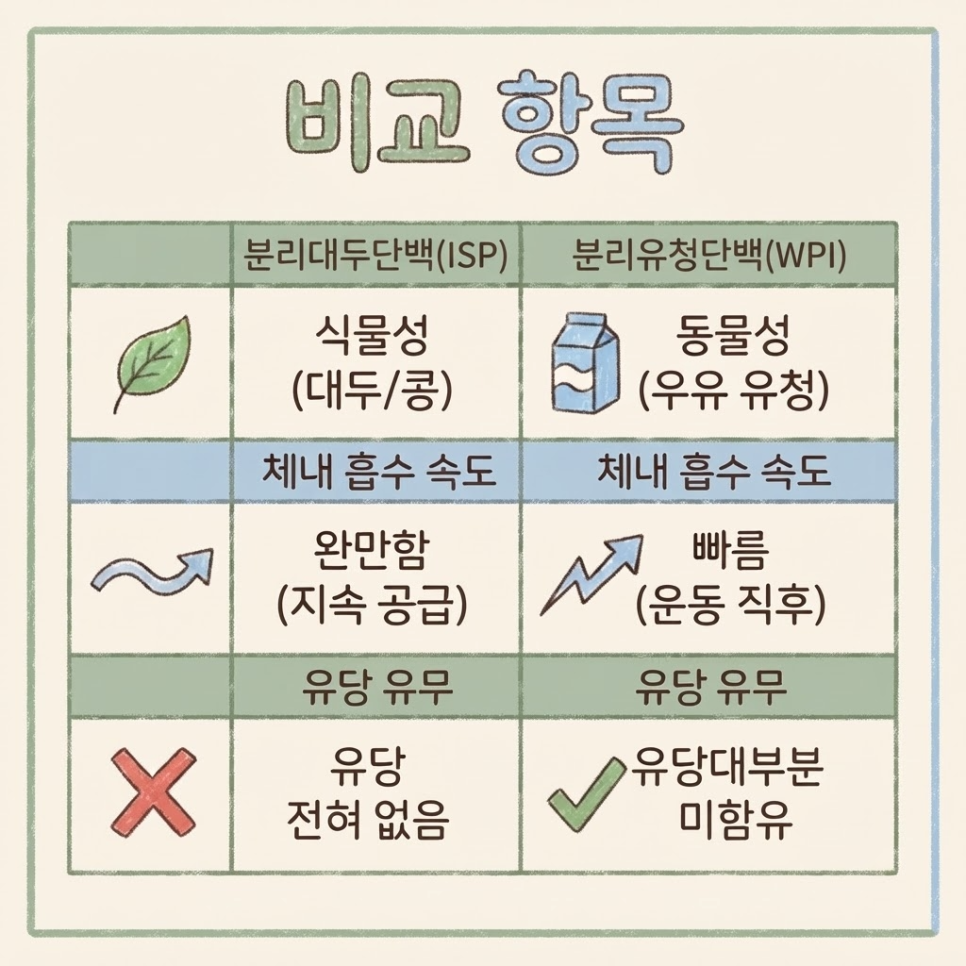
| Comparison | Soy Protein Isolate (ISP) | Whey Protein Isolate (WPI) |
|---|---|---|
| Raw Material | Plant-based (soybeans) | Animal-based (milk whey) |
| Absorption Speed | Relatively slow and steady | Relatively fast |
| Lactose Content | Lactose-free | Mostly removed during processing |
| Best Suited For | Vegans and plant-based diet followers | Those who want fast post-workout absorption |
Once you understand the difference in raw materials, choosing a product becomes much easier.
The key is picking the protein that fits your diet and fitness goals.
Most of the lactose in WPI is removed during processing, but trace amounts may remain depending on the product.
If you’re sensitive to lactose, be sure to check the finished product’s ingredient list and nutrition facts yourself.
✅ Whether you generally prefer plant-based or animal-based protein
✅ Whether dairy products have ever caused stomach discomfort for you
✅ Whether you want fast absorption right after exercise, or a slower, steady release
✅ How the product’s other nutrients, like sugar and fat, are composed
✅ Whether the taste and format are easy to stick with long-term

Understanding the characteristics of each protein source ahead of time makes it much easier to evaluate a product’s nutrition label at a glance.
If you’d like more detailed information on protein and nutrition, check out the resources at Kookmin Bio’s homepage.
Frequently Asked Questions
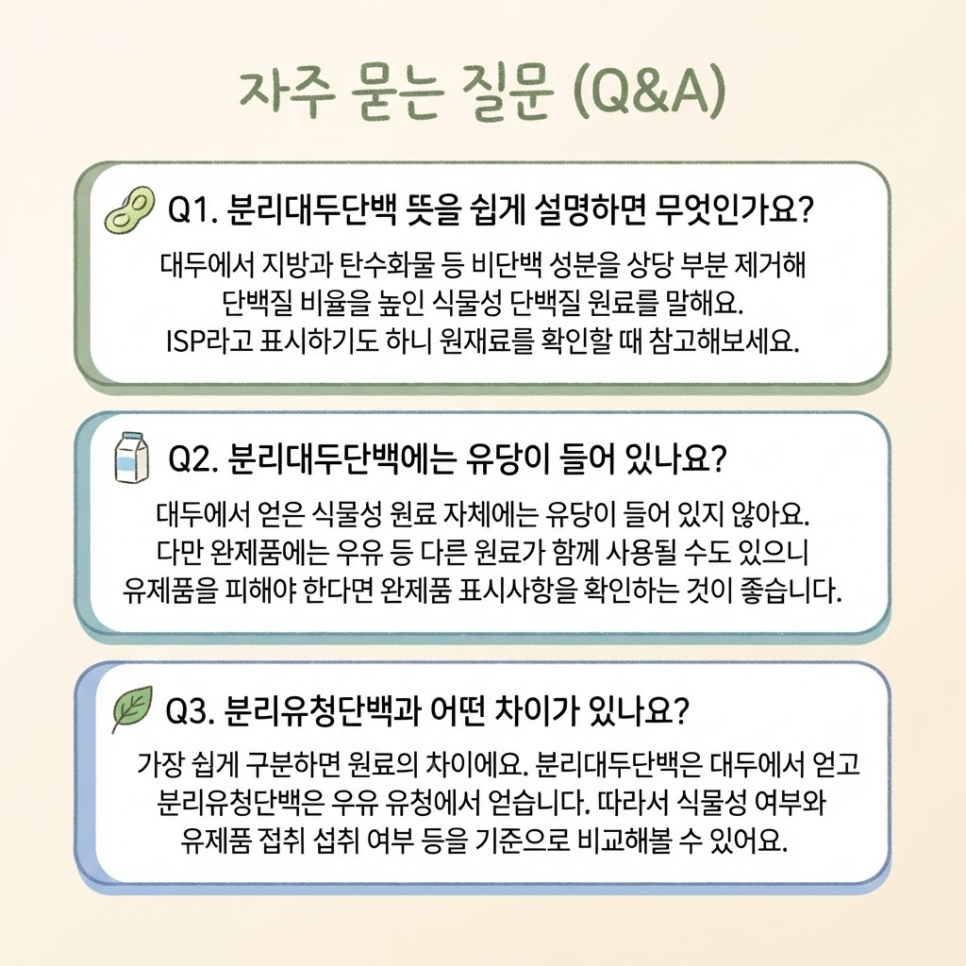
1. What does soy protein isolate mean, in one sentence?
It’s a plant-based protein ingredient made by removing non-protein components like fat and carbohydrates from soybeans, raising the protein ratio to 90% or more. On product labels, it’s sometimes listed as ISP.
2. Does soy protein isolate contain lactose?
The ingredient itself, derived from soybeans, contains no lactose. However, finished products may include other ingredients such as milk, so if you need to avoid dairy, it’s best to check the finished product’s ingredient list.
3. What’s the biggest difference from whey protein isolate?
The raw materials themselves are different. Soy protein isolate comes from soybeans, while whey protein isolate comes from milk whey. Comparing them by plant-based versus animal-based origin and by absorption speed makes the choice easier.
4. Which protein is better for fitness goals?
Some studies suggest WPI may offer an edge if fast absorption is your priority, but ISP is also a solid choice if you follow a plant-based diet or are sensitive to lactose. Ultimately, it’s worth weighing your own eating habits and digestion together.
References
· ISSA (International Sports Sciences Association), “Soy Protein vs Whey Protein – What’s Best For Your Goals?”, ISSA Nutrition Blog. View source
· Camera D.M. et al., “Myofibrillar and Mitochondrial Protein Synthesis Rates Do Not Differ in Young Men Following the Ingestion of Carbohydrate with Whey, Soy, or Leucine-Enriched Soy Protein after Concurrent Resistance- and Endurance-Type Exercise”, PMC (National Library of Medicine). View source

This article is intended for general health information purposes only and is not a substitute for individual diagnosis or treatment. If you have any health concerns, please consult a medical professional.