
Tired of Eating Chicken Breast Instead of a 30g Protein Breakfast Every Morning?
Eating chicken breast every single day just to get enough protein is more of a hassle than it sounds.
You know it’s good for you, but getting tired of the same dry, bland meals means a lot of busy professionals end up skipping a proper 30g protein breakfast entirely and heading to work on an empty stomach.
But once you learn the secret to smartly refueling on an empty stomach in the morning, your energy and overall condition throughout the day can completely change.
Let’s walk through simple, practical ways to get essential nutrients in even during a hectic morning.
Article Preview
This guide shares practical tips for easily getting 30g protein foods into your morning routine on an empty stomach. We break down exactly how much of each food you need to build a 30g protein breakfast, laid out in a clear comparison table. You’ll also find ultra-simple 30g protein recipes you can make in 5 minutes flat, plus a full FAQ section.
※ Table of Contents Note: This post supports the Easy TOC plugin. If installed, this manual table of contents section will be automatically replaced.
Why Should You Eat Protein First Thing on an Empty Stomach?

Because your muscles need a quick refuel after being depleted overnight — that’s essentially the only way to help prevent muscle loss.
During the long fasting period while you sleep, your body may start breaking down muscle tissue for energy once other reserves run low.
That’s why giving your body solid nutrition at that very first meal is one of the most direct ways to help prevent muscle loss.
If you grab a sugary pastry or bowl of cereal just because you’re rushing out the door, your blood sugar can spike and then crash, bringing on a false sense of hunger not long after.
Eating protein on an empty stomach in the morning essentially flips the switch on your daily metabolism. Clinical nutrition research suggests that getting enough protein in the morning may help boost metabolism and trigger the release of satiety hormones, which in turn may help curb overeating at lunch and dinner (Source: Korean Society for the Study of Obesity, 2022).
Data Insight
In studies, groups who ate protein-centered breakfasts on an empty stomach showed significantly lower daytime secretion of ghrelin — the hunger hormone — compared to groups who ate carb-centered breakfasts, which may meaningfully help reduce total daily calorie intake.
How Much Do You Actually Need to Eat for a 30g Protein Breakfast?
The total weight of a food and its actual protein content on the nutrition label are two completely different things.
Eating a 100g pack of chicken breast, for example, absolutely does not mean you’re getting 100g of protein.
This gap between total weight and actual protein content is exactly what trips up most people new to tracking their diet.
Once you get a clear, at-a-glance sense of how much you actually need to eat of common 30g protein foods, planning your meals becomes a lot easier.

| Food | Amount Needed for 30g Protein | Notes & Tips |
|---|---|---|
| Chicken breast | About 130g–150g | About 1.5 standard store-bought portions |
| Eggs (large) | About 4–5 eggs | Whole egg, including yolk |
| Salmon / white fish | About 150g | About 1.5 average-size fillets |
| Tofu (plant-based) | About 1.5 blocks (450g) | Large volume — can feel overly filling on its own |
As you can see, hitting 30g of morning protein from just one food source means eating more than most people expect.
That’s why we recommend mixing animal and plant protein sources in the morning to strike a better nutritional balance.
Results & Benefits
Combining animal-based whey protein with plant-based soy protein — each absorbed at a different rate — may help maintain a steadier supply of amino acids in the body, a combination some research suggests can support more efficient muscle synthesis.
5-Minute 30g Protein Breakfast Recipes for Busy Mornings
You don’t need to fire up the stove for an elaborate meal during your rushed morning routine.
A quick spin in the microwave or a few seconds in the blender is all it takes to put together a great high-protein first meal.
Here are two go-to combinations I rotate between depending on how I’m feeling each morning.
Both are quick, easy, and gentle on the stomach while still packing in plenty of nutrition.
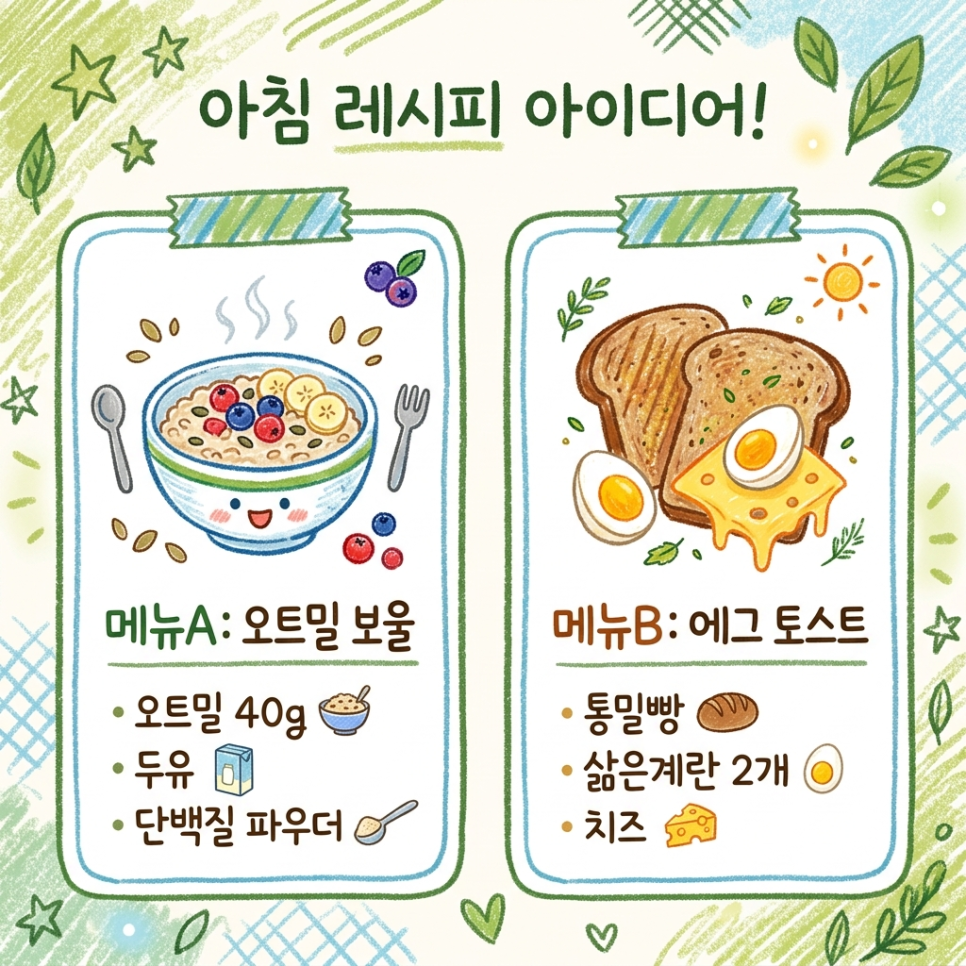
Menu A: Nutty Quick Oatmeal Bowl
Pour one pack of unsweetened soy milk over 40g of oats and microwave for 1 minute 30 seconds until warm. Stir in one scoop of easy-to-digest, lactose-free protein powder (about 20g protein), then top with 5 crushed almonds. Done.
Menu B: Hearty Egg & Yogurt Toast
Toast a slice of whole wheat bread until crisp. Roughly mash 2 eggs you boiled the night before in a bowl. Layer on 100g of thick Greek yogurt and a slice of cheese to finish — you’ll end up with a sandwich that’s tangy, light, and satisfying.
Rotate between the two so you don’t get bored, and you’ll likely notice steady energy that lasts right up until lunchtime.
If prepping breakfast at home feels like too much hassle, checking out a variety of high-protein meal replacements from a diet-management platform like Kookmin Bio Home is also a solid alternative. (Internal link note: recommend replacing with a Kookmin Bio high-protein shake product page)
Action Checklist for Tomorrow Morning
✅ Boil 2–3 eggs the night before and store them in an airtight container
✅ Keep unsweetened soy milk on hand that you can grab and drink on your way out the door
✅ Check the nutrition label on the back of packaged foods until estimating portions becomes second nature
Frequently Asked Questions
1. Is it okay to just drink protein powder on an empty stomach to hit my 30g protein target?
Yes, it can be a great option if you’re short on time in the morning. That said, liquid protein tends to digest and absorb quickly, so it may keep you feeling full for a shorter time than solid food would. If you tend to get hungry again quickly, adding a slice of whole wheat bread or a few nuts for some chewing texture can help send fullness signals to your brain more effectively.
2. Is it enough to get all 30g of morning protein from plant-based sources alone?
It’s entirely possible to hit your target number using plant-based foods like tofu, soy milk, and legumes. That said, when it comes to the essential amino acid profile that supports muscle synthesis — especially leucine — mixing in even a small amount of animal protein, like eggs or chicken breast, tends to be more efficient from a bioavailability standpoint.
3. If I eat more than 30g of protein foods in one meal, does the excess just get flushed out in urine?
It used to be widely believed that the body could only absorb about 30g of protein per meal. However, more recent research suggests that any amount beyond that is still absorbed gradually in the digestive tract and continues to be used as material for muscle synthesis or as an energy source. That said, if you have a sensitive stomach, eating a large amount at once can be hard on your digestion, so it’s best to spread your protein intake evenly across three meals.
4. I have a sensitive stomach — are there any gentle 30g protein recipes that work well in the morning?
If your stomach is sensitive first thing in the morning, we’d recommend soft, warm steamed eggs or a Greek yogurt bowl (much of the whey is strained out, so lactose intolerance is generally less of a concern) instead of greasy meats. Warm pan-seared tofu or a silken tofu salad is also a great, gentle way to get in nutrients on an empty stomach without irritating your stomach lining.
References
· Korean Society for the Study of Obesity, “The Effect of Breakfast Type on Protein Intake and Daily Energy Metabolism in Adults,” Journal of Clinical Nutrition, 2022. View source
· Korean Nutrition Society, “Dietary Reference Intakes for Koreans: Research on Macronutrient Protein Function,” Revised Report, 2020. View source
Medical/Health Disclaimer
This article is intended for general health information purposes only and is not a substitute for individual medical diagnosis or treatment. Appropriate nutrient intake can vary based on individual constitution and underlying health conditions, so please consult a physician or registered dietitian if you have any specific health concerns.
Tags: #30gProteinFoods #Morning30gProtein #30gProteinAmount #30gProteinRecipes #WorkdayBreakfast #EmptyStomachDiet #BeginnerDietTips #MealPlanGuide #HealthyLiving #BreakfastIdeas #BusyMorningMeals #PreventMuscleLoss #HighProteinDiet #KookminBio