Every morning at 7 a.m., the first thing you probably do is check the clock, right?
If your routine has been grabbing a slice of bread or a bowl of cereal and rushing out the door,
you may notice your body feeling heavy and your focus slipping by mid-morning.
This isn’t necessarily a willpower problem — it could be a blood sugar spike.
A breakfast built around refined carbs can send blood sugar up quickly and then crash it just as fast,
which can lead to post-meal drowsiness and sluggishness.
In this post, we’ll cover what to look for in a breakfast protein shake,
plus a hands-on review of Meal4U Protein Bomb after drinking it for over two months — protein content, a flavor comparison, and tips for enjoying it.
If you’re looking for an easy way to hit your daily protein goal, this should be genuinely useful.

Why Do You Keep Feeling Sleepy After Breakfast?
To put it simply, a breakfast heavy in refined carbs like bread or cereal can spike your blood sugar and then cause it to crash, leading to post-meal drowsiness.
A blood sugar spike is when blood glucose rises sharply after a meal and then drops quickly due to insulin response.
During this process, your body moves closer to a temporary low-blood-sugar state, which can bring on heavy eyelids and reduced focus.
I’ve experienced this myself — grabbing bread, rice cakes, or cereal on my way to work, only to feel drowsy all morning and see my productivity drop.
That’s why switching from a carb-only breakfast to a protein-focused one may help.
✔ A breakfast heavy in refined carbs may trigger blood sugar spikes and post-meal drowsiness
✔ A protein-focused breakfast protein shake can be an alternative that helps ease that blood sugar burden
What Is Meal4U Protein Bomb?
To put it simply, Meal4U Protein Bomb is a product that can meaningfully boost your daily protein intake with just one pack.
Meal4U Protein Bomb is a weight-management shake launched by SoyFrom, the healthcare brand from Kookmin Bio.
It’s a breakfast shake designed to deliver a generous amount of protein from a single 50g pack.
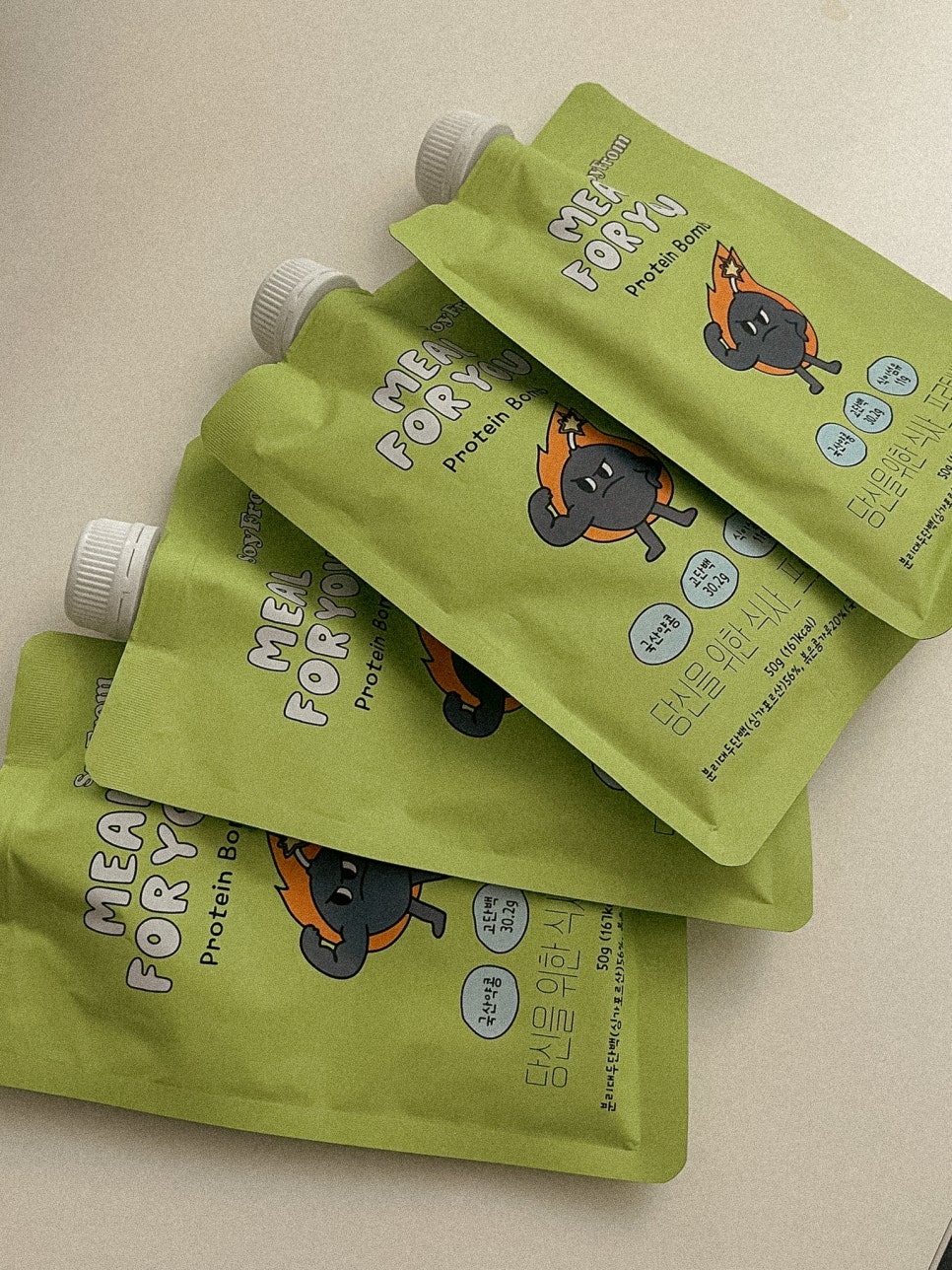
Honestly, this wasn’t my first protein drink, so I didn’t expect much.
But after actually trying it, I found the taste barely artificial and easy to drink without getting sick of it —
two months later, I’m still having it regularly.
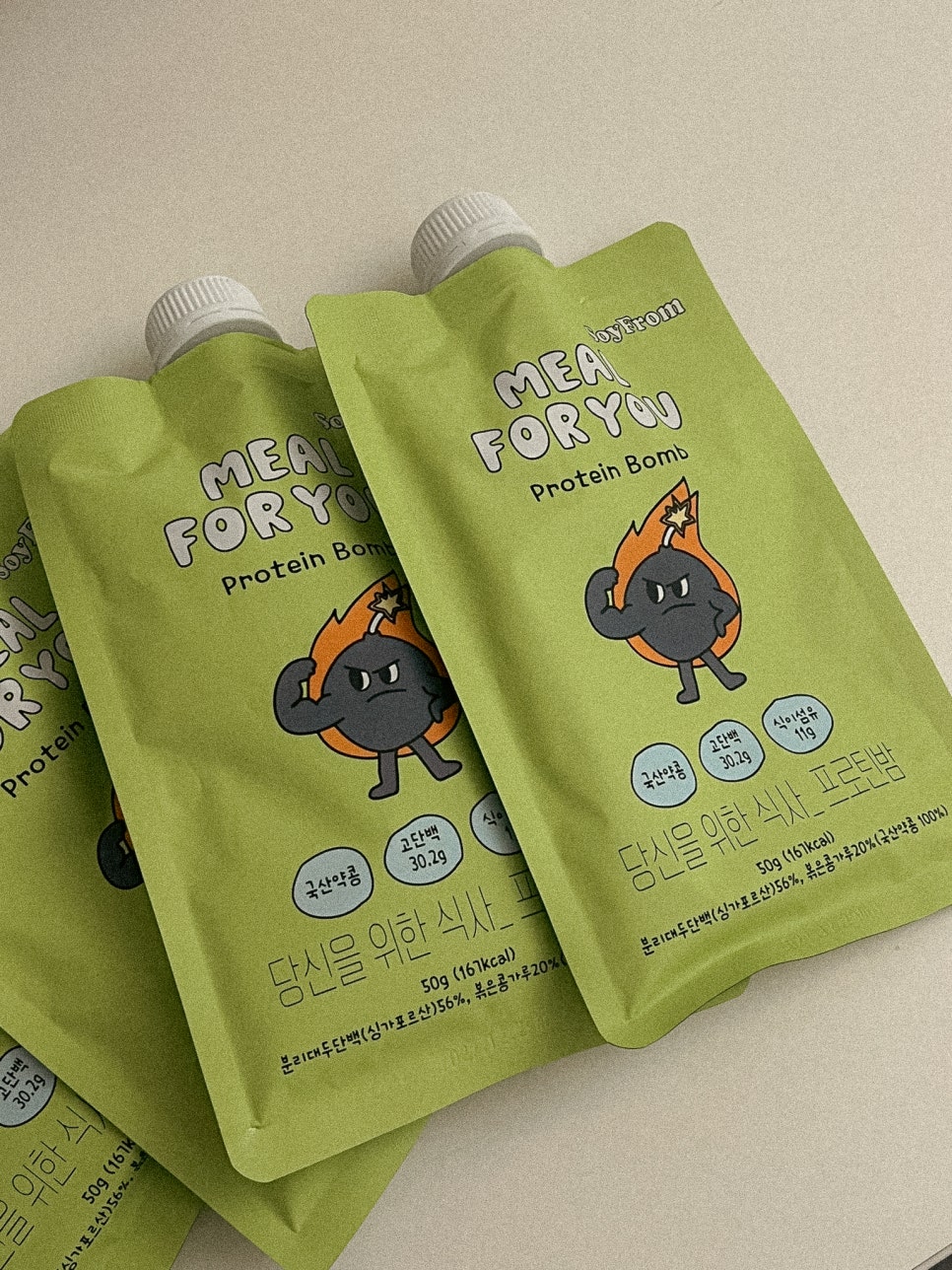
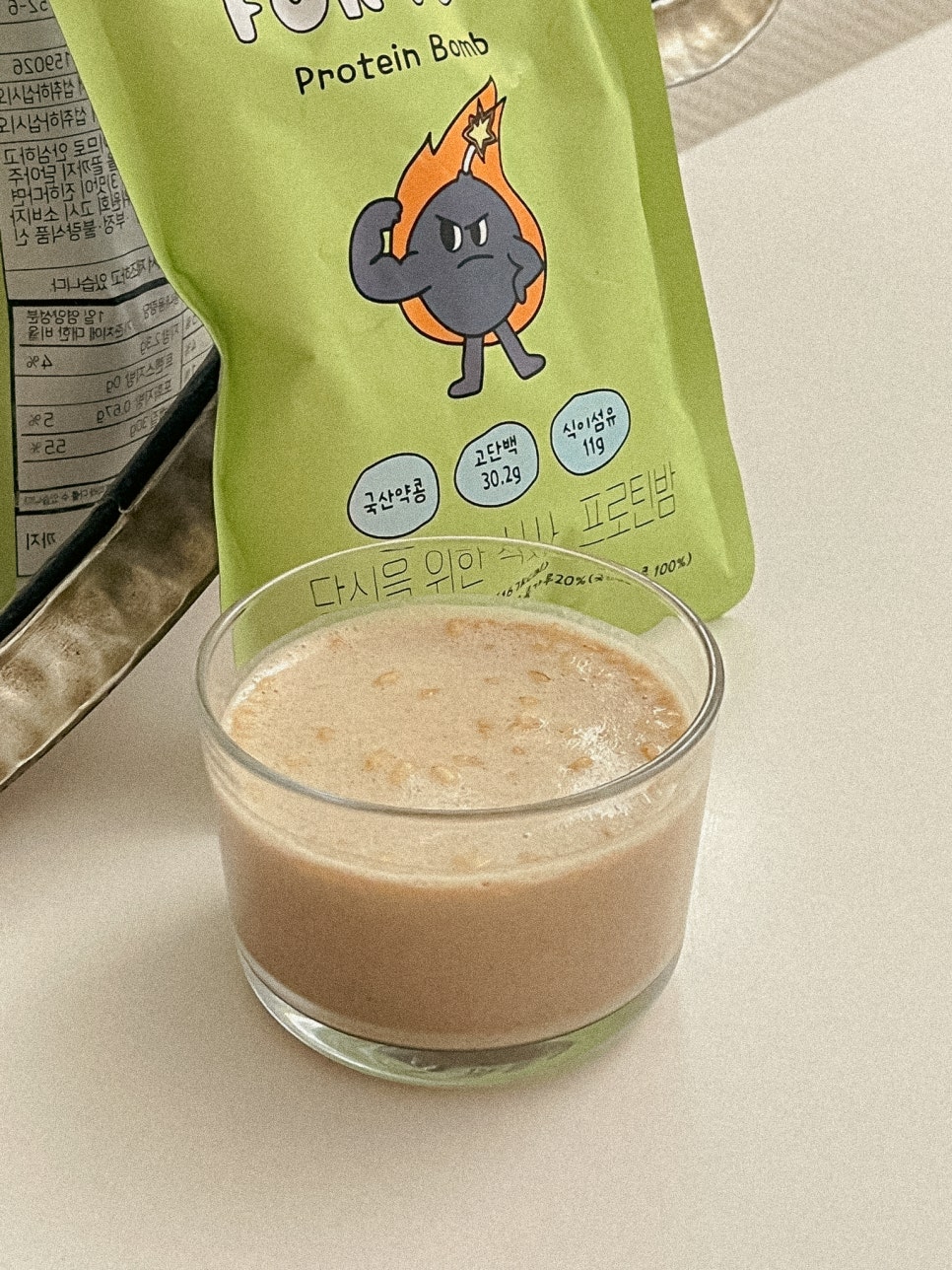
The Misugaru (roasted grain) flavor alone packs 30.2g of protein, which made it a genuinely satisfying pick for someone like me who usually falls short on protein.
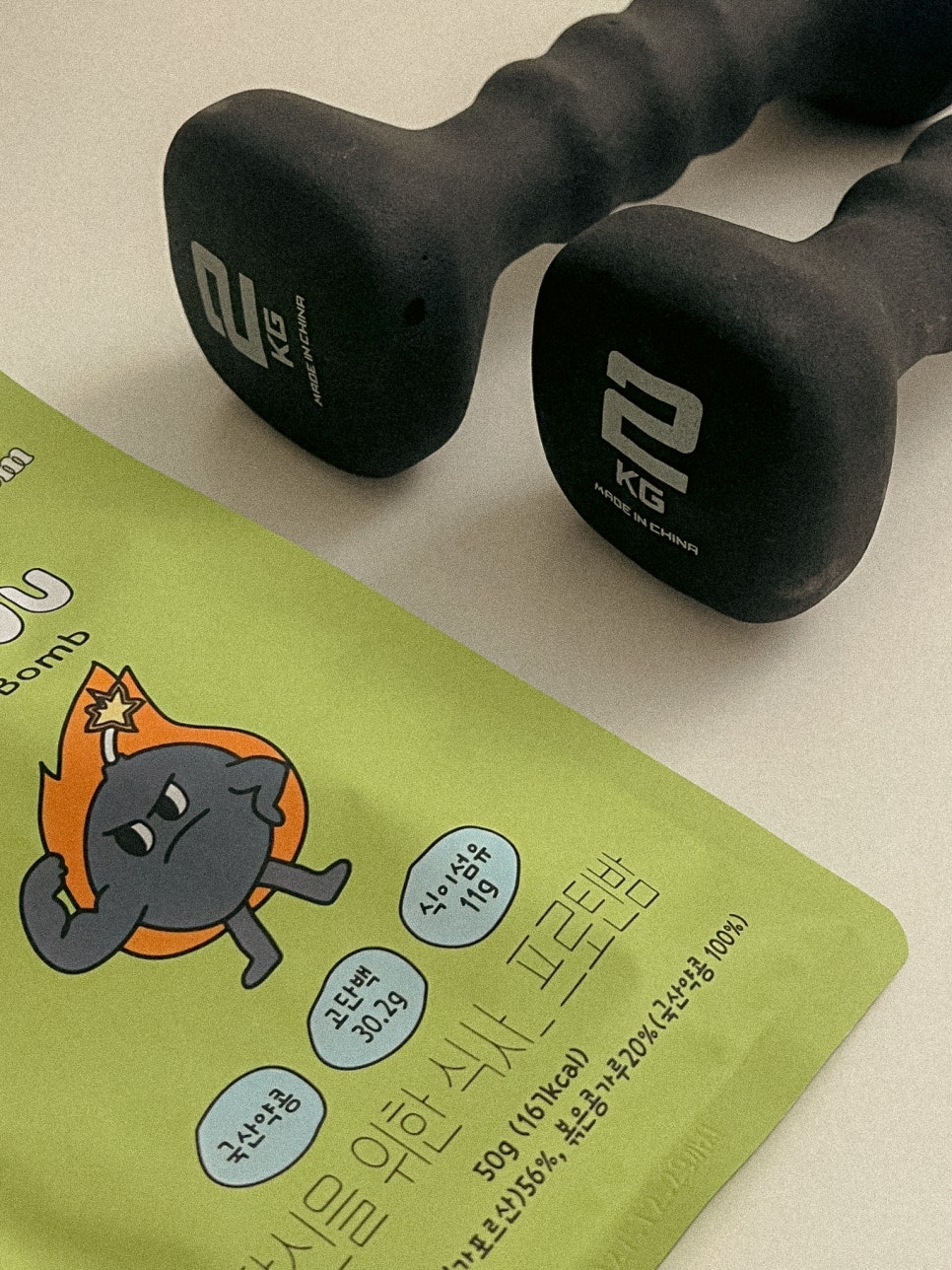

Protein is known as a nutrient that may increase satiety and help with portion control.
In fact, the Dietary Reference Intakes for Koreans, published by South Korea’s Ministry of Health and Welfare and the Korean Nutrition Society, note that increasing protein’s share of daily energy intake may boost satiety and support weight management.
At the same time, sugar content is kept in the low single digits (around 1g), which may help ease the blood sugar spike concerns mentioned earlier.
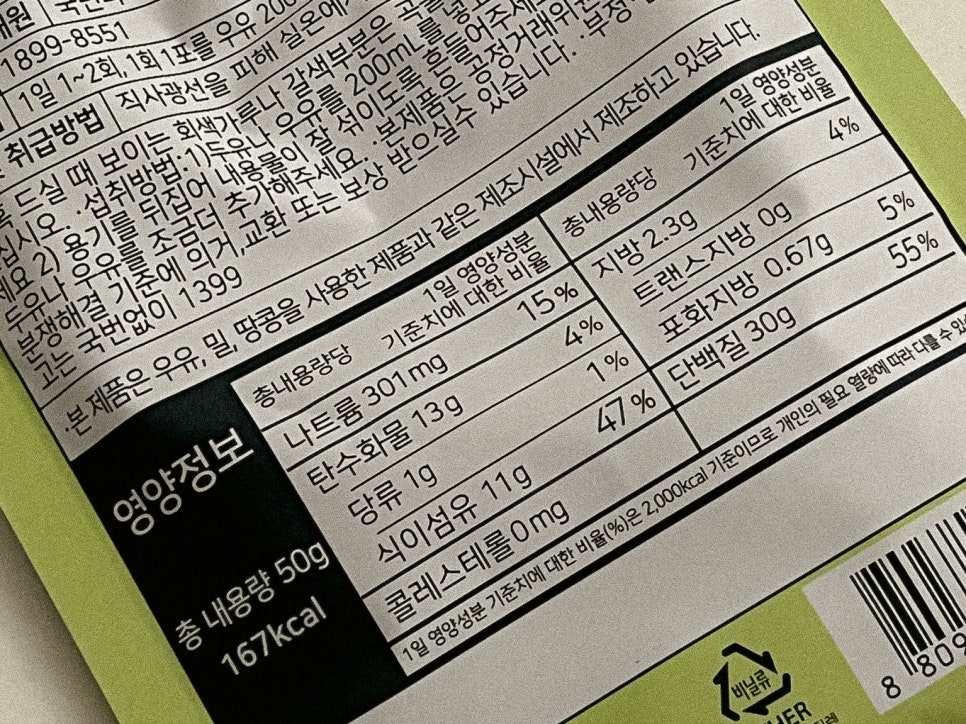
Since I started having Meal4U Protein Bomb, my mornings feel noticeably lighter,
and staying fuller has meant far fewer sluggish mornings.
Misugaru vs. Chocolate: What’s the Difference?
Both flavors are similar in serving size and protein content, but they differ in taste and detailed nutrition facts.
The green package is a nutty, mild Misugaru (roasted grain) flavor, while the chocolate package is a rich, sweet chocolate flavor.

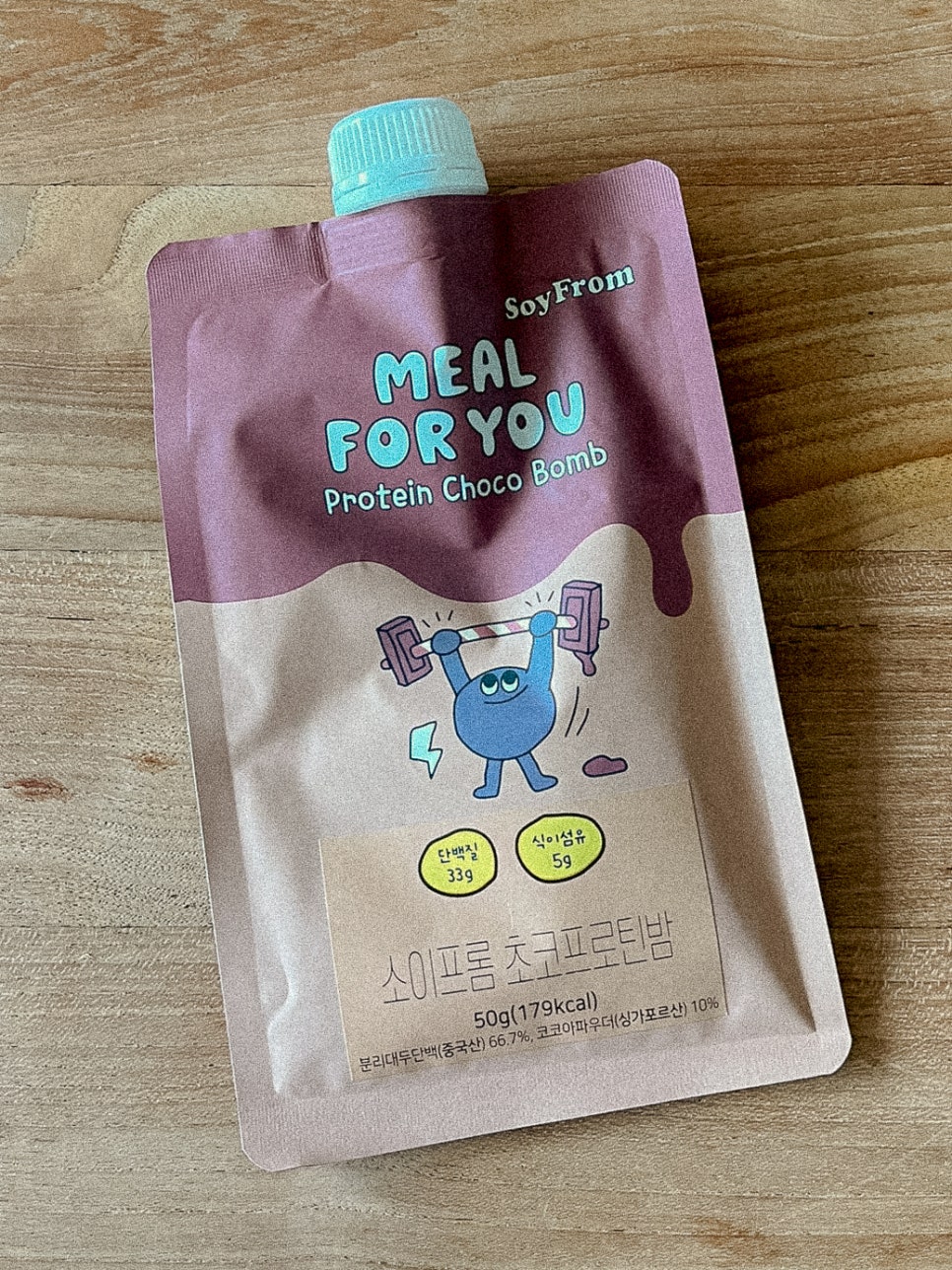
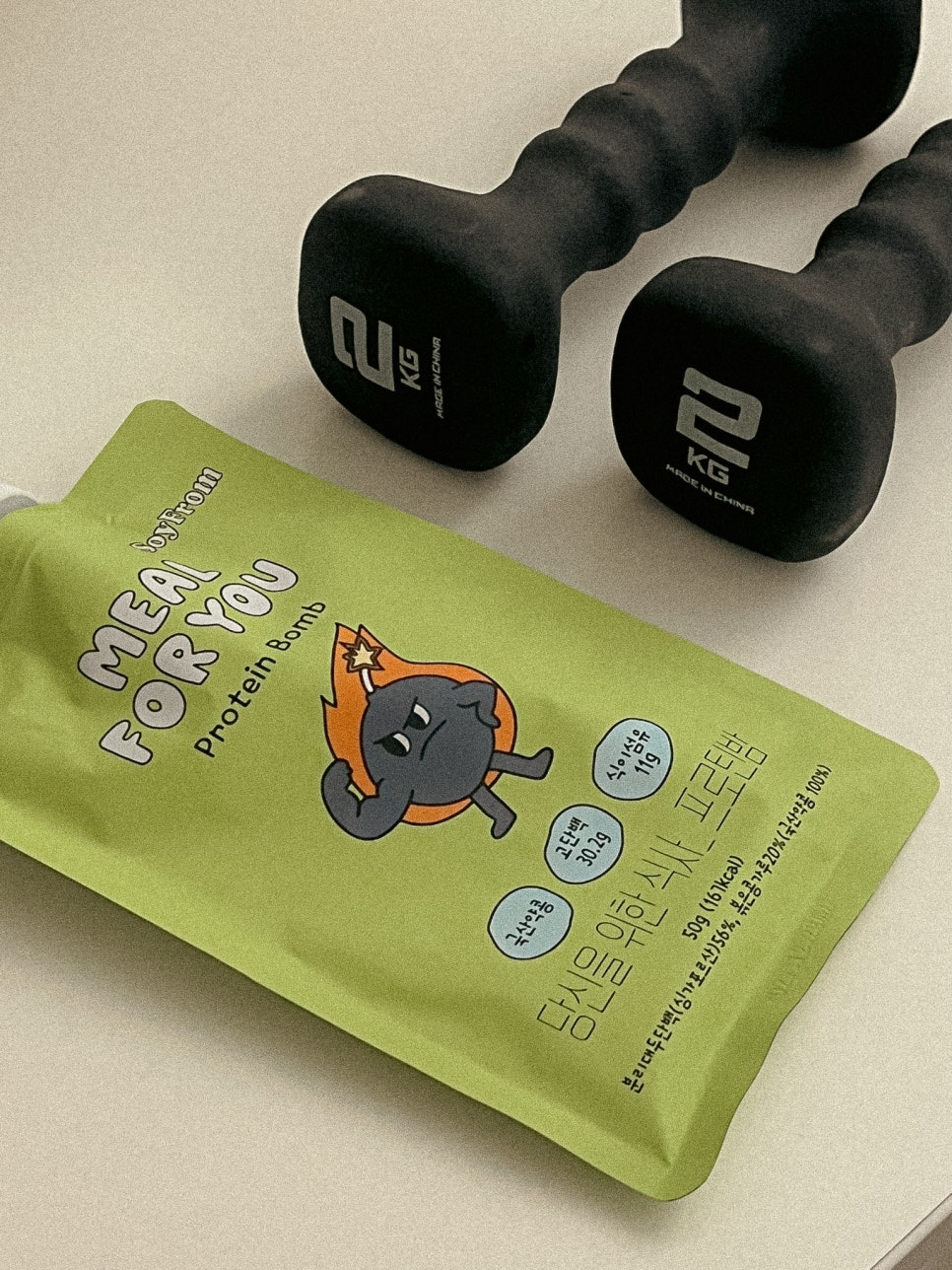
To avoid getting tired of one flavor, I keep both on hand and rotate between them —
Misugaru in the morning, and chocolate in the evening or after workouts.
| Category | Misugaru Flavor (Green Pack) | Chocolate Pack |
|---|---|---|
| Taste | Nutty, mild roasted-grain flavor | Rich, sweet chocolate flavor |
| Serving size | 50g | 50g |
| Calories | 167kcal | 179kcal |
| Protein | 30g | 33g |
| Carbs / Fat | 13g / 2.3g | 12g / 1.2g |
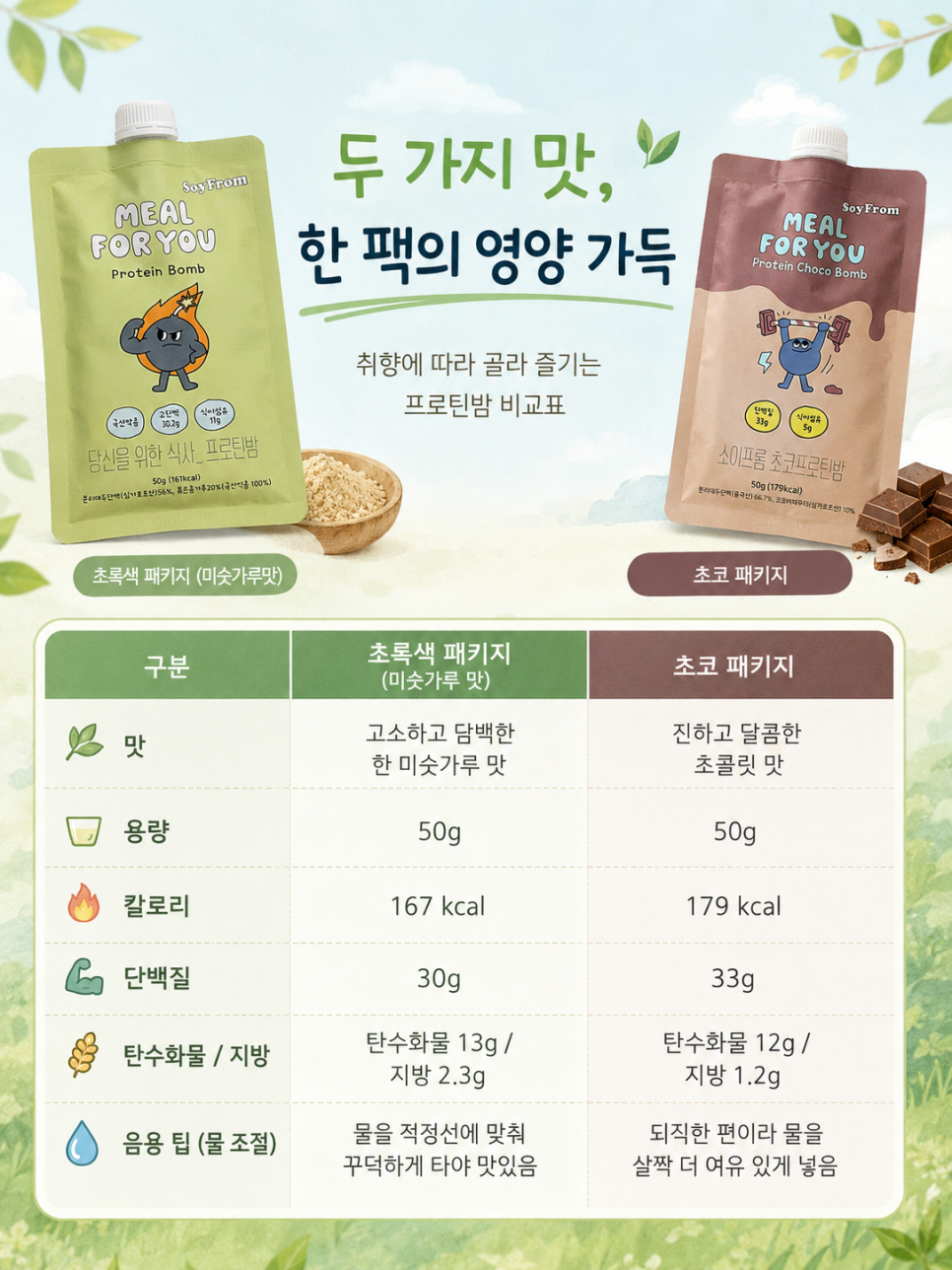
✔ Misugaru is mild and savory, while chocolate is rich and sweet
✔ The calorie difference is only about 12kcal, so either flavor works depending on your preference
If you prefer a mild, savory taste over sweetness, go with Misugaru; if you like something sweeter, choose chocolate.


How Can You Make a Breakfast Protein Shake Taste Even Better?
In short, how much water you use makes a big difference in overall taste satisfaction.
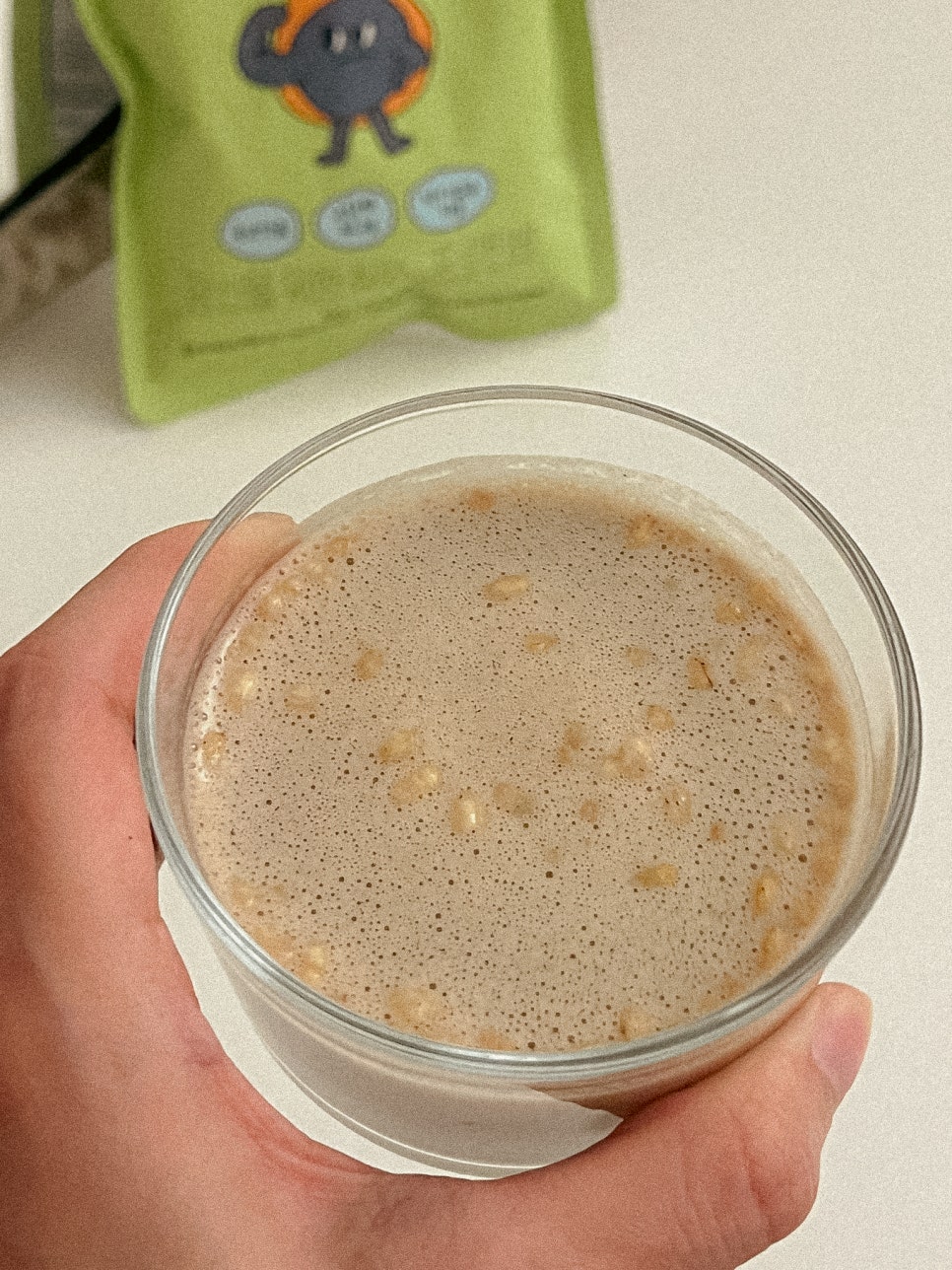
For Misugaru, mixing it thick with the right amount of water brings out the nutty flavor,
while chocolate tends to be a bit denser because of the cocoa powder, so it’s better to add slightly more water.
✅ If you overate the night before, mix with water only for a lighter drink
✅ On regular days, mix with oat milk or soy milk for a thicker, richer texture
✅ Use less water for Misugaru, slightly more for chocolate
✅ Also works as a post-workout recovery drink or a late-night snack replacement
My personal favorite is mixing it with Kookmin Bio’s black soybean soy milk —
it really brings back that thick, nostalgic texture of the misugaru drinks from childhood.
If your mornings feel too rushed to prep something, it’s worth checking out related products too.
Visit the Kookmin Bio homepage to explore the full lineup of protein products from the SoyFrom brand.
A weight-management shake is best used to support a balanced diet,
and should not be used to treat or prevent any specific disease.
Frequently Asked Questions
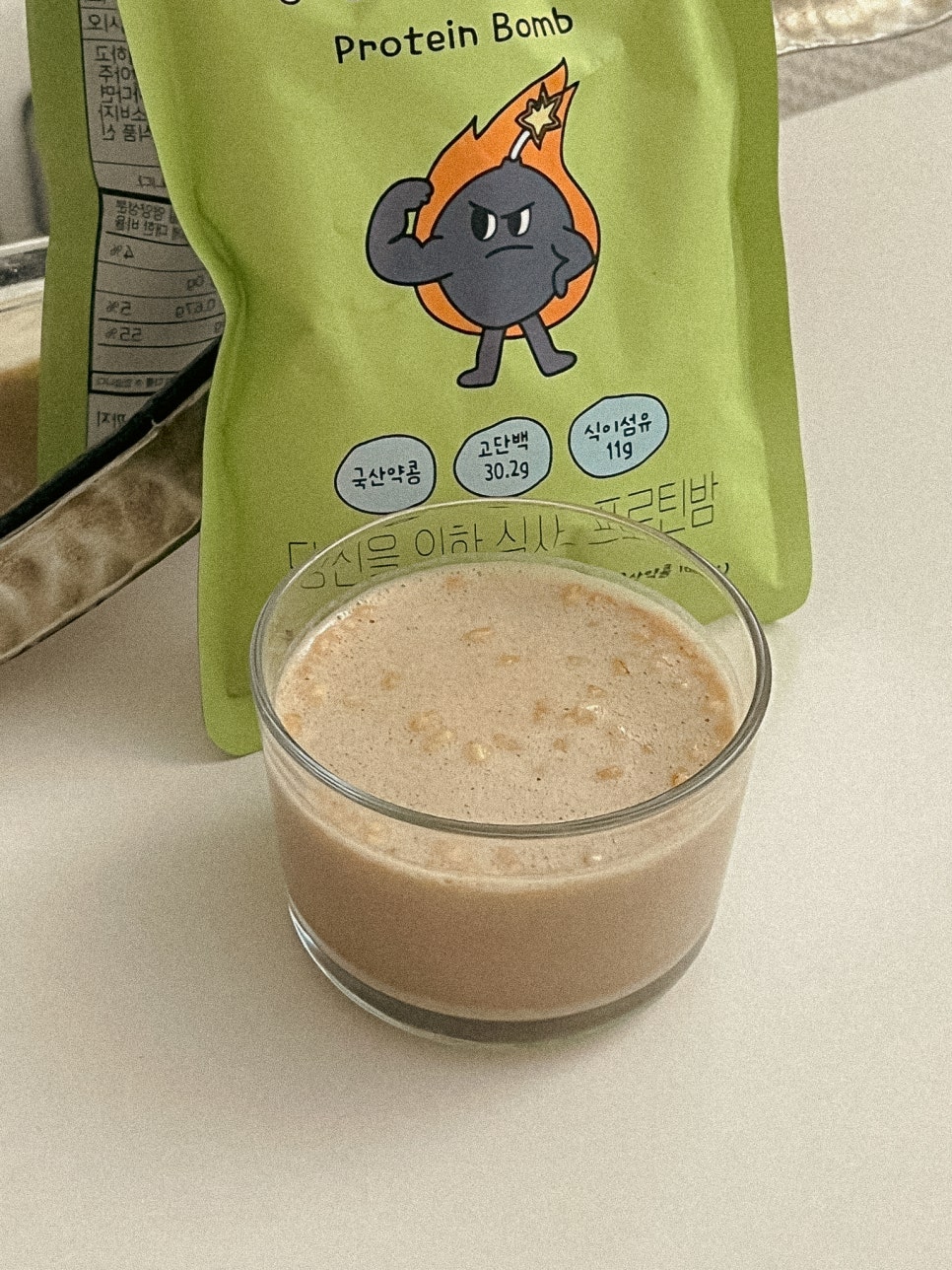
1. What’s the exact protein content of the Misugaru flavor?
One pack (50g) contains 30.2g of protein — a high-protein serving.
2. Is there a big calorie difference from the chocolate flavor?
Misugaru has 167kcal and chocolate has 179kcal, a difference of about 12kcal.
3. Any tips for mixing the Misugaru flavor well?
Adding too much water makes it watery, so it’s best to keep the water amount moderate for a thicker, richer texture.
4. How much water should I use for the chocolate flavor?
Because of the cocoa powder, it’s naturally a bit denser, so use slightly more water than you would for Misugaru.
5. Is the sugar content low enough to feel comfortable about?
The Misugaru flavor has sugar in the low single digits (around 1g), making it relatively easy on those watching their sugar intake.
References
· Kim Ga-young, “Feeling Sleepy After Meals? It Could Be a Blood Sugar Spike Signal,” Hidoc, 2025. Read more
· Ministry of Health and Welfare & Korean Nutrition Society, “2020 Dietary Reference Intakes for Koreans,” Ministry of Health and Welfare, 2020. Read more
This article is intended for general health information purposes only and is not a substitute for individual diagnosis or treatment.
If you have any health concerns, please consult a medical professional.