The moment you spot red text next to your LDL cholesterol levels on a health checkup report,
your heart probably sinks a little.
I remember going through the same thing last year, when my own bad cholesterol level landed in the borderline range and I spent hours digging through research.
What I found, though, is that understanding your LDL cholesterol levels matters more than the number itself — and building steady habits to manage it matters even more.

Seeing an abnormal result like this naturally makes you wonder if something’s wrong with your health.
That’s exactly why it’s important to understand the number accurately
and manage your lifestyle habits consistently.
Quick overview of this article
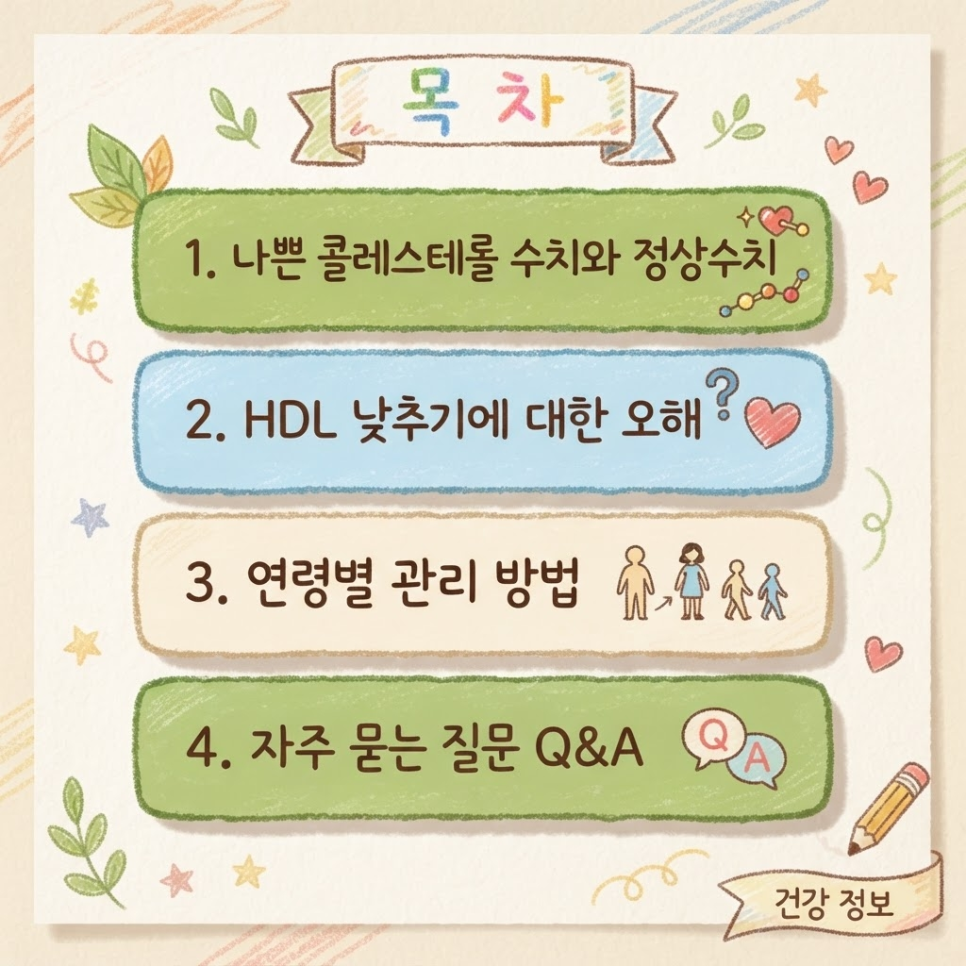
This article breaks down the normal LDL cholesterol levels chart stage by stage,
and clears up the common misconception that HDL should always be lowered.
It also covers practical, age-specific ways to manage LDL and HDL levels,
from your 20s all the way through your 60s and beyond.
What Is the Normal Range for LDL Cholesterol Levels?
Short answer: LDL cholesterol levels under 100 mg/dL are generally considered optimal.
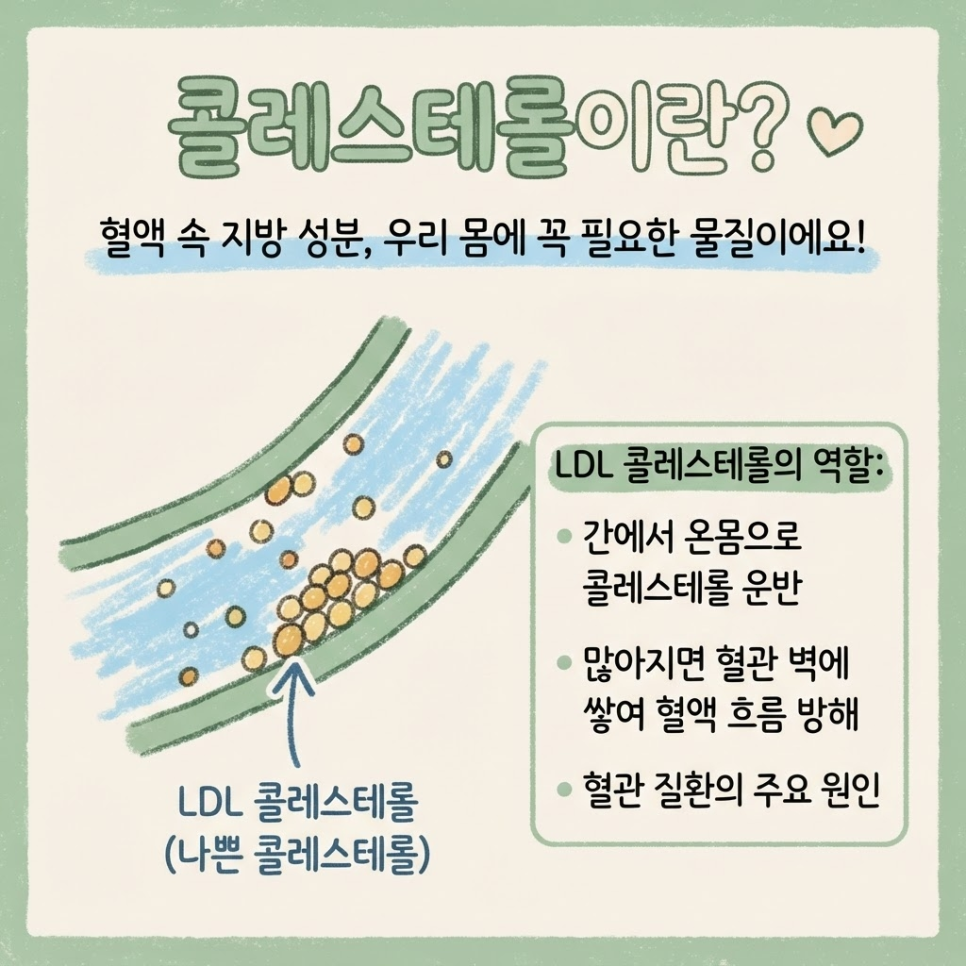
Bad cholesterol level refers to the concentration of LDL cholesterol in the blood, which can build up in artery walls and affect vascular health.
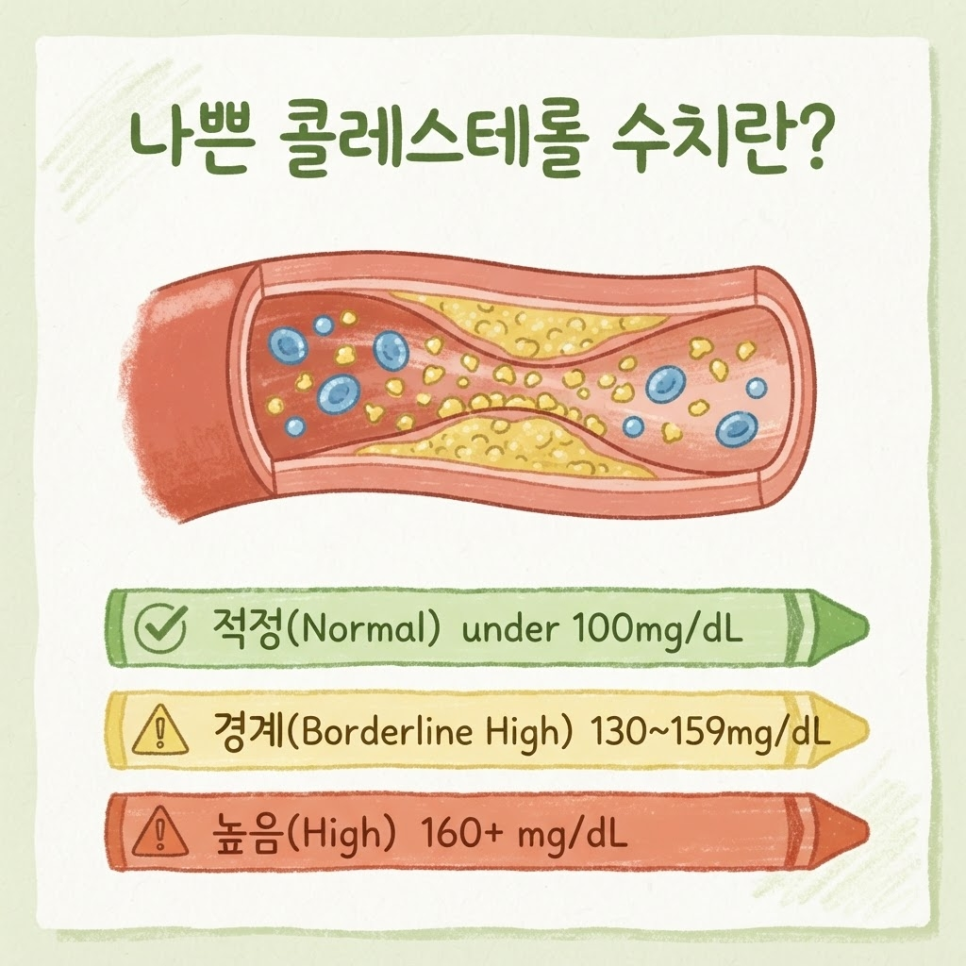
According to the Dyslipidemia Treatment Guidelines from the Korean Society of Lipid and Atherosclerosis (KSoLA),
LDL cholesterol levels are classified into five stages as shown below.
A level of 130-159 mg/dL is considered borderline high, and 160 mg/dL or higher is considered high.
| Category | LDL Cholesterol Levels (mg/dL) |
|---|---|
| Optimal | Under 100 |
| Near optimal | 100-129 |
| Borderline high | 130-159 |
| High | 160-189 |
| Very high | 190 and above |
That’s why it’s important to check where your own LDL cholesterol levels fall through regular checkups
and manage it consistently over time.
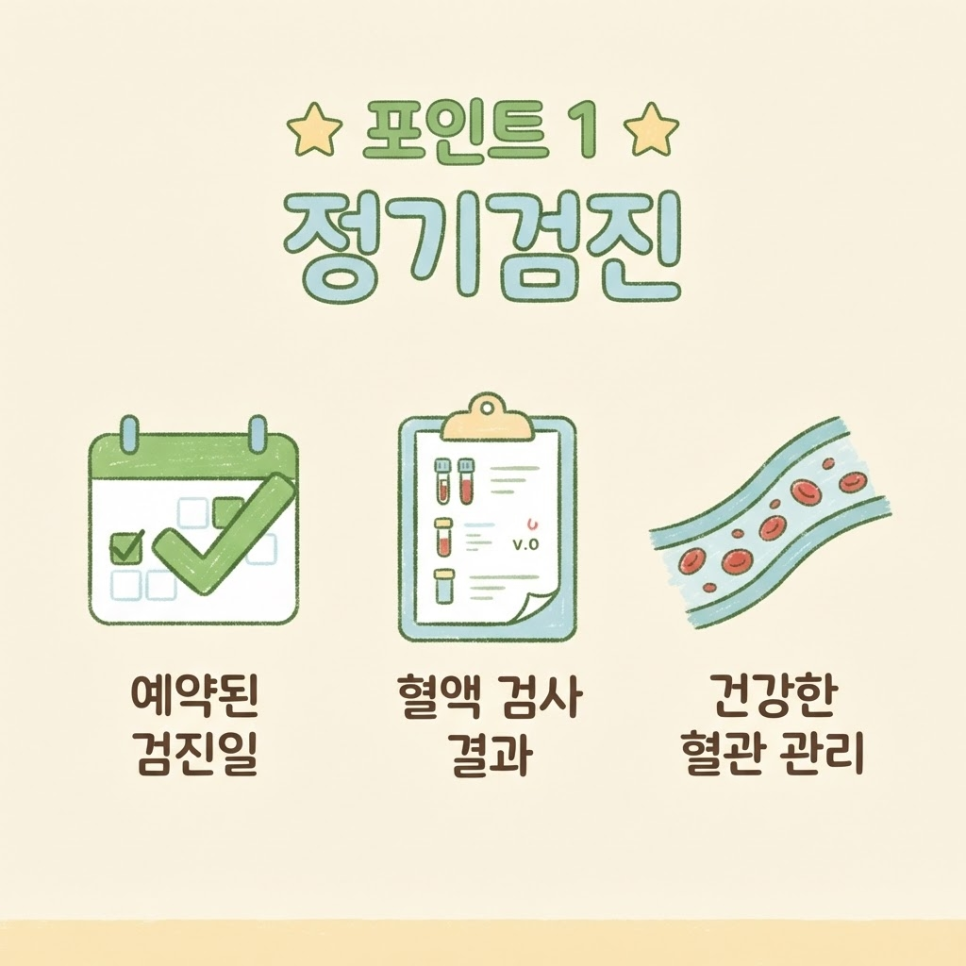
✔️ To support vascular health, it’s important to check your current levels regularly through a blood lipid test.
✔️ Based on your results, aim to manage this number consistently over time.
Is Lower HDL Always Better? What It Means for LDL Cholesterol Levels
Short answer: no — a lower HDL level is not better.
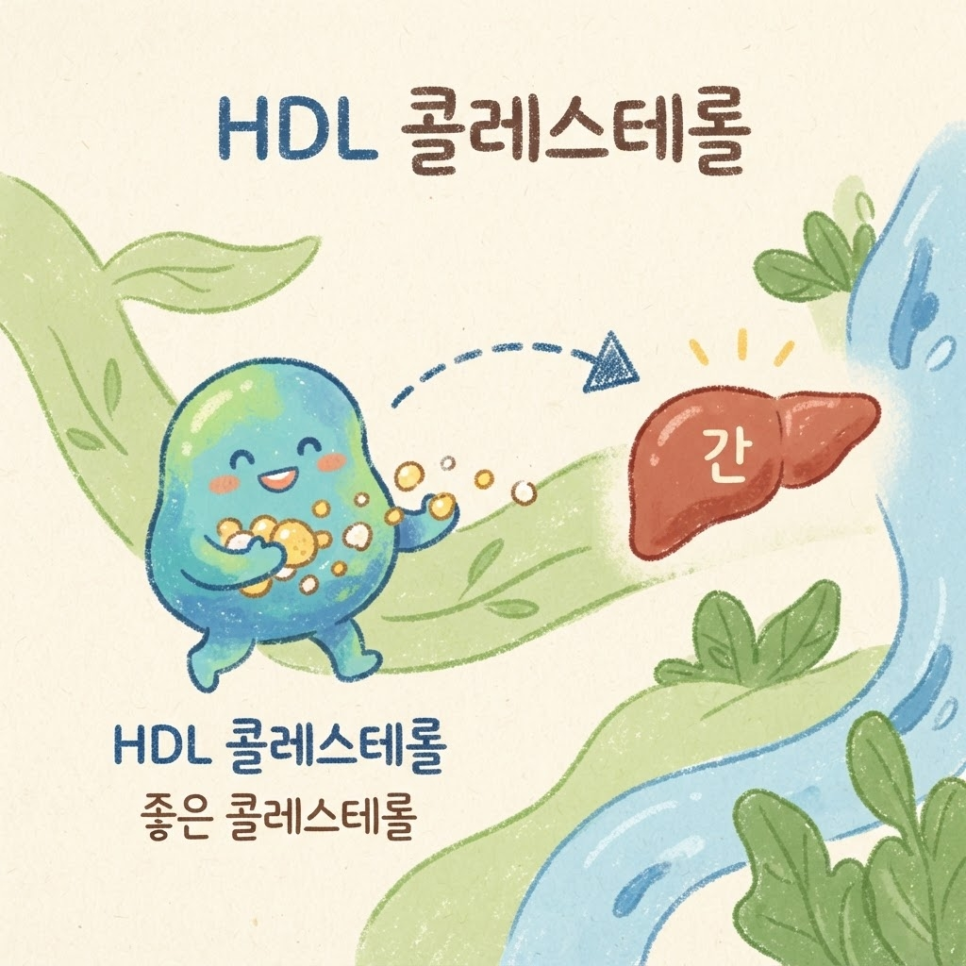
HDL cholesterol is a high-density lipoprotein that helps transport cholesterol in the blood to the liver for processing.
When you’re focused on managing your LDL cholesterol levels,
it’s easy to assume that lower cholesterol is always better across the board.
That assumption leads some people to think they need to lower not just LDL but HDL too,
and they end up searching for ways to lower their HDL.
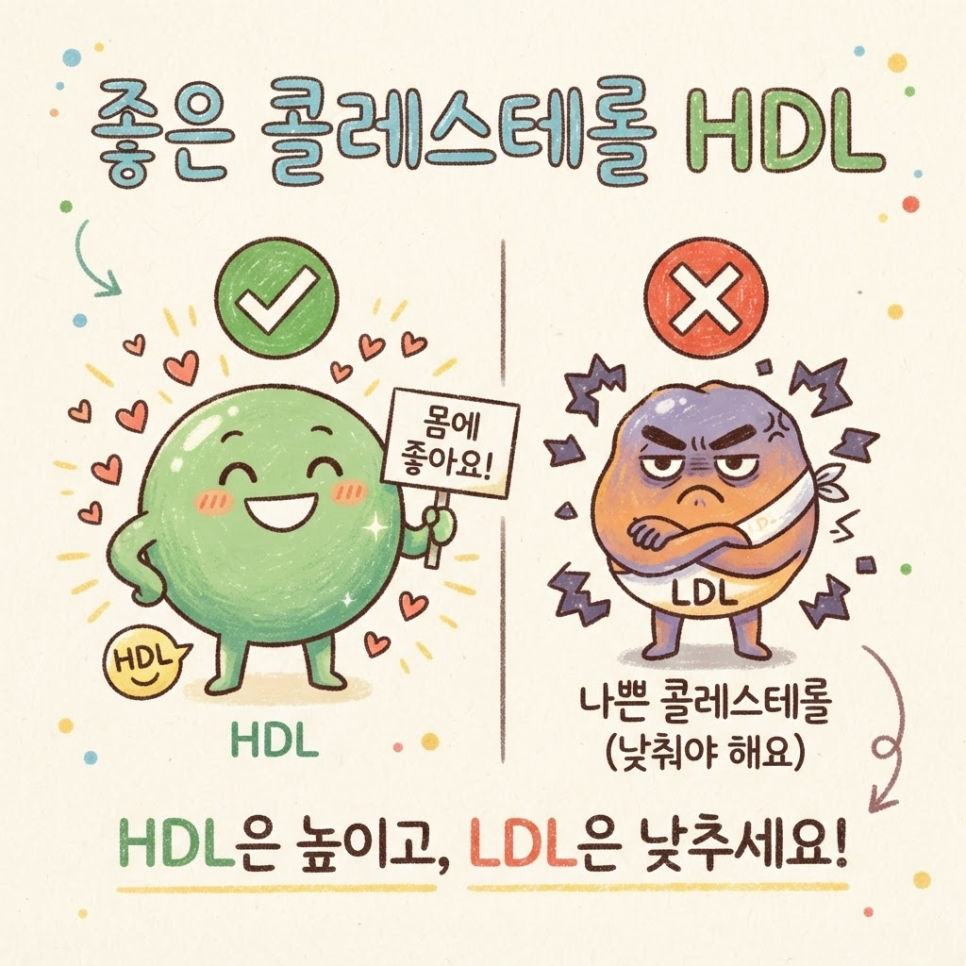
But HDL is often called the ‘good cholesterol,’
and a low HDL level is known to be associated with a higher risk of cardiovascular disease.
In fact, according to Asan Medical Center, HDL helps move cholesterol that has built up in artery walls
back to the liver, which may help lower the risk of atherosclerosis.
So rather than setting out to lower HDL without good reason,
it’s important to look at your overall lipid profile — LDL, HDL, and beyond — together.
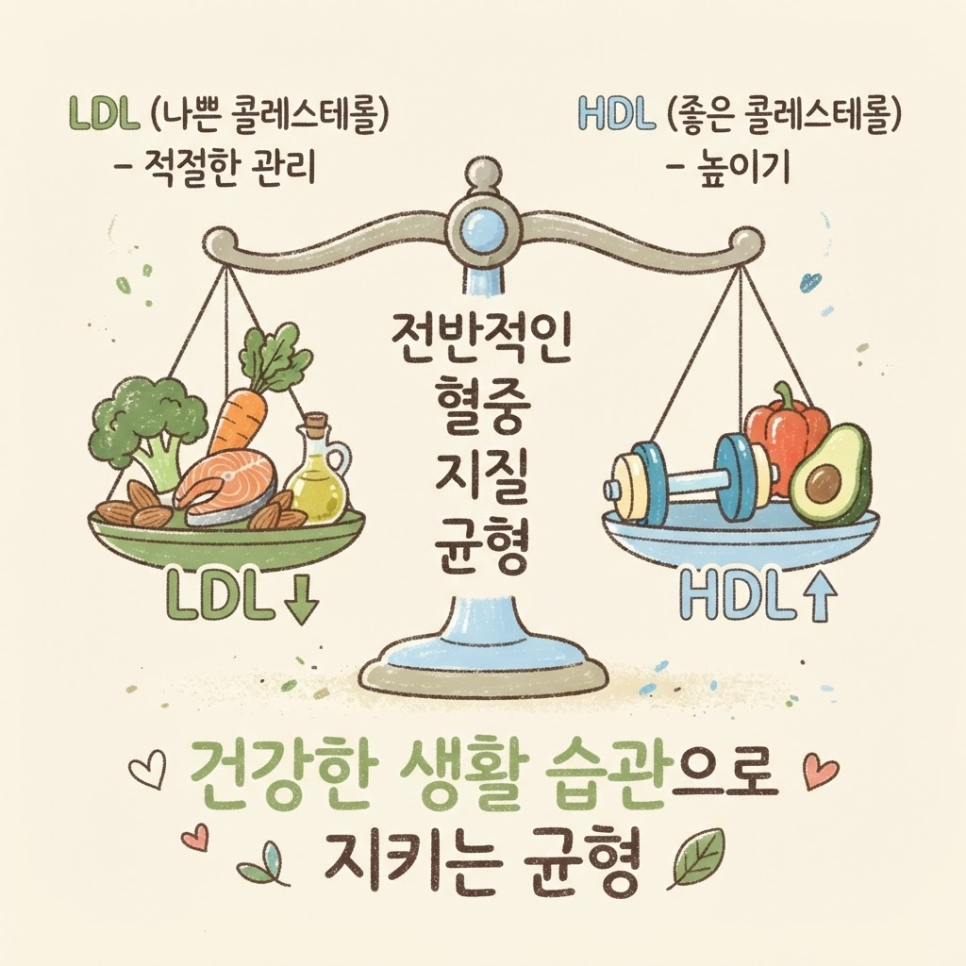
A high LDL result doesn’t mean you should also try to lower your HDL.
It’s better to focus on balancing your overall blood lipid profile through diet, exercise, and weight management.
In the end, managing cholesterol isn’t about watching a single number —
it’s important to review each marker together.
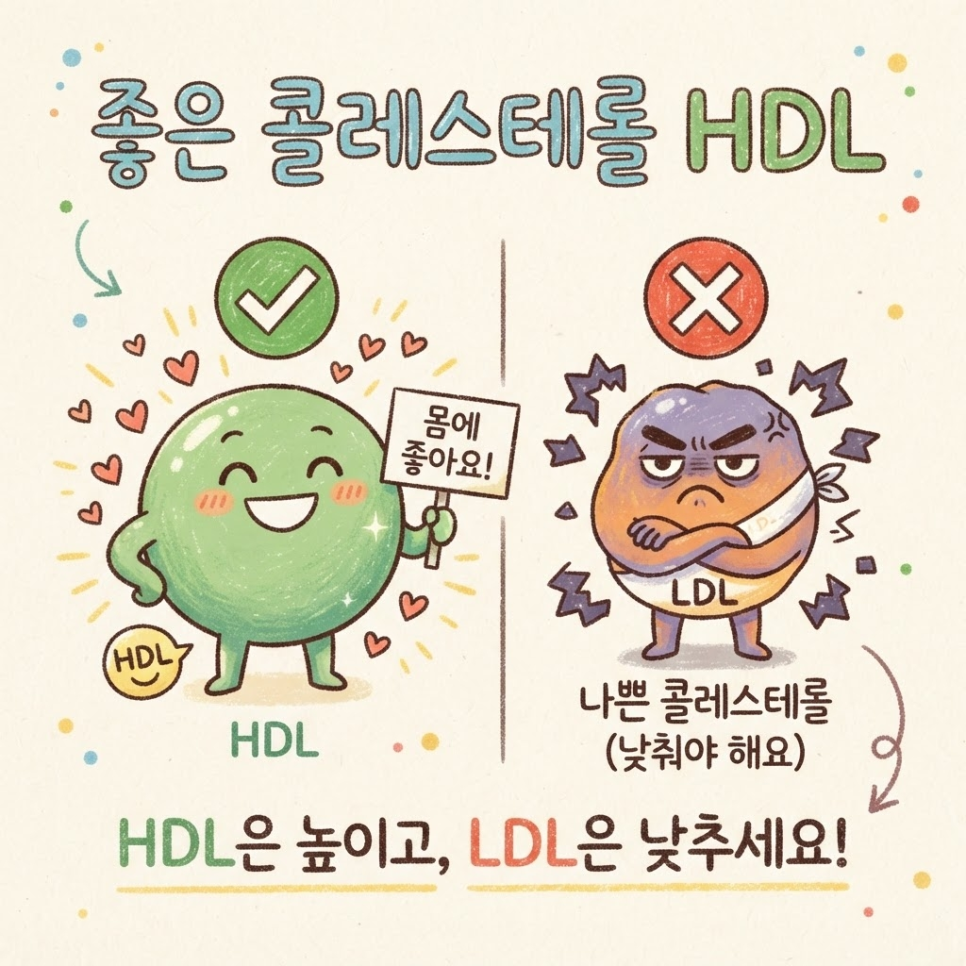
✅ Check your LDL level regularly
✅ Be cautious of unverified ‘lower your HDL’ advice
✅ Cut back on saturated and trans fats
✅ Talk to your doctor based on your test results
How Should You Manage LDL Cholesterol Levels by Age?
Short answer: managing your LDL cholesterol levels should be approached a bit differently
depending on your age and lifestyle.
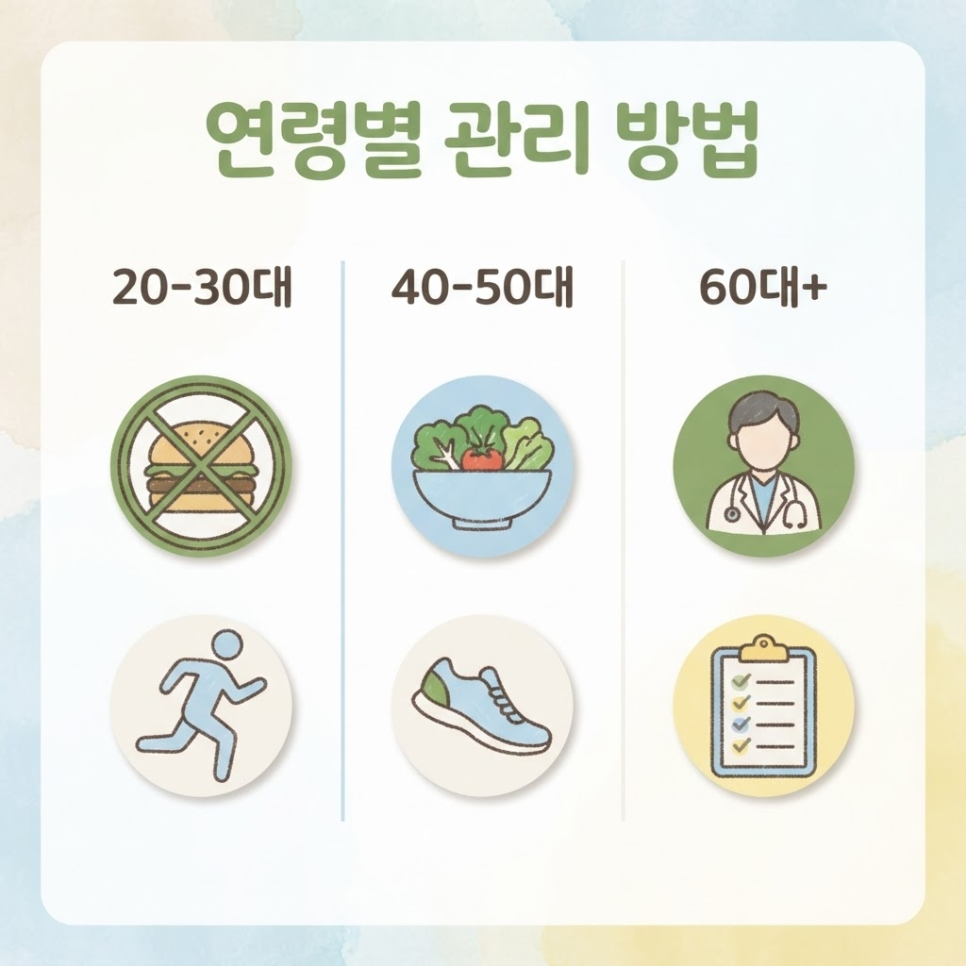
- 20s-30s: Cut back on processed foods and exercise regularly
to help keep your cholesterol within a normal range. - 40s-50s: This is a stage when LDL cholesterol levels can rise
due to bodily changes and reduced activity. Eating fiber-rich foods
and keeping up with regular aerobic exercise can help. - 60s and older: Other health conditions and any medications you’re taking
should be factored in when managing this number.
If you’re in your 40s or 50s, instead of following questionable ‘HDL-lowering’ methods,
it’s better to eat an appropriate amount of healthy fats like unsaturated fat.
Foods rich in unsaturated fatty acids — like perilla oil, soybean oil, and fatty fish —
along with fiber-rich foods like oats and barley, can help.
You can also find related health information at Kookmin Bio Home.

✔️ Age-appropriate eating habits and consistent exercise can support healthy cholesterol management.
✔️ Rather than pushing too hard all at once, try changing your habits one step at a time to keep your levels in a healthy range.
Frequently Asked Questions
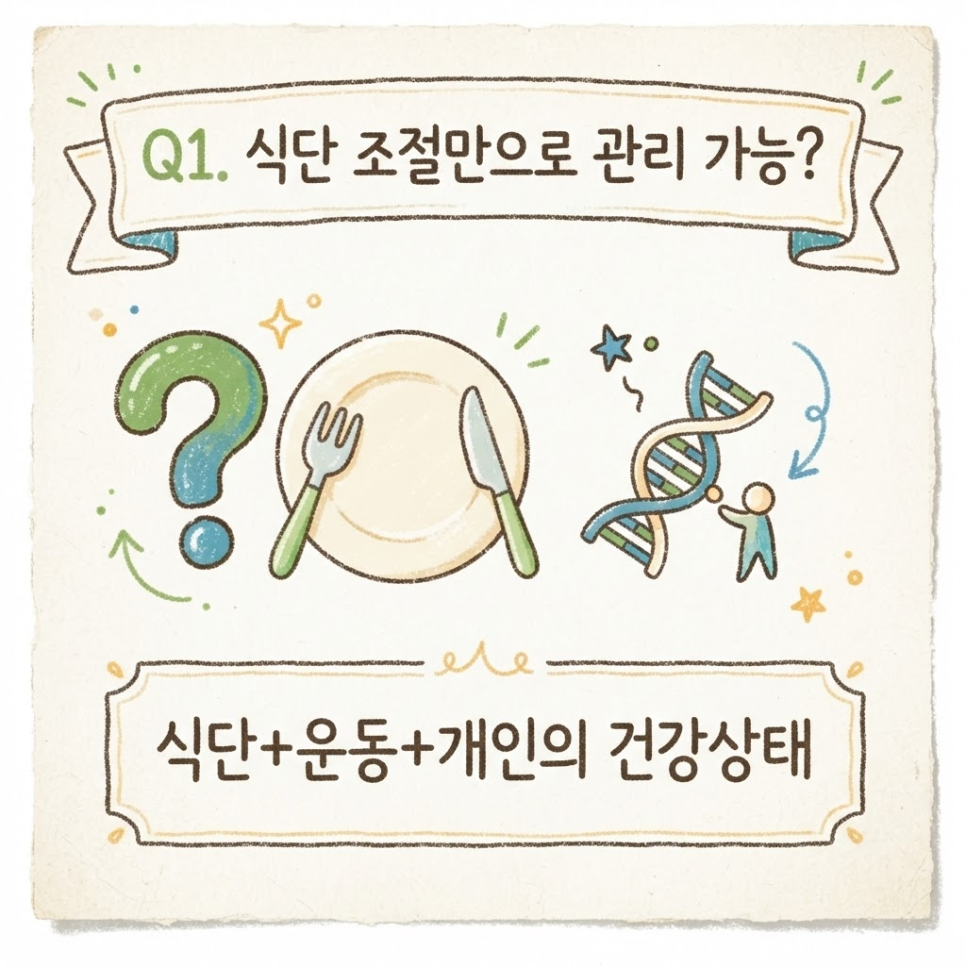
1. Can diet alone manage LDL cholesterol levels?
Diet and exercise are important lifestyle factors, but depending on genetics and individual health status, additional management or treatment may be needed.
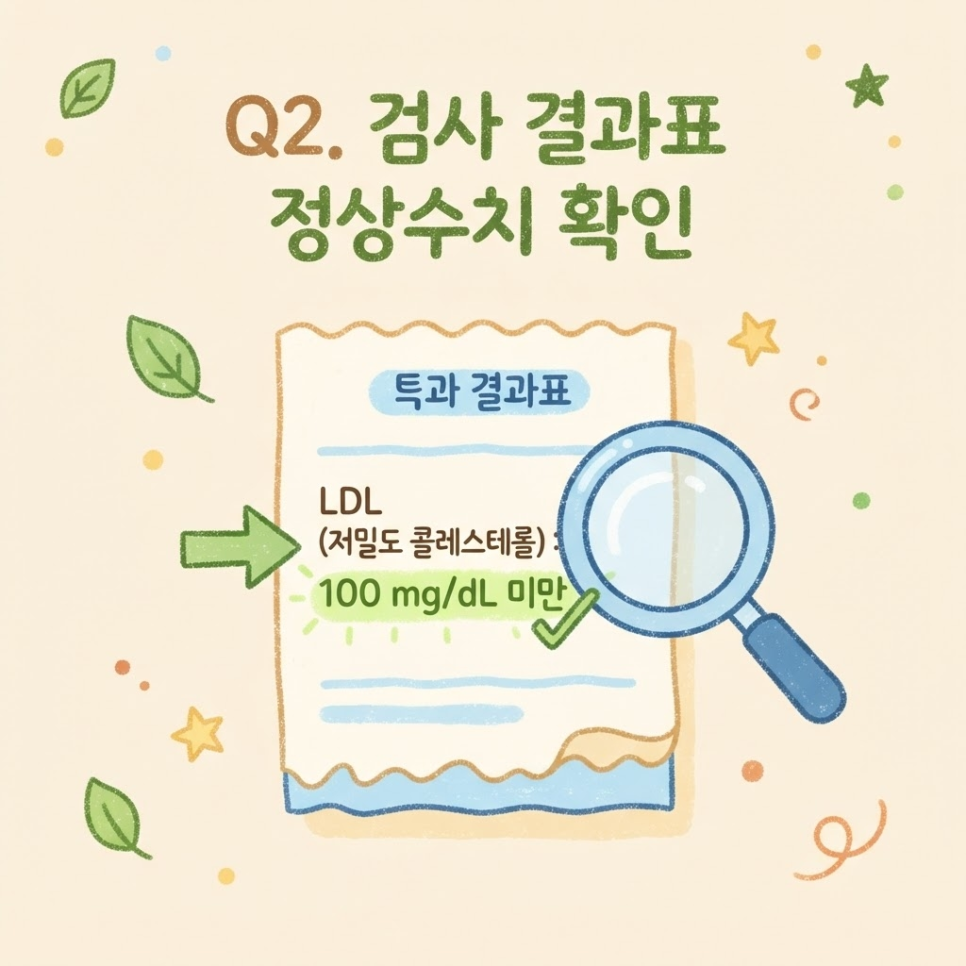
2. Where can I find the normal cholesterol range on my test results?
You can check it in the reference range section of your lab report. LDL cholesterol levels under 100 mg/dL are generally considered optimal, but your target level can vary depending on your individual cardiovascular risk.
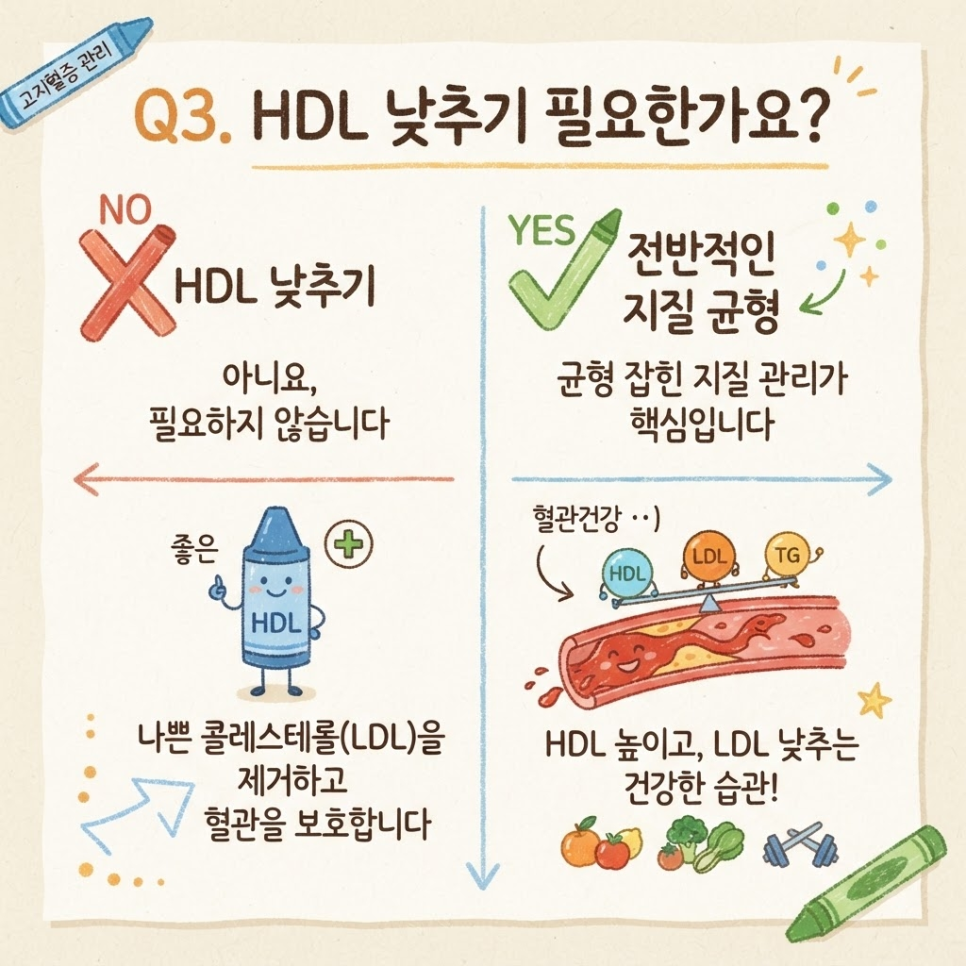
3. Do I need to lower my HDL to improve my blood lipid profile?
Generally, lowering HDL isn’t a management goal. It’s important to look at your overall lipid profile — including both LDL and HDL — together with your individual health status.
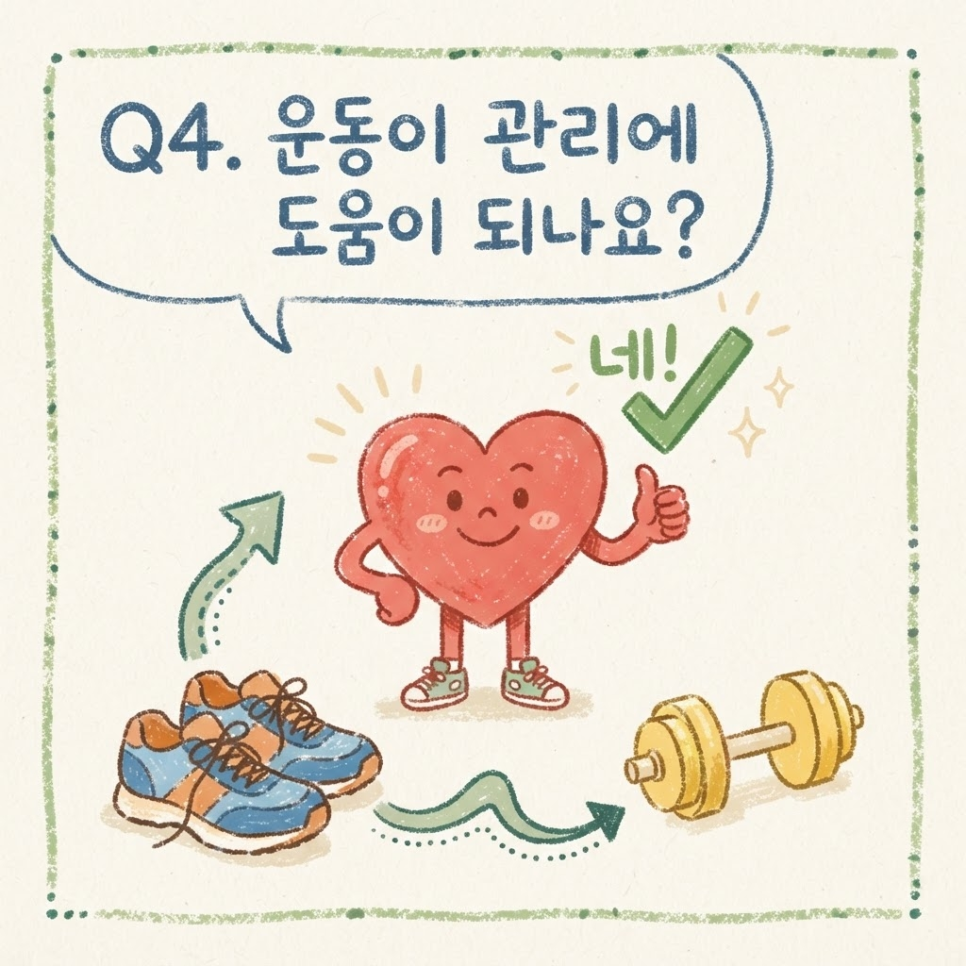
4. Does exercise help with cholesterol management?
Regular exercise may support overall cardiovascular health, including weight and lipid management. It’s best practiced consistently alongside healthy eating habits.
References
· Korean Society of Lipid and Atherosclerosis, “Dyslipidemia Treatment Guidelines,” Korean Society of Lipid and Atherosclerosis. View source
· Asan Medical Center, “High-Density Lipoprotein Cholesterol (HDL),” Asan Medical Center Health Information. View source
· Samsung Medical Center, “If Your Cholesterol Level Is High,” Samsung Medical Center Health Information. View source
This article is intended for general health information purposes only and is not a substitute for individual diagnosis or treatment.
If you have any health concerns, please consult a medical professional.