Parabiotics (Heat-Killed Probiotics)

If you’ve been taking probiotics every day but haven’t noticed the results you hoped for, you’re not alone. Many people focus only on the number of live bacteria when choosing a probiotic supplement.
But no matter how many bacteria you consume, if most of them are destroyed by stomach acid and bile before reaching your intestines, the potential benefits are limited. This is exactly why parabiotics — a newer approach to gut health — are gaining attention in health communities and wellness programs.
Key Takeaways
This guide breaks down the definition of parabiotics and how they differ from traditional live probiotics, exploring their role as a next-generation approach to gut health. We also cover how to use them safely, what the research suggests about their benefits, and how to minimize potential side effects.
What Are Parabiotics and How Do They Work?

Parabiotics are not live bacteria — they are bioactive components derived from beneficial bacteria through specialized heat treatment.
Parabiotics are heat-inactivated forms of beneficial bacteria (also called tyndallized or heat-killed probiotics) that retain their original bioactive components and cell wall structures intact.
Traditional live probiotics must survive and reach the gut alive to be effective — a significant challenge, since most are destroyed by stomach acid and bile along the way. This has long been a known limitation of conventional probiotic supplements.
These inactivated forms, by contrast, are already in a stabilized, inactivated form. Because they are not alive, they are not significantly affected by temperature, humidity, or stomach acid, and may reach the intestines structurally intact.
Data Insight
Unlike live probiotics that must survive the journey to your gut, they are inactivated bacterial cells that may deliver their bioactive components directly to the intestines — representing an innovative next-generation approach to gut health support.
Parabiotics Benefits: Why Should You Consider Them?

One of the biggest potential advantages is that parabiotics may be gentler on sensitive digestive systems, and their cell wall components may serve as nourishment for beneficial gut bacteria, potentially supporting a healthier gut environment.
Research suggests that the cell wall components of inactivated bacteria may interact with immune cells in the gut lining, potentially helping to support the body’s natural defense systems. Because there is no colonization period required — unlike live probiotics — this interaction may occur more directly.
They are also highly resistant to heat and humidity, making them shelf-stable without refrigeration — convenient for summer travel or everyday use on the go.
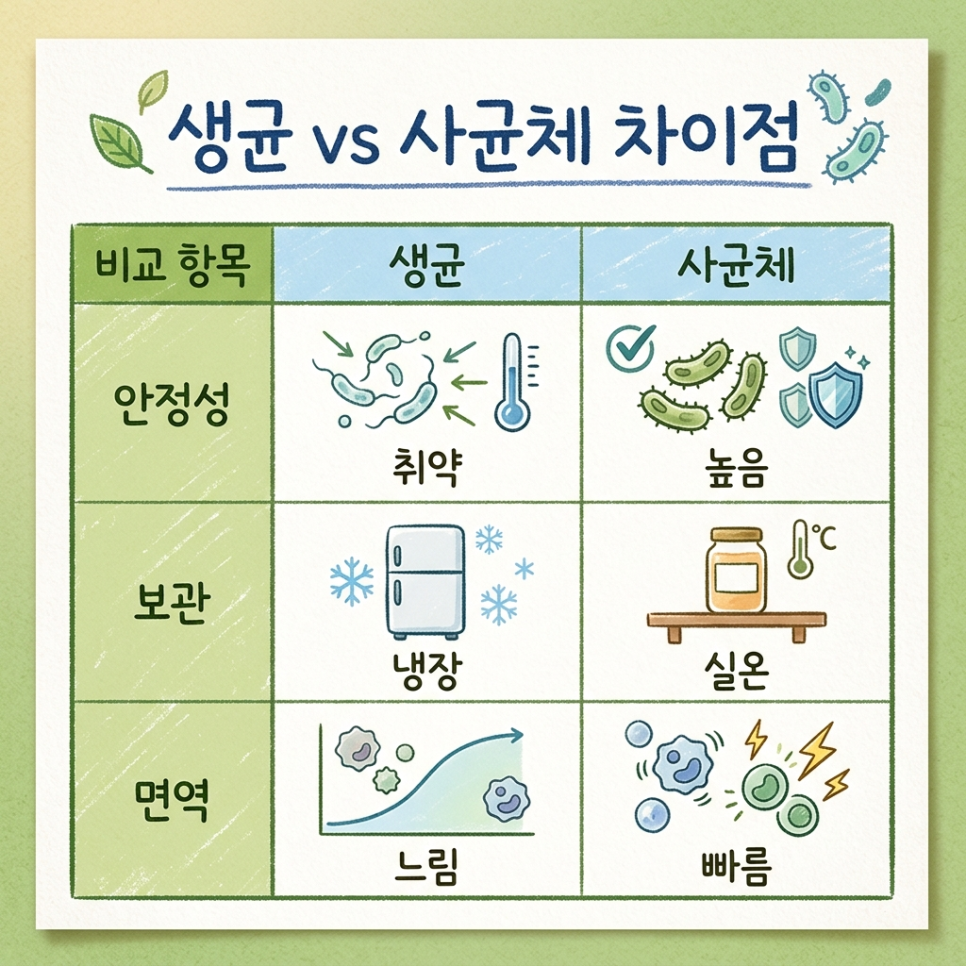
| Comparison | Live Probiotics | Parabiotics (Heat-Killed) |
|---|---|---|
| Heat & Acid Stability | Low (most bacteria die before reaching the gut) | Very high (may reach the gut structurally intact) |
| Storage | Often requires refrigeration | Room-temperature stable (very convenient) |
| Immune Activation | Requires gut colonization first | Cell wall components may interact with immune cells more directly |
Parabiotics Side Effects and Precautions for Safe Use

Parabiotics are generally considered to have a favorable safety profile compared to live probiotics, but some individuals may experience bloating or temporary loose stools when first starting.
These reactions are not typically caused by ingredient toxicity. They more likely reflect a temporary adjustment period as the gut microbiome rebalances in response to the new inactivated bacterial components — usually presenting as mild gas or mild stomach discomfort.
For this reason, it is wise to start with a smaller amount and gradually increase your intake to give your gut time to adjust.
Checklist
✅ Follow the serving size and daily recommended amount on the product label
✅ Start with a smaller amount and gradually increase when first using
✅ Those with underlying health conditions or who are pregnant should consult a healthcare professional before use
If you experience skin hives or persistent vomiting even after reducing your intake, stop use immediately and seek medical advice.
The full potential benefits are best supported when you pay close attention to how your body responds and maintain consistent, healthy daily habits.
Frequently Asked Questions
1. Does “parabiotics” mean the bacteria are dead or inactivated?
Yes. Parabiotics refers to beneficial bacteria that have been inactivated through specialized heat treatment — their cellular life activity has stopped, but the bioactive components and cell wall structures are preserved intact.
2. Will combining parabiotics with live probiotics improve the benefits?
A synergistic effect is possible. Live probiotics colonize the gut and may function as beneficial bacteria directly, while they may help support the growth of existing beneficial gut bacteria and interact with the immune system. Products combining both approaches are increasingly popular for this reason.
3. Can children or elderly individuals experience side effects from parabiotics?
Because they do not multiply inside the body, heat-killed probiotics are considered relatively safer than live probiotics when it comes to risks such as bacteremia. However, taking too much may cause bloating, so children and elderly individuals are advised to start with less than the recommended amount and monitor how they feel.
4. Is it best to take parabiotics on an empty stomach in the morning?
Unlike live probiotics, there is no concern about stomach acid destroying them, so they can be taken any time — before or after meals. Consistency matters more than timing: taking them at the same time each day tends to be more effective than focusing on when exactly to take them.
References
· (Internal link: Kookmin Bio Home — recommended to replace with a link to a parabiotic product recommendation post when available)
· Ministry of Food and Drug Safety, Republic of Korea, MFDS “Status of Recognized Functional Ingredients in Health Functional Foods,” MFDS Public Data.
· Benefector Research Team, “Immunomodulatory Activity of Heat-Killed Lactic Acid Bacteria,” Korean Society for Microbiology and Biotechnology, 2023.
This article is for general health information purposes only and is not a substitute for professional medical diagnosis or treatment. If you have health concerns, please consult a qualified healthcare provider.
#parabiotics #parabioticsbenefits #heatkilledprobiotics #parabioticssideeffects #tyndallizedprobiotics #postbiotics #guthealth #immunesupport #probiotics #gutmicrobiome