You’re not diabetic yet, but your body may already be sending warning signs.
Miss this window, and you could develop full-blown diabetes within a few years.
But manage it now, and you may be able to bring your blood sugar back to normal — this window is what’s known as prediabetes.
This article covers 3 prediabetes management strategies, from diagnostic criteria to supplements, exercise, and diet planning that may help.
If you’re not sure where to start, just follow along step by step.


What Is Prediabetes, and What Are the Diagnostic Criteria?
To put it simply, prediabetes isn’t diabetes yet —
but it’s a warning zone you can’t afford to ignore.
Prediabetes refers to a fasting blood sugar level of 100–125 mg/dL,
or an HbA1c level of 5.7–6.4%.
According to the Korean Diabetes Association’s criteria, a fasting blood sugar under 100 mg/dL is considered normal,
while 126 mg/dL or higher (confirmed by two separate tests) is diagnosed as diabetes.
The concern is that a significant number of people in this range
go on to develop actual diabetes within a few years.
On the flip side, that also means practicing proper prediabetes management may be
your last chance to bring your blood sugar back to a normal range.
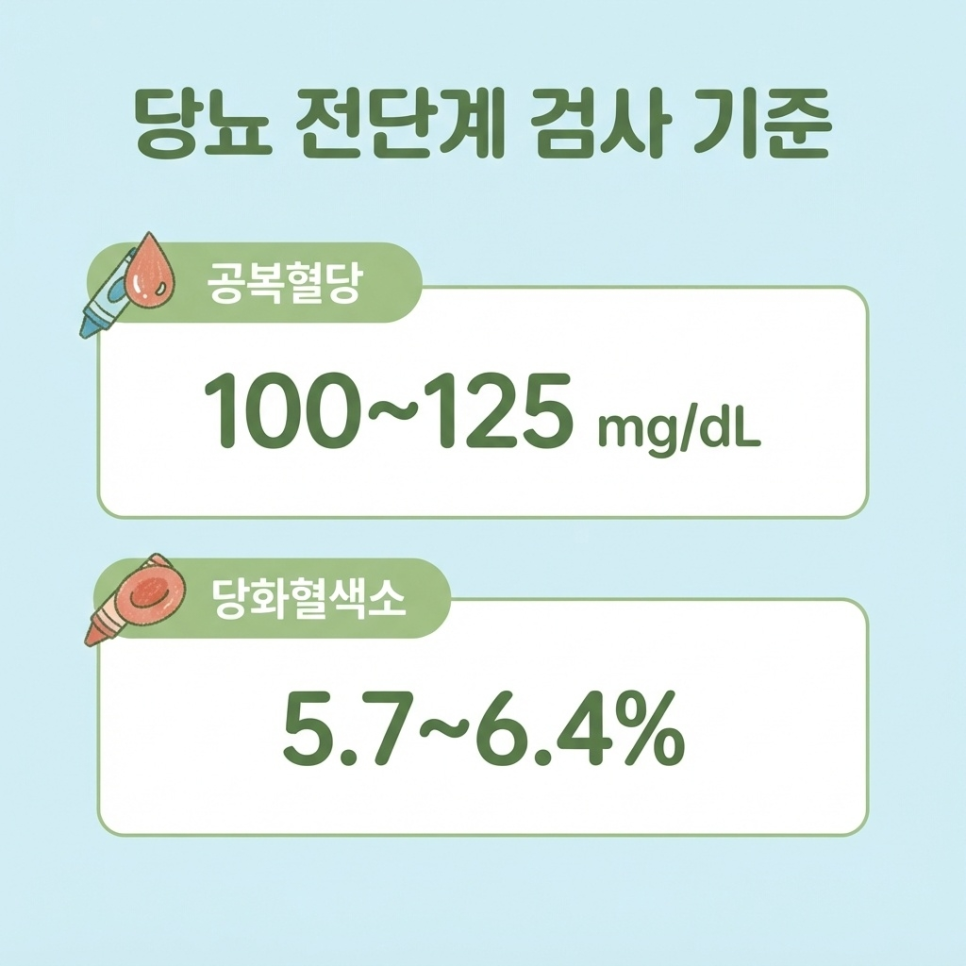
✔️ Fasting blood sugar 100–125 mg/dL or HbA1c 5.7–6.4% = prediabetes
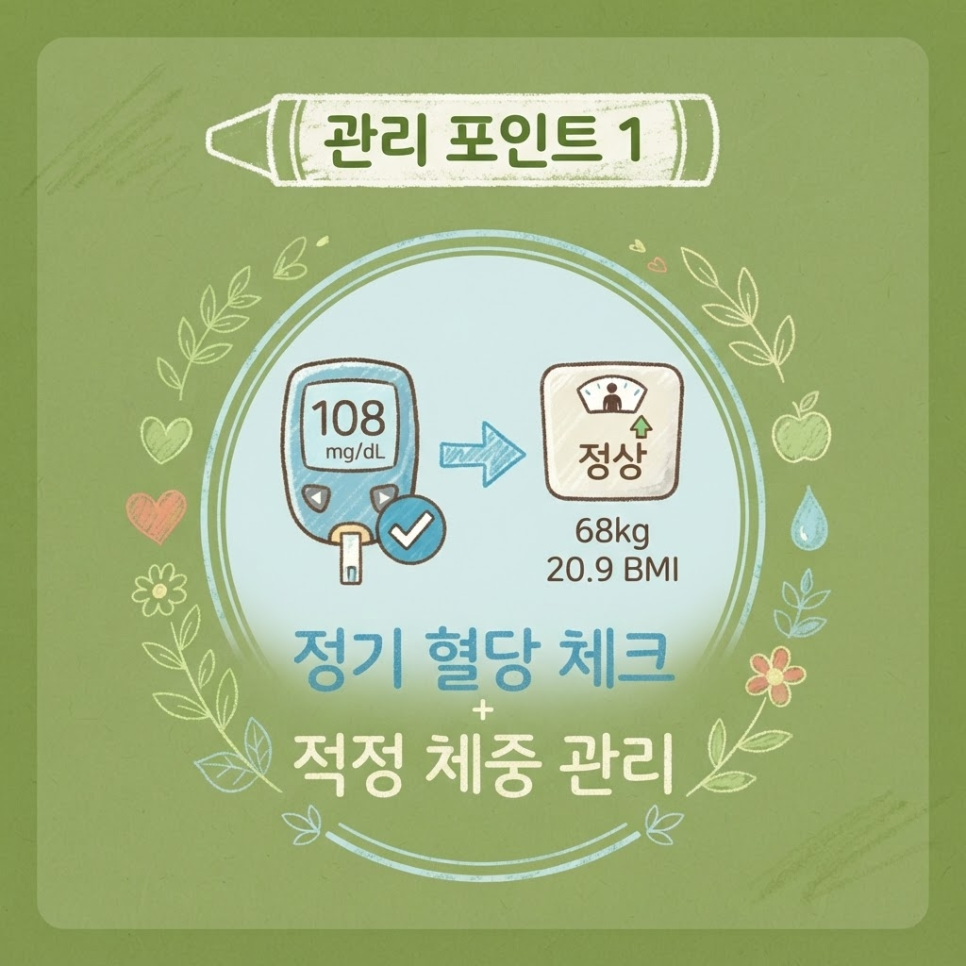
✔️ Regular blood sugar checks and healthy weight management are the basics
✔️ Don’t overdo it at first — make steady, gradual adjustments
Prediabetes Supplements: Which Ingredients May Help?
The two standout ingredients are banaba leaf extract and chromium.
One of the most well-known prediabetes supplement ingredients is banaba leaf extract, which contains corosolic acid.
Korea’s Ministry of Food and Drug Safety (MFDS) has recognized banaba leaf extract
as a functional ingredient that may help suppress the rise in post-meal blood sugar.
Chromium is a nutrient known to contribute to the body’s metabolism of carbohydrates, fat, and protein.
When I checked the ingredient labels of several products myself,
I noticed the corosolic acid content varied quite a bit between brands.
So it’s worth comparing labels carefully before choosing a product.
That said, taking a supplement alone won’t automatically control your blood sugar.
It should be used as a supportive measure
alongside a solid diet and exercise routine.
You can find more product information on the Kookmin Bio homepage.
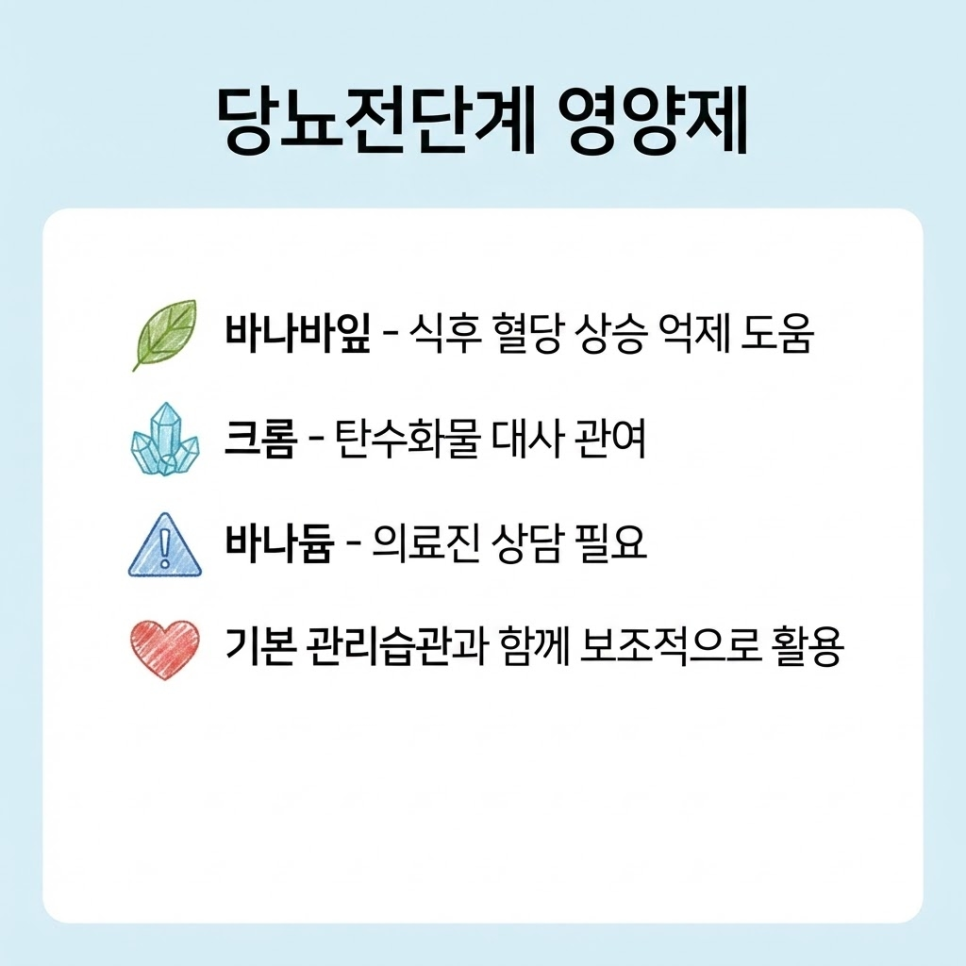
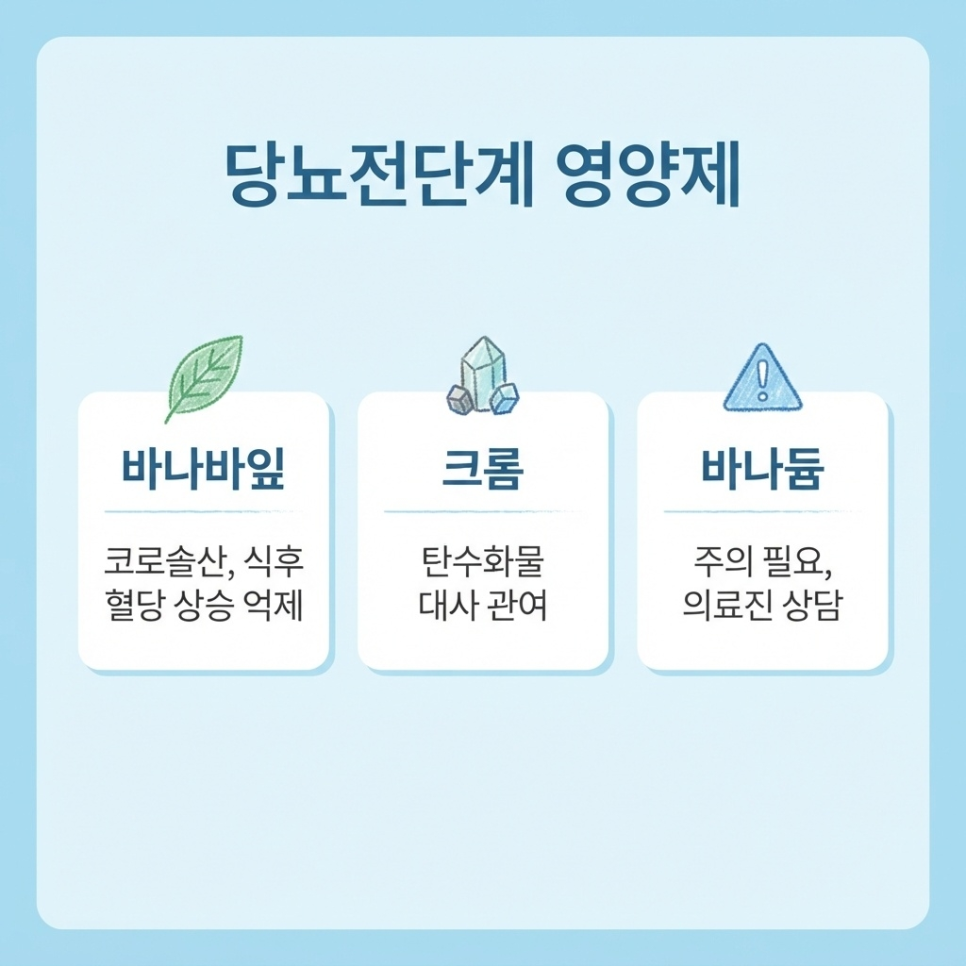
✅ Banaba leaf extract (corosolic acid) — may help suppress post-meal blood sugar spikes
✅ Chromium — a nutrient that contributes to carbohydrate, fat, and protein metabolism
✅ Vanadium — still being studied; use caution with unsupervised intake
✅ If you’re taking any medication, consult your doctor or pharmacist before use
Prediabetes supplements are health functional foods, not medications.
They cannot be said to treat or prevent any disease,
and depending on your medications or health condition, professional consultation is recommended.
Exercise and Diet Tips for Prediabetes Management
The key is combining cardio and strength training with a fiber-rich diet.
For prediabetes, combining cardio and strength training tends to be more effective than either alone.
Cardio exercises like walking or cycling
may help improve insulin sensitivity.
Adding strength training builds muscle mass, which helps your body use blood sugar more efficiently.
Even a simple habit of taking a light walk after meals
may help manage post-meal blood sugar.
The key to prediabetes diet planning is cutting back on refined carbohydrates.
Try building your meals around fiber-rich foods like vegetables, protein, and whole grains.
Meal order matters too — eating vegetables and protein first,
then carbohydrates last, is a method worth trying.
| Category | Examples | Expected Benefit |
|---|---|---|
| Cardio | Walking, cycling, swimming | Improved insulin sensitivity |
| Strength training | Squats, resistance bands, dumbbells | More muscle mass, better blood sugar use |

✔️ Combine cardio and strength training, 3–5 times a week
✔️ Cut back on refined carbs and eat more fiber-rich foods
✔️ Eat vegetables and protein first, carbs last

Frequently Asked Questions
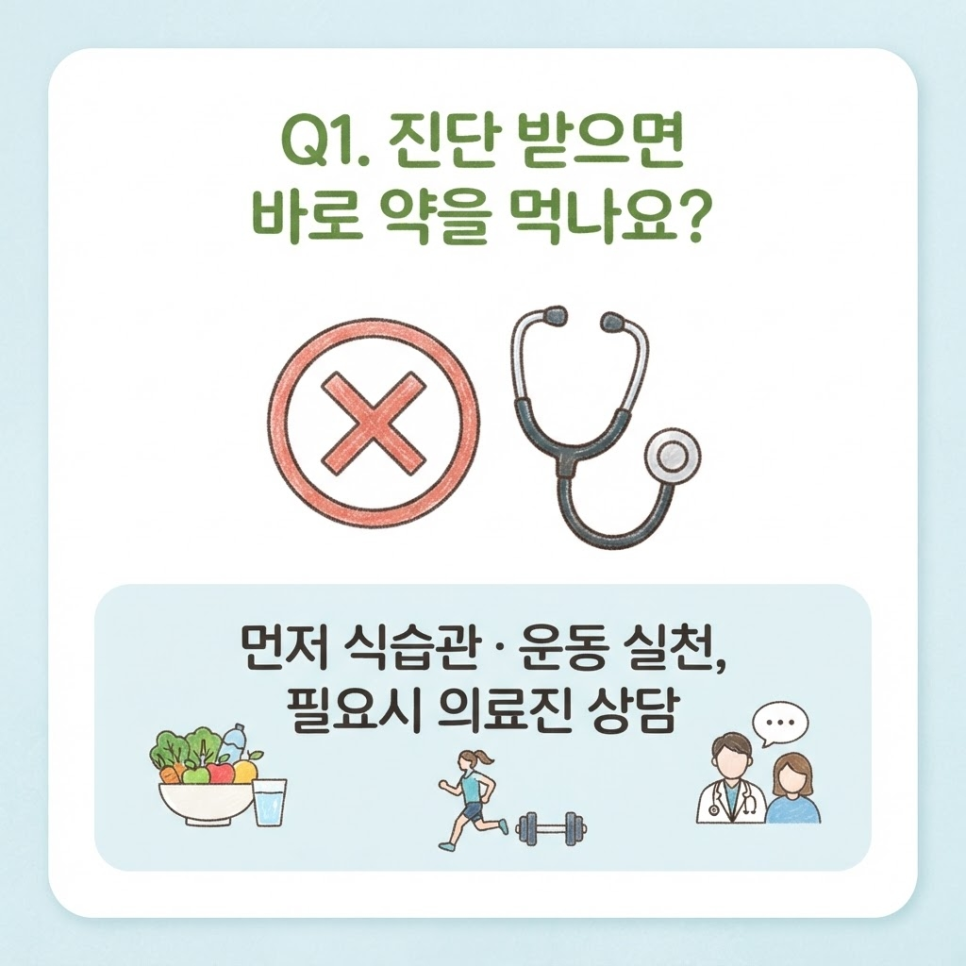
1. If I’m diagnosed with prediabetes, do I need to start medication right away?
Not necessarily. In the early stages, many people focus on improving their diet and exercise habits first. That said, depending on your blood sugar levels and overall health, medication may become necessary, so be sure to talk with your doctor.
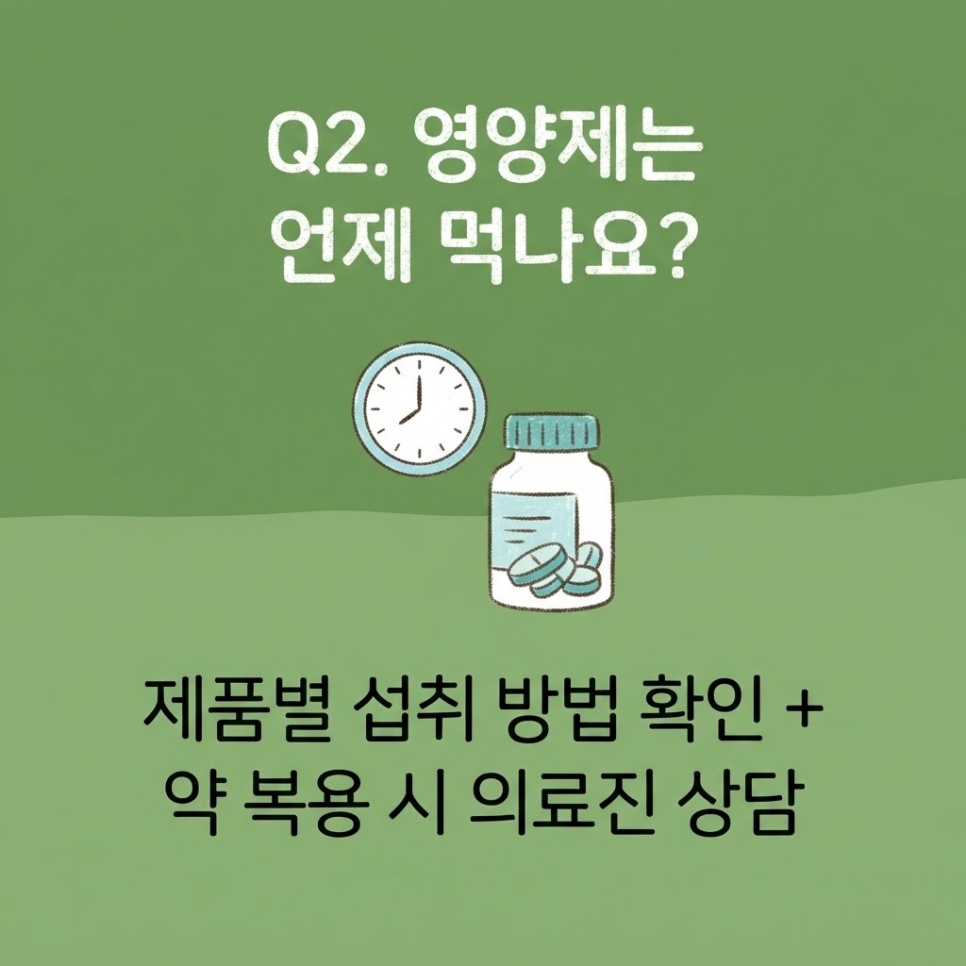
2. When is the best time to take prediabetes supplements?
Intake methods vary by ingredient and product. Check the directions listed on the product label, and if you’re taking any medication, it’s best to consult your doctor or pharmacist.
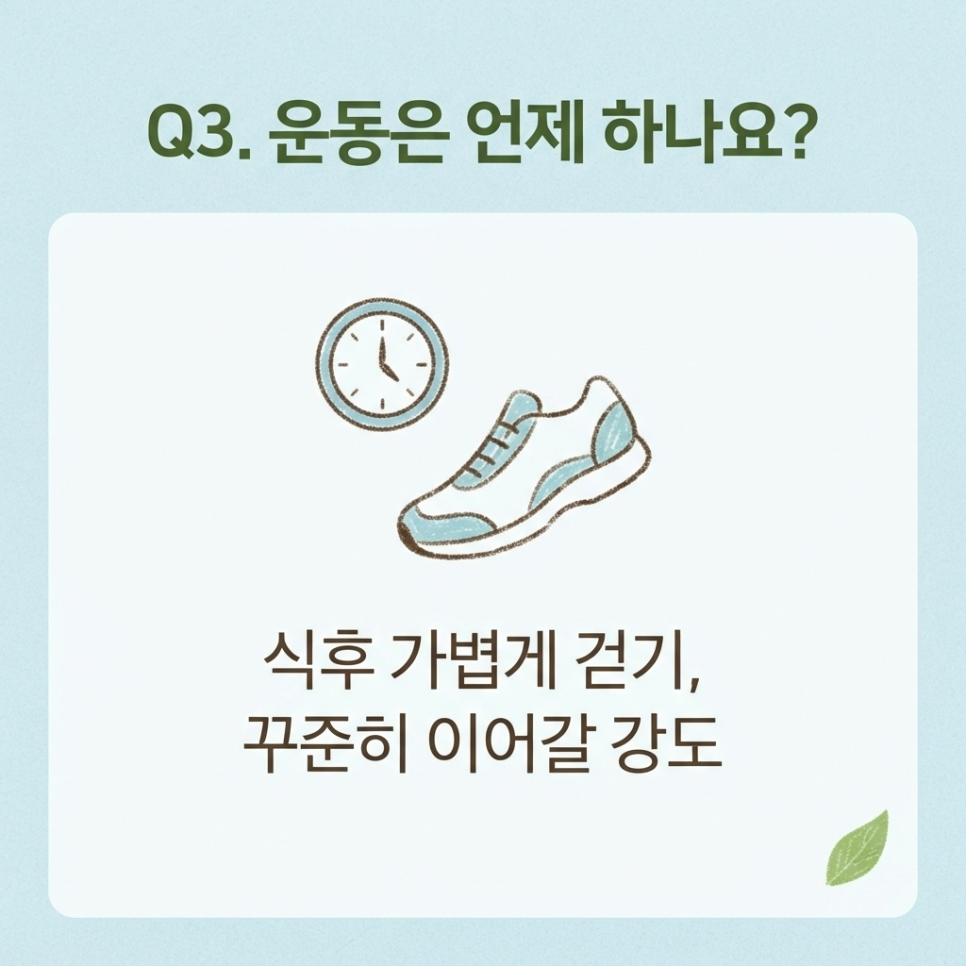
3. When is the best time to exercise for prediabetes?
A light walk after meals may help manage post-meal blood sugar. Start at an intensity you can keep up consistently, rather than pushing too hard.
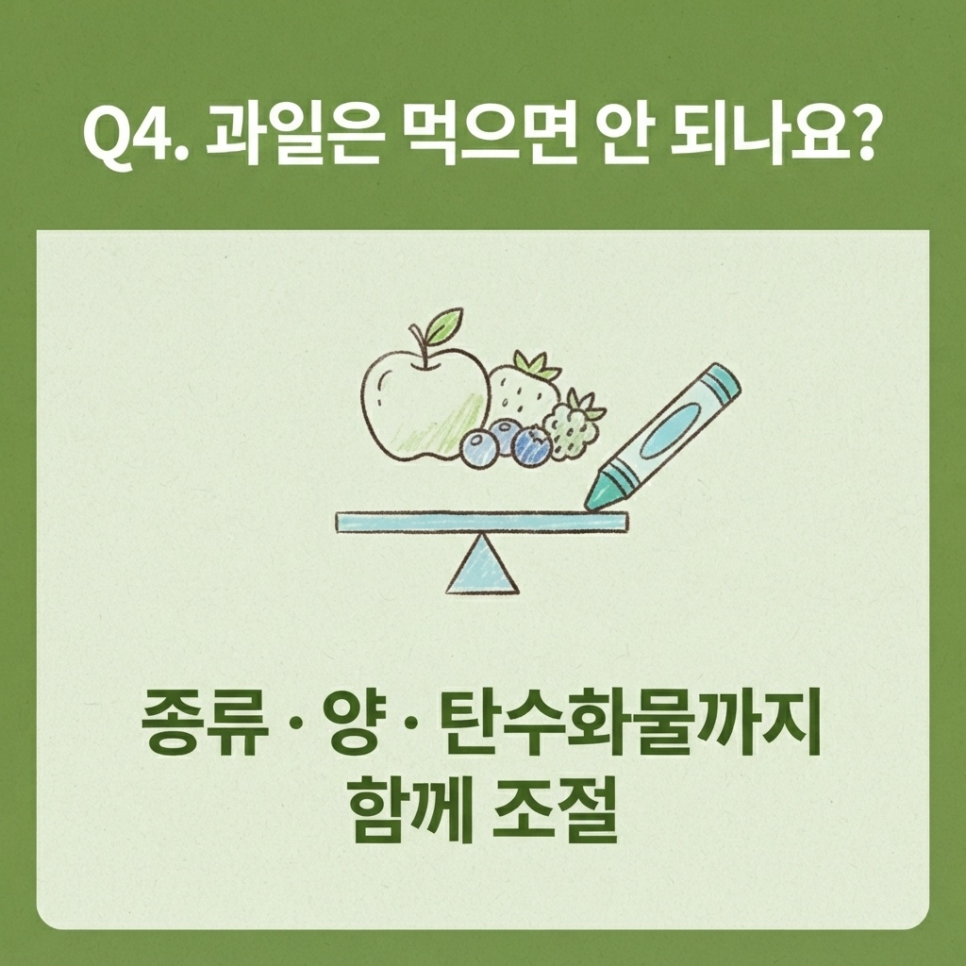
4. Should I avoid fruit entirely when planning a prediabetes diet?
You don’t need to cut out fruit altogether. What matters is managing not just the type, but also the portion size and your overall carbohydrate intake.
References
· Korean Diabetes Association, “Understanding, Treating, and Managing Diabetes.” View source
· Korean Pharmacists Journal (KPA News), “[Nutrition & Doping] Banaba Leaf Extract: A Helper for Blood Sugar Management and Energy Metabolism.” View source
· Dailypharm, “Chromium’s Contribution to Carbohydrate and Other Metabolism Recognized as a Functional Ingredient.” View source
This article is intended for general health information purposes only and is not a substitute for individual diagnosis or treatment. If you have a health concern, please consult a medical professional.