Ever have one of those stretches where no matter how much you sleep, you still wake up exhausted and achy all over?
It’s easy to chalk it up to not getting enough rest, but in many cases the real culprit is inflammation in the body — and learning to recognize the signs of inflammation in the body early can make a real difference.
I went through a stretch myself where I felt inexplicably drained and kept getting swollen, tender gums, so I finally saw a doctor about it.
That’s when I first started taking a serious look at inflammation in my own body.
In this article, we’ll walk through the signs you can use to self-check for inflammation in the body and how it connects to chronic fatigue.
We’ll also cover everyday diet and lifestyle habits that can help you manage inflammation.

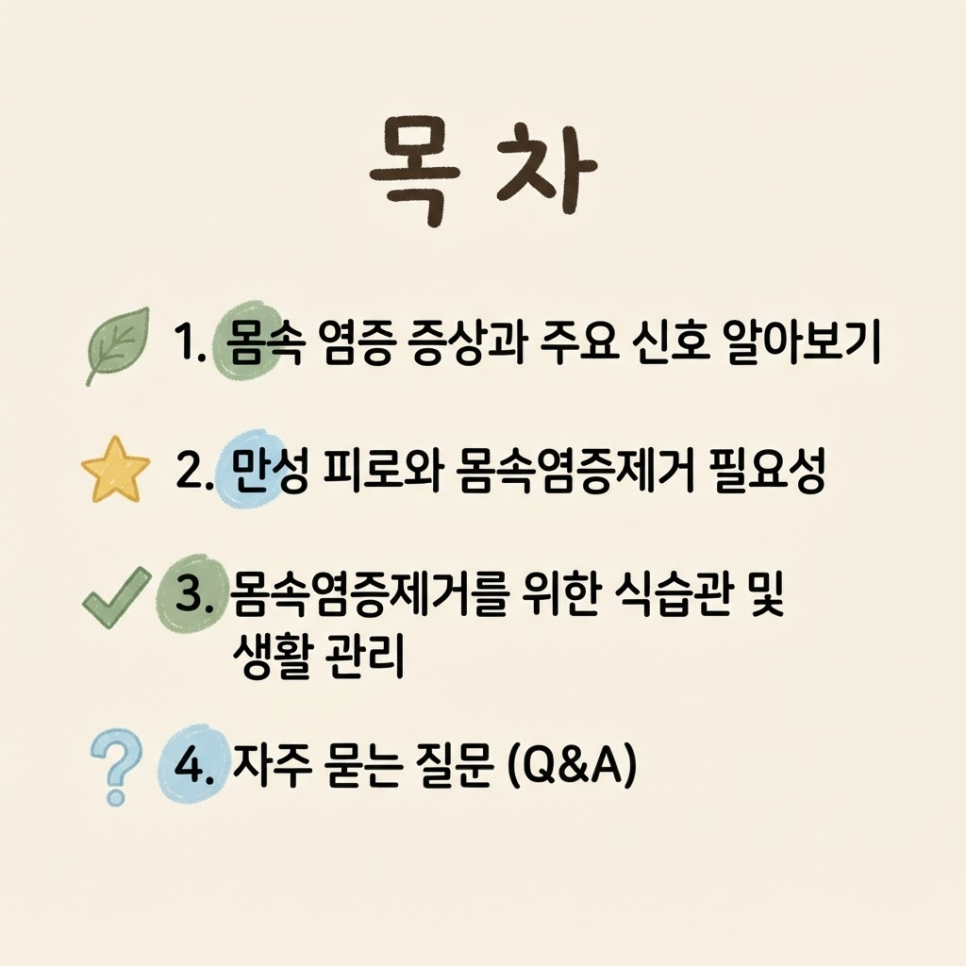
1. Can You Self-Check for Inflammation in the Body?
2. How Is Chronic Fatigue Related to Inflammation in the Body?
3. Can CRP Levels Show the State of Inflammation in Your Body?
4. What Diet and Lifestyle Habits Help Reduce Inflammation in the Body?
Can You Self-Check for Signs of Inflammation in the Body?
Signs that inflammation is present in the body include physical changes that occur as the immune system responds to various triggers.
Unlike acute inflammation, these signs often don’t come with obvious pain or swelling, so it’s easy to brush them off as nothing.
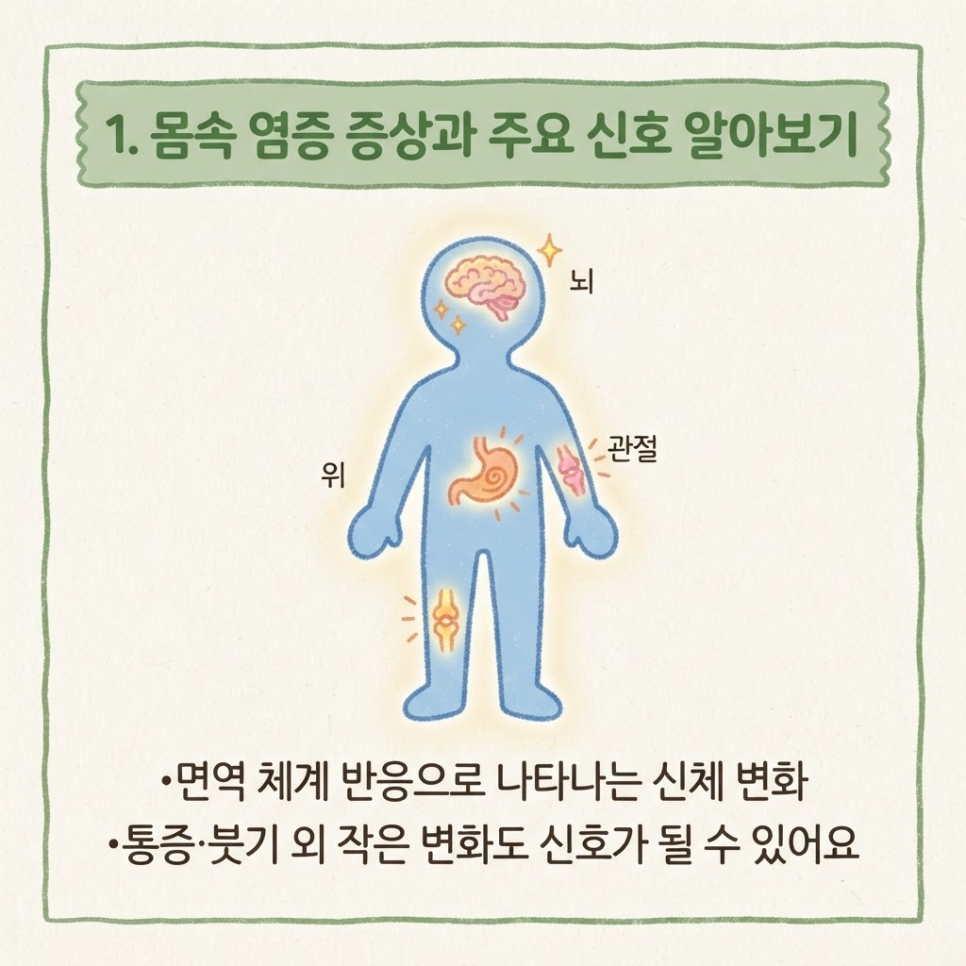
If you notice recurring fatigue with no clear cause, puffiness, skin flare-ups, or digestive discomfort,
it’s worth taking a closer look at your current health.
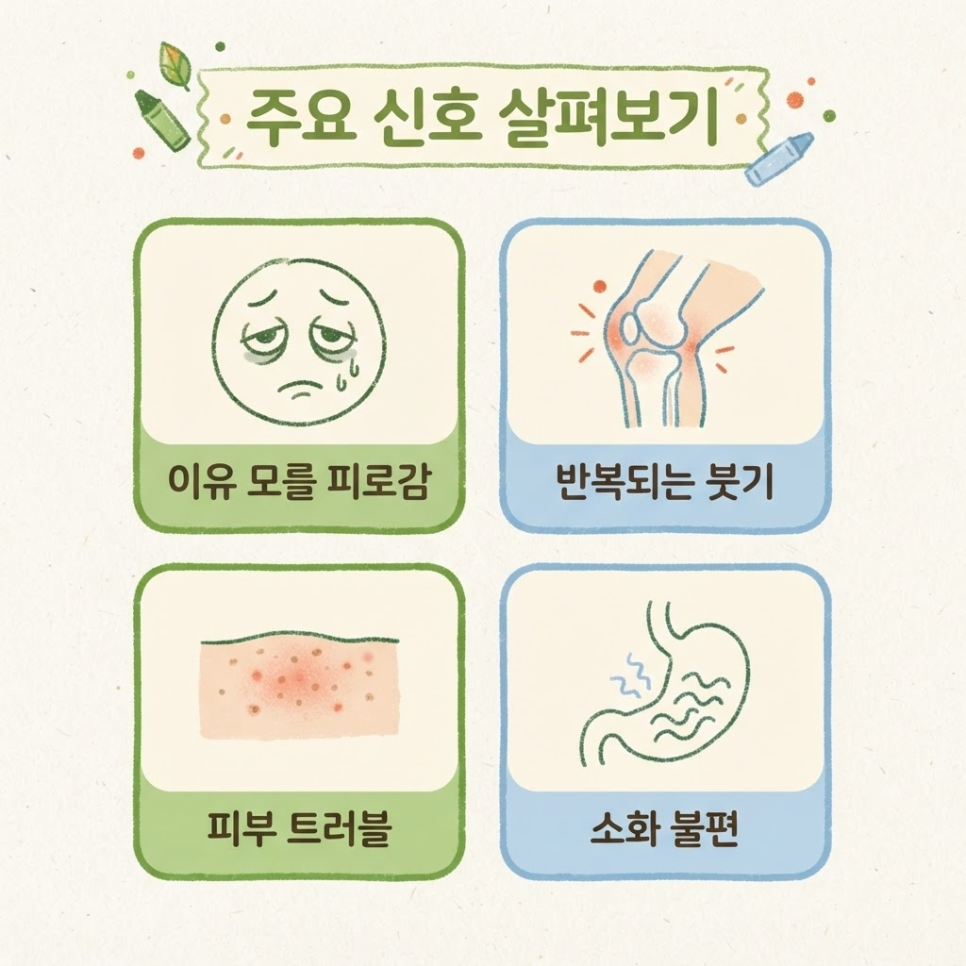
✅ Your joints feel stiff in the morning
✅ Your gums are often swollen or sensitive
✅ You keep feeling tired for no clear reason
✅ Skin breakouts have become more frequent
✅ You feel bloated and have trouble digesting food
If these changes stick around for a long time, don’t just assume it’s inflammation in the body —
it’s important to pin down the actual cause.
If you have recurring fatigue or puffiness with no clear cause, it’s worth checking your overall health, including possible inflammation in the body.
If symptoms persist, don’t stop at self-checking — confirm the exact cause with a professional.

How Is Chronic Fatigue Related to Inflammation in the Body?
Chronic fatigue is one of the most common signals that accompanies ongoing inflammation in the body.
If you’re still tired even after getting plenty of rest, it’s worth looking at several possible causes together,
such as lack of sleep, stress, or poor nutrition.
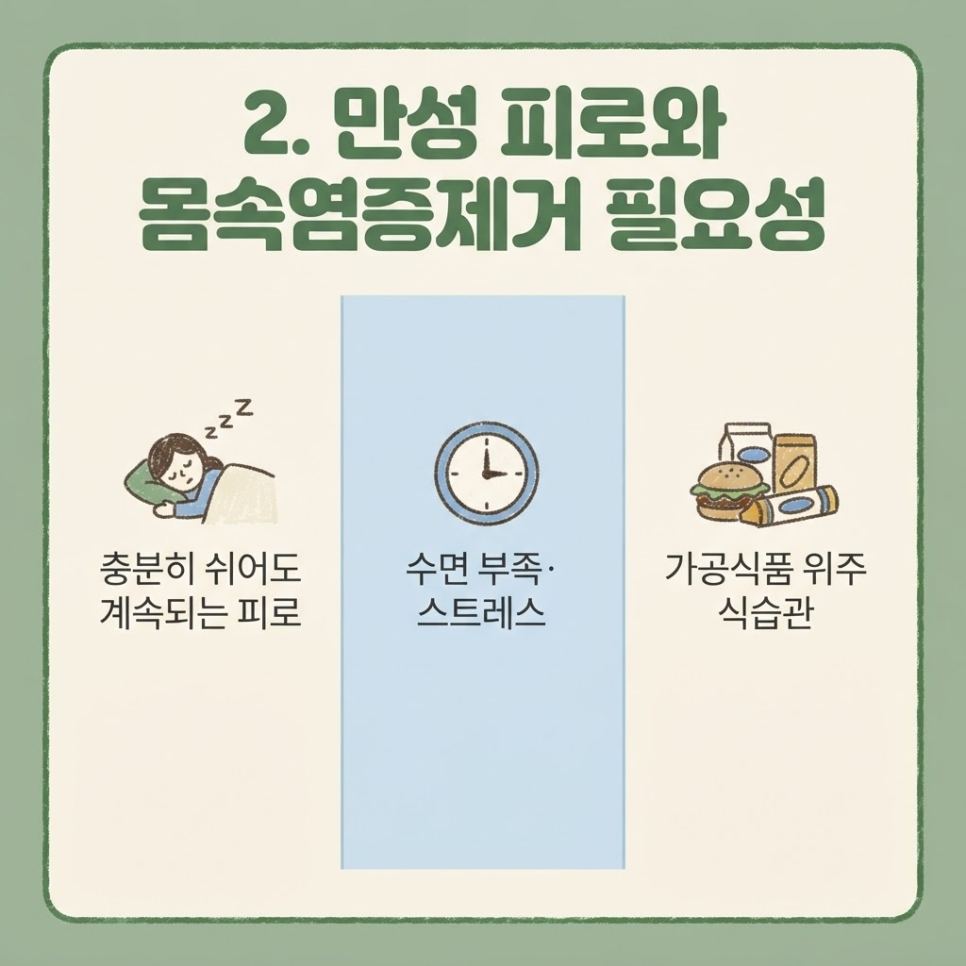
An irregular routine, lack of exercise, and a diet heavy in processed foods can quietly add strain to your whole body over time.
That’s why managing inflammation in the body shouldn’t rely on any single food —
it’s better to adjust your diet, exercise, and sleep together as part of an overall lifestyle approach.
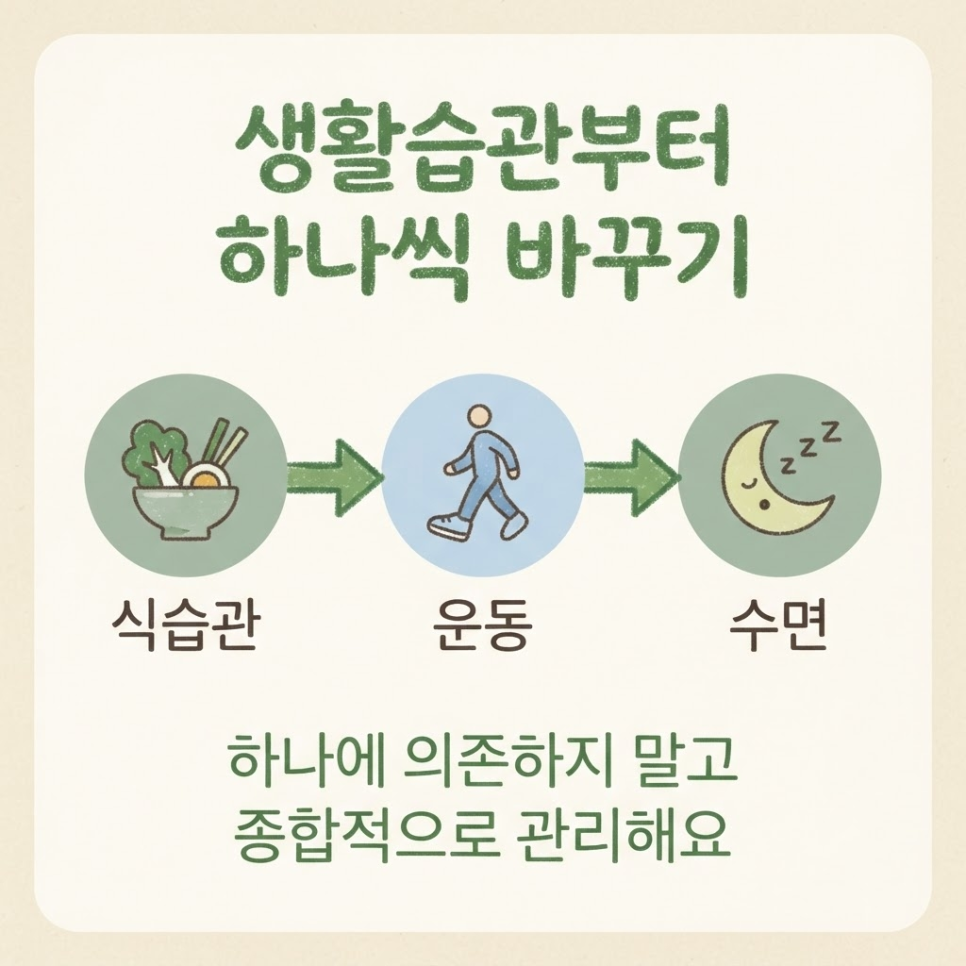
✅ Pay attention to unexplained fatigue and inflammation in the body
✅ Manage inflammation through a regular daily routine
✅ Cut back on processed foods and refined sugar
✅ Check your health status with regular checkups

Smoking, heavy drinking, and frequent late-night eating may increase the inflammatory burden on your body.
Take a moment to review your everyday habits one by one.
Can CRP Levels Show the State of Inflammation in Your Body?
CRP (C-reactive protein) is a protein produced by the liver in response to inflammation, and it can be measured with a blood test.
Higher levels are generally interpreted as a sign that inflammation may be present in the body.
| CRP Level | Interpretation |
|---|---|
| 0.5–1.0 mg/L | Normal range |
| 1–3 mg/L | Borderline range |
| Above 3 mg/L | Range that may warrant attention |
※ Reference ranges can vary by lab and testing method, so please consult a medical professional for an accurate interpretation.
CRP is known to be more sensitive than white blood cell counts, making it a useful early marker for detecting inflammation.
That said, a CRP level alone can’t confirm a specific condition, so it should be interpreted alongside other tests.
What Diet and Lifestyle Habits Help Reduce Inflammation in the Body?
A diet built around antioxidant-rich foods is one of the most effective lifestyle habits for managing inflammation in the body.
It’s best to eat a balanced variety of foods such as leafy greens, tomatoes, and olive oil.

| Category | Food Examples |
|---|---|
| Foods to favor | Leafy greens, tomatoes, olive oil, nuts, fatty fish |
| Foods to cut back on | Processed foods, refined sugar, trans fats, excess sodium |
Pair this with regular exercise as well.
Sticking with aerobic exercise like walking, at a pace that suits your fitness level, can support your overall health.
Getting enough sleep is another piece you can’t skip when it comes to managing inflammation in the body.

Combining a balanced diet, regular exercise, and enough sleep
may help support your overall health over time.
If it’s hard to get enough antioxidants from diet alone, it may help to look into related dietary supplements.
When choosing a product, be sure to carefully check the ingredients and recommended intake.
For more health information, check out the Kookmin Bio homepage.
A balanced diet and enough sleep are core habits for managing inflammation in the body.
Try building a routine you can actually stick with long term.

Frequently Asked Questions

1. What are common signs that inflammation is present in the body?
It helps to regularly notice ongoing fatigue or changes in your skin and joints. If needed, a doctor may order a blood test to check inflammation markers such as CRP.
2. Can diet changes alone manage inflammation in the body?
A balanced diet can help, but diet alone has its limits. It’s best paired with regular exercise, enough sleep, and stress management.
3. What lifestyle habits can affect inflammation in the body?
Eating too many processed foods or too much sugar, along with lack of sleep, smoking, and heavy drinking, can negatively affect your overall health.
4. Does exercise help manage inflammation in the body?
Regular aerobic exercise can support cardiovascular and metabolic health. Rather than overdoing it, start with low-impact activities like walking and build up consistently at your own pace.
5. If my CRP level is high, should I see a doctor right away?
A higher-than-normal CRP level doesn’t necessarily point to a specific condition. But if it stays elevated or comes with other symptoms, it’s safer to consult a doctor.
References
· Asan Medical Center, “C-Reactive Protein (CRP) Test,” Asan Medical Center Health Information.
Read more
· Severance Hospital, “C-Reactive Protein,” Severance Hospital Health Information.
Read more
· KorMedi, “Root Out the Pain… 18 Foods That Fight Inflammation,” KorMedi.
Read more
This article is intended for general health information purposes only and is not a substitute for individual diagnosis or treatment. If you have a health concern, please consult a medical professional.